

Dangote is testing the market Nigerian startups need to exit
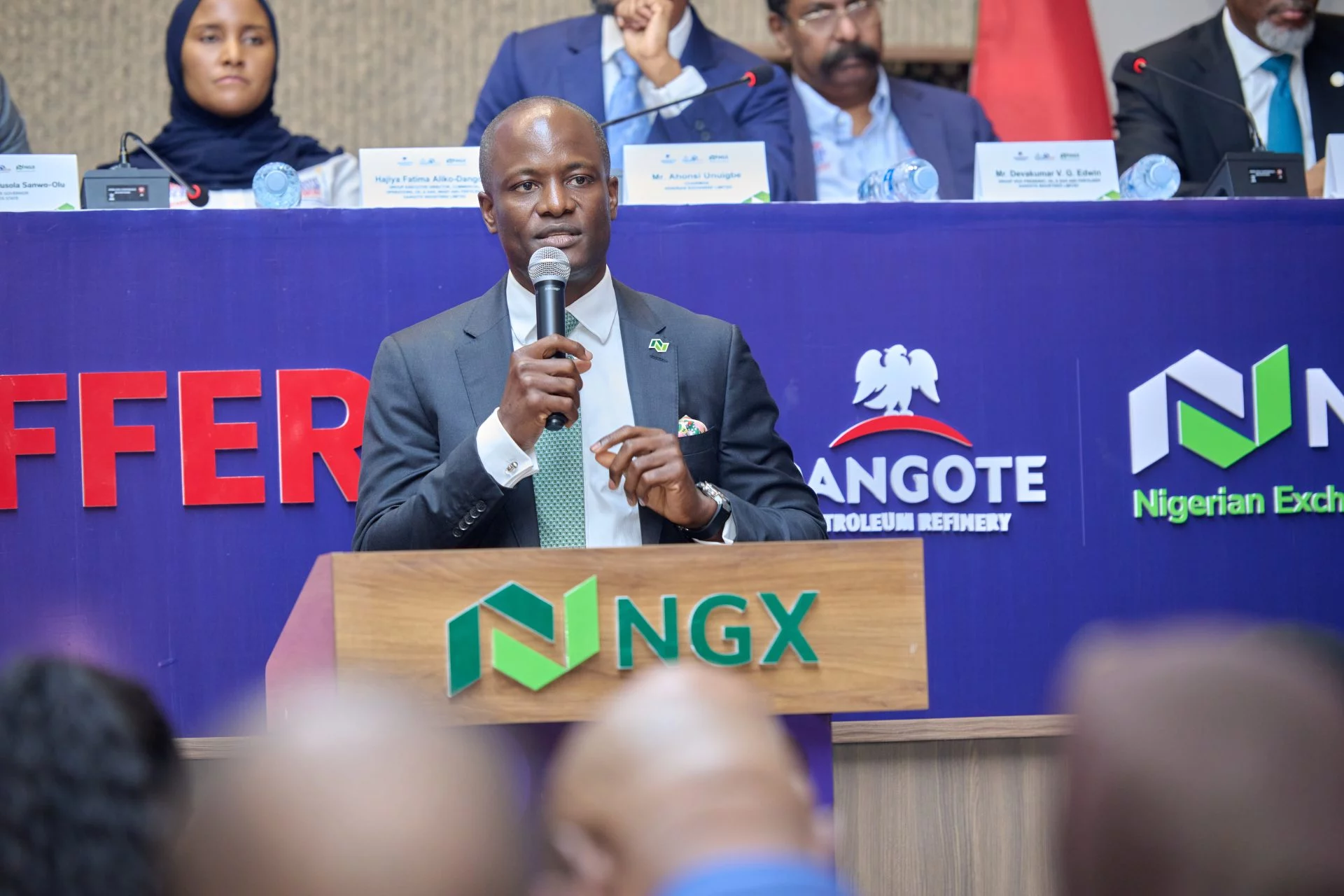
Nigeria’s stock exchange is in the midst of its largest liquidity year.
In March, Nigerian banks completed their largest capital-raising exercise, raising ₦4.65 trillion ($3.49 billion) in 24 months, including $2.54 billion from local investors.
Dangote Refinery is trying to raise almost half that amount in a single offering.
If successful, its $1.62 billion IPO will be one of the largest liquidity events in Nigeria’s stock market history. More importantly, it could answer a question that has constrained Nigeria’s startup ecosystem for years: Is there enough local capital to provide venture-backed companies with a credible exit through the public markets?
For years, venture capital has poured money into Nigerian startups but has struggled to exit, with limited options: sell the company, sell shares to another private investor, or wait for another funding round.
Mergers and acquisitions (M&A) remain the dominant exit route for venture-backed companies in Africa, with 63 deals recorded in H1 2026. Nigeria has yet to produce a VC-backed IPO. The US has recorded 44 VC-backed IPOs this year and is on track to surpass 2025’s total of 50. The African Private Capital Association recorded just one venture-capital-backed IPO exit on the continent in 2025.
If Dangote can bring substantial retail and institutional money into a Nigerian public offering, it could provide something founders and investors have never had at scale: evidence that a deep enough pool of Nigerian capital exists at the end of the startup lifecycle.
The door Nigeria built
Nigeria already has much of the framework needed for technology companies to go public.
The Nigerian Exchange Limited (NGX) has a Growth Board for smaller, growth-oriented companies and a Technology Board, specifically for technology companies seeking to raise capital and become publicly traded. The Nigerian Startup Act also contains provisions intended to facilitate listings for labelled startups.
Yet no Nigerian startup has tested the market.
A 2025 report from venture law practice TLP Advisory found that 53% of founders surveyed had not considered an NGX listing because they did not understand how local listings work or why they should pursue them.
TLP found that 76.5% of funded startups raise capital in US dollars even though much of their revenue is earned in naira. Foreign investors generally want dollar-denominated returns because of naira depreciation risk.
The Growth Trap
The business grew 200%, but the naira weakened faster, leaving the investor with a 10% dollar loss.
$10M
→
₦4.5B
→
+200%
→
₦13.5B
→
₦1,500/$
→
$9M
THE BUSINESS
Final value
₦13.5B
▲ 200% growth
THE DOLLAR INVESTOR
Final dollar value
$9M
▼ 10% return
This is a simplified illustration of how local-currency growth and NGN/USD exchange-rate movements affect a dollar-denominated investment. It does not account for fees, taxes, dilution, or actual exit pricing. Source: TechCabal.
Market depth is another constraint. TLP also argued that Nigerian public-market investors tend to rely on measures such as price-to-earnings ratios and dividend yields, which may not fit high-growth technology companies as neatly. Its calculation suggested that a private technology company valued at $100 million could potentially be valued at only $60 million on the NGX.
JP Morgan points to the deeper and more diversified investor base in US public markets, where investors are generally more willing to accept risk and favour growth and innovation.
Dangote is the experiment
Dangote Refinery’s IPO is effectively a large-scale liquidity experiment.
It is offering 4.1 billion shares and targeting up to 10 million retail investors through digital investment platforms. Nigeria currently has about 2.7 million retail investors.
Evidence suggests Nigerian retail investors will participate in large public offers. When MTN Group reduced its stake in MTN Nigeria by 3.25 percentage points, the offer was oversubscribed by 139.7% and attracted 126,720 retail investors.
Dangote’s listing could also add roughly $60 billion to the NGX’s equity-market capitalisation. The exchange was worth ₦163.11 trillion ($122.72 billion) as of September 30. That would push the market closer to $200 billion, while exposing its concentration risk: a single company could account for about one-third of the market.
But if successful, Dangote would leave startups with a larger pool of retail investors willing to buy and trade Nigerian companies. That could give companies such as Flutterwave, which has previously discussed an IPO, a possible exit location.
But Dangote is not a startup
Dangote is Africa’s richest man, and his companies have a long history in Nigeria’s public markets. The refinery is part of a mature conglomerate with substantial assets, revenues, and an operating history that investors can evaluate.
Dangote also has the money and distribution network to market an IPO at a scale most startups cannot replicate. The offering will cost at least $31.22 million and involve more than 50 investment intermediaries.
A startup cannot replicate that scale. But it can benefit from the investor base that the playbook creates.
M&As will remain the dominant exit route. In the US, about 85% of VC-backed exits happen through acquisitions. Nigeria does not need IPOs to replace M&As; it needs them to become a credible alternative.
The currency mismatch, valuation concerns, and market-depth problems remain, and even the NGX acknowledges them. It recently said reforms introduced since 2023 have improved price discovery and capital mobility.
“Nigeria’s markets are not yet frictionless, but they are no longer static,” Temi Popoola, Group Managing Director of Nigerian Exchange Group, said in April.
Dangote’s IPO cannot solve the structural problems facing Nigerian startups listing. But if the refinery proves that Nigerian investors will provide deep, sustained liquidity for a large public company, it could show that when Nigerian startup investors are ready to leave, there may finally be a Nigerian market deep enough to support them.
*Exchange rate used: ₦1,329.16/$
True scale demands moving beyond surface-level integrations to robust execution. We’ve filtered the noise out of Moonshot 2026, optimising the conference strictly for high-calibre connections between startup founders, global financial operators, enterprise leaders and individuals rewiring Africa’s technical frameworks.
Get 20% off Early Bird tickets for a limited time.
Crédito: Link de origem