

Cuba’s Recent Economic Reforms: Legal Opening or Legislative Illusion?
A Reform Moment, but Not yet a Legal Transition
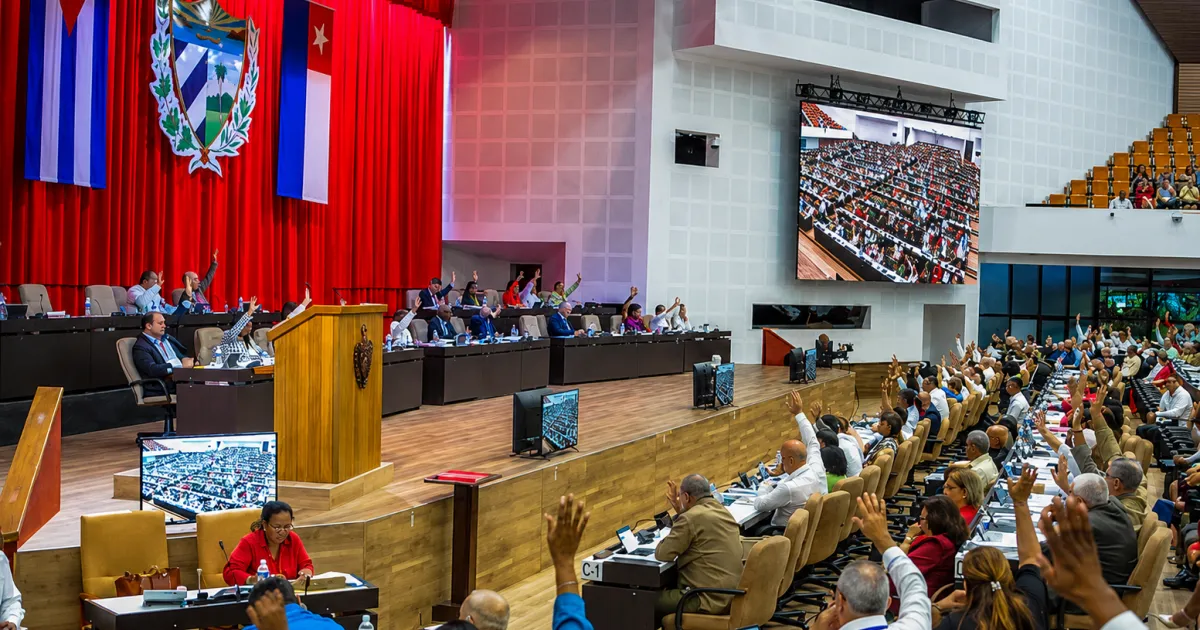
On June 18, 2026, Cuba’s National Assembly of People’s Power unanimously approved 176 economic and social measures organized into 23 strategic areas, in a package Prime Minister Manuel Marrero Cruz presented to the National Assembly as the most consequential economic realignment (the “Recent Reforms”) of his tenure and which London-based Cuban Economist Daniel Torralbas described as the most profound change since 1959 revolution.1 On paper, several elements read as historic: gone is the decades-old requirement that foreign investors form joint ventures with a Cuban state enterprise; private banks are authorized for the first time since before the Revolution; the cap on private sector firm size is lifted; and both Cuban and foreign investors may, in principle, acquire stakes in state-owned enterprises.
A careful reader should resist equating the legislative announcement of the Recent Reforms with legal transformation. Marrero gave lawmakers no implementation timetable, and by the government’s own account, giving legal effect to 176 measures requires amending or repealing roughly 148 existing legal instruments and enacting 32 new ones, including ten laws.2
Six weeks after the vote, only a handful of those legislative instruments had actually reached the Gaceta Oficial. The question this article asks is not whether Cuba has announced an opening – it plainly has – but whether that opening yet amounts to law that an investor, lender, or insurer could actually rely on. Legal significance should not be confused with legal sufficiency.
That distinction matters more, not less, because of the circumstances under which the package was adopted. The vote came as the Economic Commission for Latin America and the Caribbean (ECLAC) projected a 6.5% contraction in Cuban GDP for 2026, as blackouts of 20 hours or more became routine in several provinces, and as a U.S. fuel blockade and expanding secondary-sanctions program tightened in parallel with Havana’s own legislative calendar.
What the Recent Reforms Appear to Change
Four changes stand out as genuine departures from six decades of Cuban investment policy.
1. First, the package removes the historical requirement that a foreign investor partner with a Cuban state enterprise, opening the door to direct investment in genuinely private Cuban firms and cooperatives through international economic association contracts with non-state actors.3 Surface rights for foreign-backed projects were extended to as long as ninety-nine years and usufruct rights to more than fifty, alongside removal of the requirement that foreign-investment firms hire staff exclusively through state labor-intermediation entities.
2. Second, the package authorizes the operation of private banks and private currency-exchange houses under Central Bank oversight, alongside a real-time digital foreign-exchange market. In practice, the Central Bank has operated so far under a narrow March 2026 resolution permitting ten designated companies to use cryptocurrency for external payments. Moreover, the announcement – which is not yet in operation – of Cuba’s first pilot private exchange house, as of this writing is missing rates, eligible currencies, and an opening date.
3. Third, firms may now employ more than one hundred workers, and for the first time an individual may hold an ownership interest in more than one private enterprise.4
4. Fourth, the state’s monopoly over foreign trade is partially dismantled: state, private, and cooperative entities are, in principle, permitted to import and export directly rather than exclusively through a state intermediary, and to acquire equity in state enterprises as those are gradually converted into joint-stock companies.5
Each of these is a genuine legal opening relative to the framework in place before June 18. None of them, however, is self-executing.6 As discussed below, most remain propositions awaiting implementing law.
The Legal Problem: Permission Is Not Protection
Removing a prohibition is not the same as creating an enforceable right, and the distinction matters most in precisely the sectors of energy, infrastructure, large-scale manufacturing, where capital is committed for years before it is repaid. A foreign investor evaluates not only whether an activity is now permitted, but whether the permission, once granted, can be relied upon; whether a contract will be enforced by a tribunal insulated from political direction; whether an approval, once issued, can be revoked at administrative discretion; whether profits can actually be converted and repatriated; and whether the state counterparty’s assets or obligations are shielded form a change in policy.
Cuba’s June 18 package does not address any of these questions directly.
- While it expands the list of permitted activities and eligible investors; it doesn’t create the juridical, regulatory, or contractual infrastructure that gives a permission durable legal content.
- Cuba’s judiciary remains constitutionally subordinate to the Communist Party, without an established tradition of adjudicating high-value commercial disputes independently of state economic policy.7
- Approvals for foreign investment above a given threshold continue to run through the Council of State or Council of Ministers on a discretionary case-by-case basis, a structure that reforms left untouched even as a separate July 2026 decree streamlined certain evaluation procedures under the existing Foreign Investment Law regulations.8
- Cuba’s own recent history counsels caution about equating ‘’authorized’’ with ‘’protected’’: the 2014 Foreign Investment Law’s promise of a more agile approval process coexisted for over a decade with one of Cuba’s largest Western investors accumulating hundreds of millions of dollars in unpaid receivables from its Cuban state partners.
The same logic applies to licensing. A private bank, exchange house, or foreign-invested enterprise operates under a license issued by state authority, and nothing in the June 18 package establishes a transparent standard for when that license can be conditioned, suspended or revoked, or what remedy – judicial or otherwise – is available if it is.
Strategic sectors, moreover, remain expressly reserved to the state or subject to state majority participation regardless of the general opening, so the reforms function less as a uniform liberalization than as an expanded, still discretionary, list of exceptions to default rule of state control.
What the Reforms Do Not Address
Four gaps are worth isolating, because each is dispositive for making an investment in Cuba bankable 9, rather than merely descriptive of Cuba’s broader difficulties.
1. No implementation timetable: The 176 measures depend on a legislative calendar Cuba has not published and has a documented recent record of missing: in 2024, the government enacted only nine of the 17 laws it had scheduled. As of this writing, the Gaceta Oficial shows only a handful of the 32 required instruments in force:
- a minimum-wage decree,
- an April 2026 decree-law establishing “investor” migratory status for Cubans abroad,
- the narrow March 2026 cryptocurrency resolution, and
- a July 2026 decree recalibrating the list of activities off-limits to the private sector.
Private banking and private exchange houses — arguably the package’s most consequential axis for outside investors — remain, in the Cuban government’s own framing, at the stage of “what” rather than “how.”
2. No independent dispute resolution: Cuba has not ratified the International Centre for the Settlement of Investment Disputes (ICSID) Convention, foreclosing the dispute-settlement forum used by the large majority of the world’s bilateral investment treaties (BITs) and project-finance structures.10 Cuba’s roughly twenty BITs instead rely on the United Nations Commission on International Trade Law (UNCITRAL) or other ad hoc arbitration, and while Cuba acceded to the 1974 New York Convention on the recognition of foreign arbitral awards, an award is only as valuable as the assets available to satisfy it – a limitation discussed further below.
3. No resolution of the GAESA problem: Grupo de Administración Empresarial S.A. (GAESA), the military-run conglomerate that different sources estimate controls somewhere between 40% and 80% of the Cuban economy, depending on methodology, has been listed on the Office of Foreign Assets Control’s (OFAC) Specially Designated Nationals and Blocked Persons List since December 2020 under the pre-existing Cuban embargo. On May 7, 2026, the U.S. State Department separately designated GAESA under Executive Order 14404, specifically for operating in the financial-services sector of the Cuban economy — a distinct legal act that activates Executive Order 14404’s secondary-sanctions authority, extending blocking-sanctions risk to non-U.S. persons, including foreign financial institutions, dealing with GAESA, rather than only to persons already subject to U.S. jurisdiction under the pre-existing embargo. A wind-down period for foreign counterparties to untangle existing dealings with GAESA expired on June 5, 2026.11
OFAC guidance issued June 4 (FAQ 1258) extends secondary-sanctions risk to any entity in which GAESA, the Ministry of the Interior (MININT), or the Ministry of the Revolutionary Armed Forces (MINFAR) hold a 50% or greater interest, whether or not that entity itself appears on the Specially Designated Nationals list – meaning that the Recent Reform’s removal of the mandatory joint-venture with a state enterprise requirement helps an investor only to the extent genuine diligence can establish that a nominally private Cuban counterparty carries no such ownership chain. Designations have continued at pace since: on July 23, 2026, the State Department added nine more entities, including a Guernsey-registered real-estate investor and the firm managing container traffic at the Port of Mariel.
4. No hard-currency convertibility solution: The Recent Reforms authorize a digital foreign-exchange market and private exchange houses, in principle, but they do not resolve the underlying scarcity of hard currency that makes conversion difficult in the first place. Cuba’s informal peso-to-dollar rate has moved from roughly 435 Cuban pesos (CUP) at the end of 2025 to approximately 673-675 CUP in early August 2026– a depreciation of more than fifty percent in seven months – and the Euro now trades even higher than the dollar on the informal market.12 Formal conversion channels have simultaneously narrowed rather than widened: Visa and Mastercard suspended processing on the island on June 6, 2026 after a foreign banking partner severed ties with GAESA’s financial-processing arm, and as of this writing that suspension remains in effect.13 A revenue stream denominated in pesos is, in practical terms, a wasting asset for as long as this gap between announced currency reform and operative conversion infrastructure persists
5. No answer to the Helms–Burton problem– and a materially worse one after June 23: Five days after the reform package passed, the US Supreme Court held, 6-3, in Exxon Mobil Corp. vs Corporación CIMEX, S.A that the Helms-Burton Act itself abrogates the sovereign immunity of Cuban state agencies and instrumentalities, so that a claimant need not separately satisfy a Foreign Sovereign Immunities Act exception to sue a Cuban state-owned enterprise over confiscated property. Combined with the Supreme Court’s earlier decision in Havana Docks Corp vs Royal Caribbean Cruises broadening what counts as ‘’trafficking’’ in confiscated property, any investor entering a joint venture, share purchase, or long-term contract with Cuban state enterprise now faces a meaningfully lower litigation bar for claims tied to pre-1995 confiscations – a risk the Recent Reforms neither created nor mitigate.
Why this Matters for Energy and Infrastructure?
These gaps bite hardest in capital-intensive, long-horizon sectors. An energy or infrastructure project:
- typically requires ten to 20 years to recover its capital;
- depends on a state counterparty for land, grid access, permits, or offtake; and
- needs hard-currency revenue to service any foreign debt.
Each of those features maps directly onto one of the unresolved legal problems described above:
- a tariff or off-take commitment is only as good as the tribunal available to enforce it;
- land and permitting run through the same discretionary approval architecture that the Recent Reforms left in place; and
- a state off-taker or grid operator is exactly the kind of counterparty most likely to sit inside the GAESA-adjacent ownership structures that now carry secondary sanctions and Helms-Burton exposure.
A private-banking law that has not yet been written cannot solve a currency-conversion problem for a solar developer waiting to be paid, and a decree authorizing private participation in fuel commercialization is not, by itself financeable collateral.14 Energy reform cannot be financed on the strength of a policy announcement; it requires contracts that a lender’s counsel can actually rely upon — a structuring question, not a policy one, and the subject to which a future article will return.