

Cuba Seized Their Mines in 1960. Now Two American…
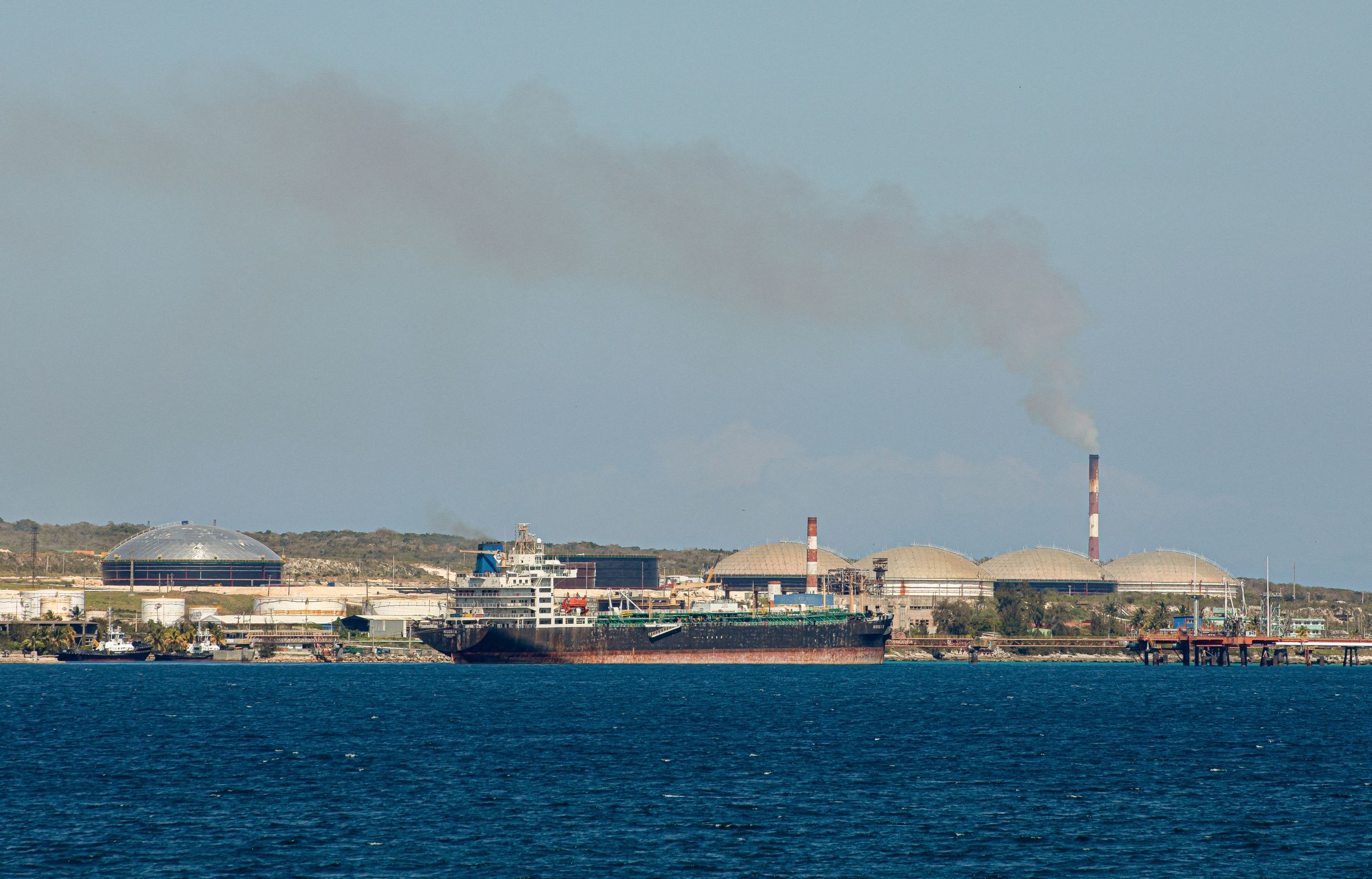
A Toronto-listed mining company that has spent three decades running Cuba’s largest nickel and cobalt operation is now the object of a takeover fight between two separate groups of American investors — a contest that traces back to land Havana seized from its owners more than sixty years ago. Whichever side wins, U.S. capital would return to Cuban mining for the first time since those confiscations, a milestone first reported by the Miami Herald.
The prize is Sherritt International Corporation, which mines and processes nickel and cobalt in Holguín province’s Moa district through a fifty-fifty arrangement with Cuba’s state-owned General Nickel Company, a partnership dating to the early 1990s.
Texas investor Ray Washburne moved first. Washburne once ran the U.S. government’s overseas development-finance bank, and his family office, Gillon Capital, reached a non-binding agreement with Sherritt on May 20 for a private placement of warrants that would let Gillon buy enough shares to control 55 percent of the company. Rather than a straight purchase, the mechanism is a warrant exercisable over nine months, priced at a discount to Sherritt’s roughly 11-cent closing share price from mid-May — meaning no cash changes hands until Gillon decides to exercise it, according to Sherritt’s own disclosure and CBC’s reporting. The two sides later locked in months of exclusive negotiations, a window that runs out in mid-October.
A rival bid emerged into public view on August 10, when a consortium confirmed it had quietly submitted its own proposal to Sherritt’s board back on June 26. That group pairs commodities trader Glencore, London-based Kyma Capital, veteran investor Trifon Natsis, and an undisclosed U.S. “anchor” backer. Unlike Gillon’s deferred-payment warrant, this offer puts real money on the table immediately — new equity priced at 12 Canadian cents a share, open to existing shareholders on the same terms, with no financing contingency attached, according to the consortium’s own announcement and Canadian Mining Journal. Sherritt’s shares jumped 24 percent the day the offer became public. Both proposals converge on the identical target: at least 55 percent control.
The rivalry has a wrinkle. Kyma is already Sherritt’s biggest financial stakeholder and has spent weeks publicly campaigning to remove the company’s board chairman, arguing management locked itself into the Gillon deal without shopping the company properly — a dispute laid out in Kyma’s own statements. Sherritt, for its part, has publicly cautioned that the rival proposal remains non-binding and isn’t currently something it can execute, per the company’s own response.
No matter which offer prevails, Havana’s position doesn’t move: General Nickel Company keeps its half of the operation under the existing joint-venture terms, and Cuba’s constitution keeps the land itself under state ownership regardless of who controls the company sitting on top of it.
How Washington Backed Sherritt Into a Corner
The bidding war exists because U.S. sanctions made Sherritt’s Cuban business nearly impossible to run. On May 1, President Trump signed Executive Order 14404, opening the door to blocking sanctions against any foreign entity operating in Cuba’s energy, defense, mining, financial-services, or security sectors — a sweeping expansion detailed by Squire Patton Boggs and Sullivan & Cromwell. Six days later, the State Department acted on it, designating GAESA — the military-run conglomerate that Secretary of State Marco Rubio has called the backbone of Cuba’s economy — along with its top executive and Moa Nickel S.A., Sherritt’s Cuban joint-venture entity, according to the State Department’s own notice and the Federal Register filing.
Sherritt itself was never designated, but the practical effect was the same. The company suspended its direct role in the joint venture the same day and began pulling staff off the island, a shift confirmed by the South China Morning Post. Within days its chief financial officer resigned, its longtime outside auditor quit, and three board members stepped down, according to Washington Post. Ontario securities regulators then hit the company with a trading halt after it missed a routine quarterly filing deadline.
Sherritt initially concluded its only way out was to walk away from Cuba altogether. It told shareholders on May 15 that it intended to dissolve the joint venture outright and asked Alberta’s Court of King’s Bench to speed up a process that could otherwise take years, with a hearing set for May 19. That plan didn’t survive the week: after further talks with advisers, stakeholders, and government officials, Sherritt announced on May 19 that it was abandoning the dissolution entirely, reversing course one day before unveiling the Gillon warrant deal — a sequence confirmed by Sherritt’s own filings and Bloomberg. In other words, the company chose to keep the asset and sell control of it rather than walk away — which is precisely why two rival bidders now have something to fight over.
By late June, with no fresh ore arriving from Moa, Sherritt’s Fort Saskatchewan refinery in Alberta ran through its remaining feedstock and moved into a full shutdown, a step the company announced June 22.
A Confiscation That Still Sets the Terms
Sherritt’s mines occupy ground that once belonged to Moa Bay Mining Company, a U.S. firm whose Cuban holdings were swept up when Havana’s revolutionary government began nationalizing American-owned property starting in 1959 and accelerating through 1960. The U.S. Foreign Claims Settlement Commission later certified Moa Bay’s loss at $88,349,000, a figure that has since ranked third by dollar value among the 5,913 U.S. property claims the commission certified against Cuba, according to tracking by the U.S.-Cuba Trade and Economic Council. That claim isn’t sitting with a mining company anymore — the council reports Citigroup now holds it.
Any buyer of Sherritt still has to clear two hurdles that have nothing to do with mining economics: sign-off from the U.S. State and Treasury departments, and some resolution with the holders of certified claims like Moa Bay’s before American money can legally flow back into the mines.
A Second, Larger Claim Lands on the Deal
Sherritt’s legal exposure widened at the end of July. Cuban Electric Company sued Cuba’s state power authority and Energas S.A. — a power venture in which Sherritt holds a one-third stake supplying roughly a tenth of the island’s electricity — in federal court in Washington on July 29, invoking Title III of the Helms-Burton Act. The underlying claim was certified by the FCSC in 1970 at $267,568,413.62; with six decades of interest and the law’s treble-damages provision, the total sought climbs to roughly $802.7 million, according to reporting from CiberCuba and case filings tracked by the trade council. Behind the plaintiff sits Atlas Holdings, a Greenwich, Connecticut, investment firm that also owns Office Depot and controls the certified claim — making it, by the council’s tally, the single largest of the 5,913 certified Cuban claims.
Because Sherritt sits inside the Energas structure the lawsuit targets, the trade council has suggested the case cuts both ways: it could either complicate a Sherritt sale or hand a buyer the chance to resolve two major confiscation claims inside a single transaction.
One Family’s Overlapping Claim
Not every claim against the mines went through official channels. William Pitt, a Miami-based Cuban American whom the Herald describes as a retired engineer, says Sherritt’s mining footprint in Moa spread beyond Moa Bay’s original boundaries and onto ground his own father once held. Because his father carried dual British and Cuban citizenship, the family was never eligible to register a claim with the Foreign Claims Settlement Commission. Pitt says he mailed Sherritt maps documenting the overlap, only to have company lawyers respond that Canadian law shielded the firm and that it held no U.S. assets a judgment could reach. “They just didn’t want to handle it,” Pitt has said.
A change in ownership could reopen that fight. Title III of the 1996 Helms-Burton Act lets Americans sue companies that profit from confiscated Cuban property — a provision every U.S. president suspended until the Trump administration let it take effect in 2019. Pitt says he has already told Gillon Capital that acquiring Sherritt would expose it to a lawsuit over his family’s land, and intends to send the rival consortium the same warning.