

Cuba Loses Another Ally as Dominican Republic Expels Its Diplomats — Havana’s Circle of Friends Shrinks Again
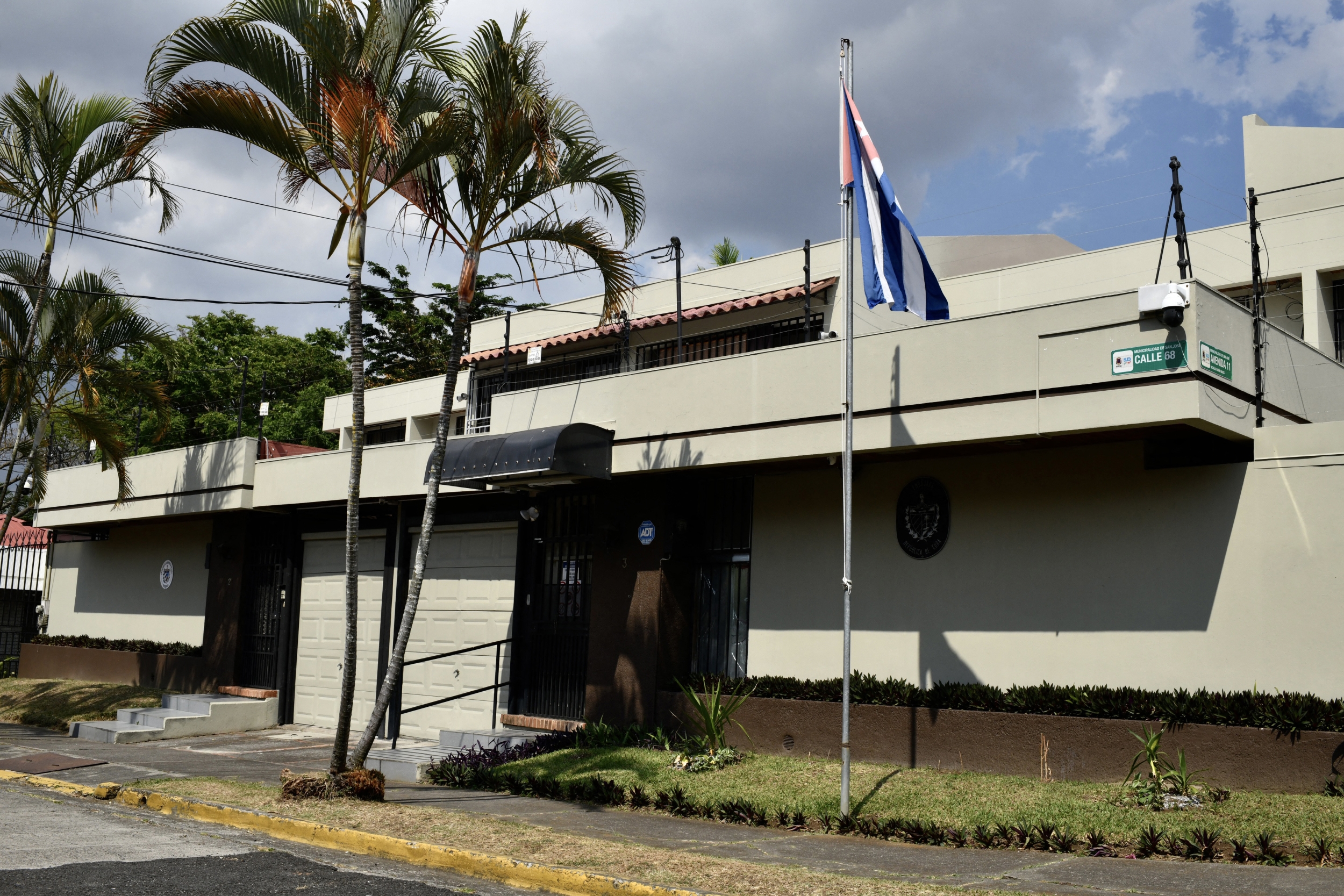
Photo by Ezequiel BECERRA / AFP via Getty Images
SANTO DOMINGO— A diplomatic relationship that had quietly cooled for months boiled over this week, after Dominican authorities told nine Cuban embassy staffers to gather their belongings and go. The order lands at a moment when Havana is running out of friends in the neighborhood, and it puts a fresh strain on two governments that both carry weight with Latino communities well beyond the Caribbean.
The Ultimatum From Santo Domingo
On Aug. 13, the Dominican Foreign Ministry notified Cuba’s embassy that nine officials — and not the entire delegation — had exactly one week to clear out, a deadline that fell on Sunday, Aug. 16. Counting spouses and children, the order touched roughly 21 people, according to figures reported by CubaHeadlines. Dominican officials offered no public justification, leaning instead on Article 9 of the 1961 Vienna Convention on Diplomatic Relations, a provision that lets any host nation send diplomats home without giving a reason. Notably, the government stopped short of the harsher legal label — it never declared the officials “persona non grata,” choosing instead to route the request through ordinary diplomatic channels.

Photo by YAMIL LAGE / AFP via Getty Images
Havana Fires Back
Cuba’s response came fast and sharp. Its Foreign Ministry accused the Dominican government of caving to Washington, with the Washington Post reporting that officials in Havana labeled the expulsion an act of “submission” to American pressure. Rio Times reporting points specifically to pressure tied to Secretary of State Marco Rubio as the force Havana believes is driving the move. Even so, Cuban officials were careful to separate the Dominican people from the Dominican state, insisting the bond between the two nations would survive the argument between their governments.
The timing added an odd note of theater: Cuba’s ambassador, Ángel Arzuaga Reyes, learned of the expulsion the same day his embassy was hosting a gala marking the 100th anniversary of Fidel Castro’s birth. Rather than address the crisis directly, he leaned into revolutionary rhetoric, telling the crowd, “the tougher the circumstances, the stronger our unity,” according to CubaHeadlines.
A Quieter Explanation Surfaces
While Santo Domingo kept its official reasoning under wraps, the Dominican newspaper El Día reported that people close to the decision pointed to something else entirely: suspicion that certain Cuban officials had been running intelligence operations under diplomatic cover. Sources told the paper such conduct falls well outside what a diplomatic posting is supposed to involve. The same reporting explicitly ruled out any link between the expulsions and four Cuban athletes who stayed behind in the Dominican Republic after this year’s Central American and Caribbean Games rather than returning home.
By the weekend, the fallout was visible on the street. Moving trucks lined up outside the Cuban embassy in Santo Domingo’s El Millón neighborhood as staff loaded furniture late into Saturday night, watched over by Dominican police. Reporters gathered outside got no comment from anyone leaving the building.
Part of a Wider Pattern
Santo Domingo isn’t acting alone. Cuba has been shedding regional relationships all year: Ecuador’s government gave the entire Cuban mission in Quito just 48 hours to leave in early March, Costa Rica shuttered its embassy in Havana that same month, and Colombia’s president-elect, Abelardo de la Espriella, used a late-July address to announce he would sever ties with Cuba and Nicaragua entirely once he took office — a promise he made good on after his Aug. 7 inauguration, when his government began closing 14 embassies. “There would be no link whatsoever with tyrannies,” he said of Havana and Managua.
Santo Domingo’s own drift away from Cuba started earlier this year. It left Havana off the invite list for a postponed regional summit once planned for Punta Cana, and in July it abstained on a U.N. resolution condemning the American embargo — a resolution it had voted to support the year before, per reporting from CubaHeadlines. President Abinader had already signaled where he stood, telling Infobae in May that Cuba “is not a democratic state.”
Still, Dominican officials insist this isn’t a full break. Both countries’ embassies remain staffed and open, and the government has framed the action as targeting specific individuals, not Cuba as a nation.
Why the Diaspora Is Watching
For Cuban and Dominican communities in South Florida and greater New York, this isn’t just wire-service news. Both expatriate populations pay close attention to how their home governments align with — or distance themselves from — Washington, and friction of this kind can bleed into local politics, remittances and travel between the islands and the mainland. It also lands as Cuba’s isolation compounds an already brutal stretch at home: repeated islandwide blackouts tied to a U.S. oil squeeze have left the country’s power grid in near-constant crisis even as Havana tries to project defiance abroad.
Four governments — Ecuador, Costa Rica, Colombia and now the Dominican Republic — have downgraded or cut ties with Cuba in 2026 alone, a pace of diplomatic isolation without much recent precedent in the region. Whether Havana answers in kind against Dominican staff on the island — or lets Sunday’s deadline pass quietly — will say a lot about how far this particular rupture is headed.
© {{Year}} Latin Times. All rights reserved. Do not reproduce without permission.