

Cuba Grid Collapses Twice in Five Days: Fuel Starvation Stripped All Redundancy
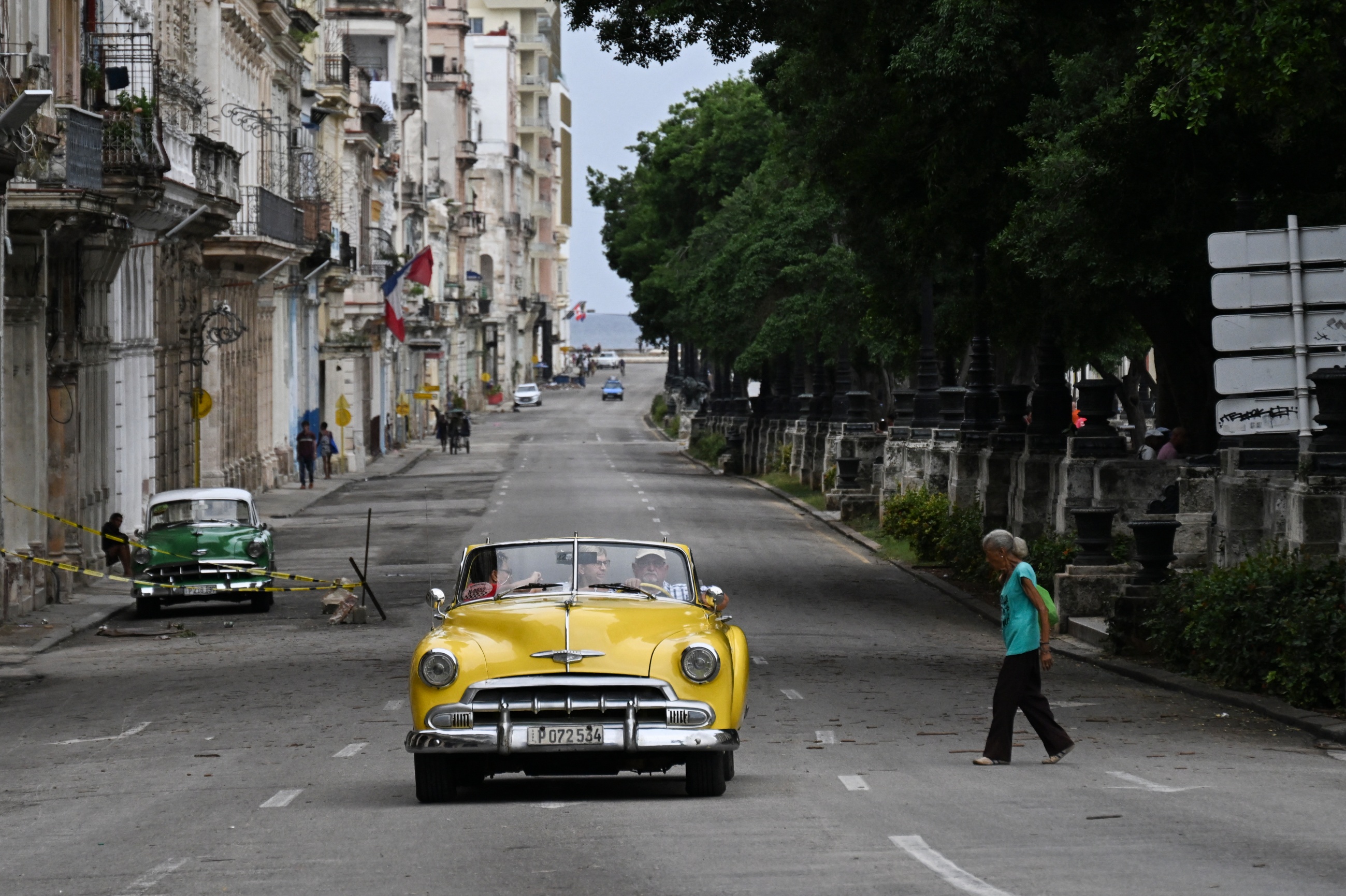
Cuba’s national electric grid fell dark for the second time in five days on Friday, July 10, when the state-run Union Electrica de Cuba (UNE) announced a “total collapse of the national electric system” at 4:30 p.m. local time — the fourth such collapse of 2026 and the ninth since late 2024 — as documented in the running record of nationwide blackouts. No single equipment failure caused the blackout. Rather, the grid has been drained of the reserve capacity that modern electrical systems require to survive any single-plant failure: with only 935 megawatts of generating capacity running against a demand of 3,100 megawatts, Cuba’s Soviet-era grid now cascades to a total collapse whenever anything goes wrong. The fuel blockade imposed by the Trump administration since January 2026 is the reason nothing is left to absorb those failures. For the 10 million Cubans living through it — including 100,000 patients waiting for surgeries that cannot proceed without reliable power — the pattern of back-to-back collapses signals that the crisis has entered a qualitatively different and more dangerous phase.
Second Collapse in Five Days
The July 10 collapse was the most dramatic indicator yet of how rapidly conditions are deteriorating. Cuba’s grid operator UNE posted the outage on X and said it was activating “protocols to begin the recovery process,” Reuters reported. Energy Minister Vicente de la O Levy said his ministry was “already working on restoring the National Electric Power System, a complex situation amid all the difficulties we face on a daily basis.”
The immediate trigger was a failure in a transmission line connecting the provinces of Santa Clara and Sancti Spíritus. But that diagnosis understates the underlying problem: the line fluctuation would have been absorbed without consequence in any grid operating with adequate reserve capacity. Cuba’s does not. According to data reported by cubaheadlines.com ahead of the collapse, the National Electroenergetic System (SEN) was running at roughly 935 megawatts against peak demand of 3,100 megawatts — a shortfall exceeding 2,100 megawatts — with an additional 106 distributed generation plants offline due to fuel shortages, representing a further 890 megawatts unavailable.
The prior collapse on July 6 — just four days earlier — had followed the same pattern. By the time UNE confirmed the July 10 outage, large parts of Cuba, including Santiago de Cuba, had still not been fully reconnected from the July 6 event.
Why Cascading Failure Is Now Structurally Inevitable
The engineering literature on power grids is unambiguous: modern systems are designed to withstand cascading failure through redundancy. When one component fails, others absorb the load. That defense requires reserve capacity. Cuba has none.
At the time of the July 10 collapse, Cuba’s largest thermoelectric plant — the Antonio Guiteras facility in Matanzas province, a 630-megawatt French-Alstom unit that has not received comprehensive maintenance since 2010 — was offline for its 17th shutdown of 2026, sidelined since July 3 by a leak in its boiler economizer. The collapse occurred precisely as engineers attempted to resynchronize it with the national grid, interrupting the process. But even had Guiteras come back online, the arithmetic of the crisis would have remained unchanged: Cuba’s eight thermoelectric plants, built predominantly with Soviet, Czech, and Japanese technology between the 1960s and 1980s, supply less than a third of what the island needs to run.
What makes full restoration difficult is equally important to understand. Steam turbine thermoelectric plants — the backbone of Cuba’s fleet — cannot restart themselves after a total blackout. They require external electrical power to boot their own systems, a challenge engineers call the “power to make power” paradox. Grid restoration must proceed through a staged “black start” procedure: small gas turbine or hydro units that can self-start are used to energize isolated “microsystem” sections, which then provide the cranking power to restart the large thermoelectric plants, which then interconnect as a unified national grid. Each reconnection carries “cold load pickup” risk — when power returns and every appliance in a neighborhood starts simultaneously, the surge can trip the system offline again. The process typically takes several days under favorable conditions.
Cuba’s conditions are not favorable. The fuel shortage that eliminated the grid’s reserve capacity also limits the fuel available to power the black-start-capable distributed units needed to bootstrap restoration. Every collapse takes longer to recover from than the one before it, because there is less fuel with which to run the recovery.
How the Fuel Blockade Was Built
Cuba’s current situation was engineered over six months through a legal mechanism — not a naval one — that U.S. Ambassador to the United Nations Mike Waltz correctly distinguished at a heated UNGA debate on July 7, the day after the prior collapse. “There is no ring of Navy warships, U.S. Navy warships sitting around this island blocking trade or humanitarian aid going into Cuba,” Waltz told the assembly.
Cuba’s Foreign Minister Bruno Rodríguez, who interrupted Waltz twice with procedural objections before being told by the Assembly president to stand down, called it “an energy collapse, equivalent to a naval blockade, which is an act of war.” The legal distinction between the two positions matters more than either side acknowledged: the US fuel blockade operates through secondary sanctions, not ships.
Secondary sanctions are extraterritorial financial penalties imposed on non-US persons or institutions that do business with sanctioned entities — even when those transactions involve no US parties and occur entirely outside American borders. The mechanism works because any bank or shipping company that processes a Cuba oil payment risks losing access to the US financial system and US markets. That consequence is severe enough that it has effectively deterred third-country suppliers without requiring any military interdiction.
The architecture of Cuba’s current fuel crisis was assembled in stages. On January 3, 2026, US forces detained Venezuelan President Nicolás Maduro and transported him to New York, where he faces drug and weapons charges. Venezuela, which had supplied Cuba with subsidized oil in exchange for Cuban doctors and security personnel for more than two decades, stopped shipping oil to the island. On January 29, President Trump signed Executive Order 14380, declaring Cuba “an unusual and extraordinary threat” and authorizing tariffs on any country that directly or indirectly supplied Cuba with fuel. Mexico — which had accounted for roughly 44 percent of Cuba’s oil imports — halted its shipments under the threat of those tariffs. Russia delivered one significant shipment, approximately 730,000 barrels, in late March. That supply was exhausted by the end of April. On May 1, Executive Order 14404 expanded the secondary sanctions framework to cover foreign banks and companies doing business with Cuba’s energy sector, its military conglomerate GAESA, and ultimately its state oil company CUPET, which was formally designated on June 11.
Cuba produces only approximately 40 percent of the fuel it needs domestically, and the crude it produces requires imported refined fuels to be usable. The oil blockade has now been in effect for roughly six months.
What PolitiFact Found
U.S. Secretary of State Marco Rubio has maintained that Washington “has done nothing punitive against the Cuban regime.” Independent assessment does not support that framing. PolitiFact’s May 2026 fact-check of Rubio’s claim — that Cuba’s 22-hour blackouts are unrelated to the US blockade — found that while Cuban government mismanagement and long-term underinvestment in the grid are real contributing factors, the scale and duration of blackouts have grown dramatically worse since January’s fuel cutoff.
“While there have been frequent blackouts in the past, they now are on a very different scale,” Bert Hoffmann, a Latin America expert at the German Institute of Global and Area Studies, told PolitiFact. “They generally weren’t for 22 hours a day.” William LeoGrande, a specialist in Latin American politics at American University, said the situation had changed qualitatively: “The blackouts have gotten much worse since January. Cuban officials have said that they are searching for someone to sell them oil but no one will because of the threat of U.S. sanctions.”
The UN High Commissioner for Human Rights, Volker Türk, was more direct. “The fuel restrictions imposed since early 2026 and the recent tightening of extraterritorial sanctions, taken together, are directly harming Cubans, especially the most vulnerable,” Türk said in a June 2026 statement. “Children are dying because doctors lack access to essential medical supplies and medicines. This is unacceptable.”
Life Without Power: Water, Food, and Medicine Also Fail
The July 10 collapse came as parts of Cuba remained only partially reconnected from the July 6 event. For the roughly 10 million people on the island, the practical consequences of serial collapse have reorganized existence around the rarest resource: electricity.
Blackouts in Havana have been stretching to 35 consecutive hours; in Matanzas province, some areas have gone 87 hours without power. In rural Granma province, communities have been dark for 72 hours at a stretch. The generation deficit, documented at more than 2,000 megawatts during peak evening hours before either of July’s total collapses, has left two-thirds of the island without power at the same time even without a national grid failure.
Power outages in Cuba do not occur in isolation. According to CSIS reporting on UN data, 84 percent of Cuba’s water pumping equipment depends on electricity, meaning blackouts translate directly into water shortages within hours. Food spoils. Garbage trucks, dependent on fuel that is not available, have stopped running across Havana. Public transportation has largely ceased. The Cuban government, because it runs all hospitals as state enterprises, cannot purchase the limited fuel the Trump administration has authorized for private sector buyers under US regulations — meaning hospital backup generators go without fuel even as private businesses can theoretically access some supply.
The UN, citing Cuban government data, has reported that approximately 100,000 patients are waiting for surgeries that cannot be carried out due to the electricity and medical supply shortages. Yailin Fis Garcia, 26, who opened a cafe in central Havana shortly before July’s collapses, stood outside her darkened business after the July 10 outage with her five-month-old baby on her shoulder. “All the food spoils, which is an economic hit,” she told Reuters. She added that her home on the city’s outskirts had received electricity for only an hour or two a day for the past month.
107 Protests and Rising Repression
Public demonstrations have become a near-nightly occurrence in a country that has historically suppressed them. After the July 6 collapse, residents in multiple Havana neighborhoods took to the streets banging pots and pans in the cacerolazo style of protest, honking car horns, and chanting demands that the government restore power. The Cuban Conflict Observatory recorded 107 street protests across Cuba in June 2026 — nearly double the previous monthly high of 54 set in March — with 82 occurring in Havana. The wave of protests is drawing comparisons to July 11, 2021, when Cuba experienced its largest anti-government demonstrations in decades.
The rights organization Cubalex documented at least 38 people detained in connection with June’s cacerolazo protests, including six minors. Human Rights Watch has counted more than 700 people imprisoned for political reasons; the organization Prisoners Defenders reports more than 1,200 political prisoners as of spring 2026.
President Miguel Díaz-Canel has framed the unrest as externally provoked. “While the US attempts to trigger social unrest through strangulation by blocking fuel access to Cuba,” he wrote on social media after the July 10 collapse, “the UNE is mobilizing to reverse the collapse of the National Electric System.” He previously called the situation a “genocidal energy blockade.”
At the July 7 UNGA session, Waltz argued precisely the opposite: that the Cuban government was using the crisis to deflect from its own failures. He displayed photographs of jailed Cuban dissidents — artists, musicians, a poet sentenced to 14 years — and challenged the assembly: “The world should not help the Cuban regime hide its incompetence, and its malice, and its corruption, and its greed.” Despite Washington’s effort to prevent the debate entirely, UNGA members voted 136 to 9 (with 30 abstentions) to proceed — though that margin represented a significant drop from the 165 countries that voted in October 2025 to call on the United States to end its embargo.
Cuba’s Solar Pivot: A Long-Term Answer to an Immediate Crisis
Cuba has been racing to install solar panels as a partial workaround to fuel dependency, with significant assistance from China, which provided an aid package of $80 million and 60,000 tons of rice earlier in 2026. Chinese technology exports have accelerated the deployment, and solar now contributes approximately 560 megawatts at peak as of early 2026. But solar provides roughly 18 percent of Cuba’s energy consumption at best — and none at night, when demand peaks and the thermoelectric plants that cannot be kept running are most acutely missed.
Scaled solar is a years-long project. Cuba’s grid architecture, described by energy analysts as overcentralized — designed so that a single plant failure can destabilize the entire national system — would require fundamental redesign alongside any renewable buildout. Estimated cost of full grid modernization: up to $10 billion, a sum that Cuba cannot currently access, finance, or spend.
In mid-June, Cuba’s National Assembly unanimously approved 176 economic reform measures described as the most sweeping since the 1959 revolution, including provisions for private banks, market-based pricing, foreign direct investment by non-state actors, and the elimination of the libreta ration system. The US State Department dismissed the package as “modest, long overdue and ultimately superficial smoke signals” and said the administration was holding out for changes that would make Cuba “investable” and grant Cubans genuine political freedom.
The logical tension in that position was visible: any real market reform requires electricity to function, and Cuba’s electricity supply is controlled by the same sanctions that punish it for failing to reform quickly enough.
What the Analysts Say Could Come Next
At the UN level, Secretary-General António Guterres has said he is “extremely concerned” that the humanitarian situation will “worsen, or even collapse” if Cuba’s oil needs go unmet. UN experts have characterized the fuel blockade as “a serious violation of international law,” though no mechanism exists to adjudicate or enforce that conclusion.
The Lowy Institute’s assessment of the scenario is blunt: a total state collapse on an island of 11 million people would produce immediate humanitarian suffering and likely trigger a mass migration crisis with regional and domestic political consequences for the United States. An analysis from the Center for Strategic and International Studies noted that ongoing energy shocks “threaten cascading breakdowns across power-dependent water, food, and public health systems,” including a water supply that depends on electricity for 84 percent of its pumping infrastructure.
Stefano Ritondale of the security consultancy Artorias offered a key distinction: Cuba is not yet experiencing a full state collapse. The military, which controls significant portions of the Cuban economy through GAESA, remains the regime’s decisive actor. But, Ritondale noted, “the key question now is whether those incidents remain contained or expand into a broader movement” — and widespread blackouts create their own intelligence problem by making it harder to assess what is actually happening on the ground.
Back-channel talks have continued. CIA Director John Ratcliffe met Cuba’s intelligence chiefs in Havana in May. Cuba’s Foreign Minister Rodríguez said as of last week that those negotiations had made “no progress.” The State Department has made clear that it regards the political and economic conditions for lifting the fuel blockade as substantially more demanding than the 176 reforms Cuba has so far produced.
For the 10 million Cubans living through it, the distance between those positions is measured in consecutive hours without electricity, water, or refrigeration. The second total blackout of July 2026, arriving four days after the first, does not suggest the gap is narrowing.
Frequently Asked Questions
Why does Cuba keep experiencing total nationwide blackouts instead of regional ones?
Cuba’s power grid is structurally overcentralized — unlike decentralized or market-based grids where failures can be isolated to a region, Cuba’s national system was built so that a single plant shutdown can destabilize the entire grid. Modern electrical systems withstand failures through redundancy: when capacity exceeds demand, any single-element failure can be absorbed. Cuba’s system is currently generating roughly 935 megawatts against a demand of 3,100 megawatts — operating at less than 30 percent of what the island needs. At that level of deficit, with 106 distributed generation plants offline due to fuel shortage, there is no reserve capacity to absorb anything. Any fluctuation — a transmission line failure, a boiler leak, a voltage drop — cascades immediately to a total national outage.
How does the US fuel blockade actually stop oil from reaching Cuba if there are no US Navy ships around the island?
The blockade works through secondary sanctions, not military interdiction. Executive Order 14380 (January 29, 2026) authorized tariffs on any country that supplies Cuba with oil. Executive Order 14404 (May 1, 2026) extended secondary sanctions to foreign banks and companies that do business with Cuba’s energy sector — meaning any financial institution that processes a Cuba-bound oil payment risks losing access to the US financial system and US markets. Because access to US dollar clearing and the US market is essential to virtually every major bank and energy trading company in the world, the threat is sufficient to deter suppliers without requiring any ships. Mexico halted oil shipments not because a tanker was intercepted but because the economic consequences of US secondary sanctions outweighed the value of the trade.
Could Cuba’s grid collapse lead to a regional migration crisis that affects the United States?
Independent analysts say this is one of the scenarios the Trump administration’s own strategy is counting on — and one of the risks it may be underweighting. The Lowy Institute’s assessment states that a total state collapse on an island of 11 million people would “produce immediate humanitarian suffering and likely trigger a mass migration crisis with regional and domestic political consequences for the United States.” Cuba sits 90 miles from Florida. The Center for Strategic and International Studies noted that cascading energy shocks threaten to break down Cuba’s water, food, and public health infrastructure in sequence — not just its electricity. The back-channel talks underway between US and Cuban intelligence officials, which Cuba says have produced “no progress,” are one indicator that both governments understand the risks of the current trajectory even as they fail to agree on an exit from it.
What is the UN’s legal position on the fuel blockade, and does it carry any enforcement weight?
Multiple UN bodies — including the High Commissioner for Human Rights and a group of UN special rapporteurs — have characterized the US fuel restrictions as violations of international law, specifically the human right to life, food, health, and development. The UN General Assembly voted 165 to 2 in October 2025 to call on the United States to end its embargo; a July 7, 2026 emergency debate on Cuba passed by 136 to 9 — lower support for Havana than at any annual vote in three decades, reflecting the EU’s shift toward demanding Cuban political reforms alongside US embargo relief. None of these resolutions are legally binding, and no international court has jurisdiction to enforce them against a permanent Security Council member. The legal characterization carries moral and diplomatic weight but no enforcement mechanism.