

CSOs Warn on Secrecy, Privacy Risks in U.S.–Liberia Health Compact | News
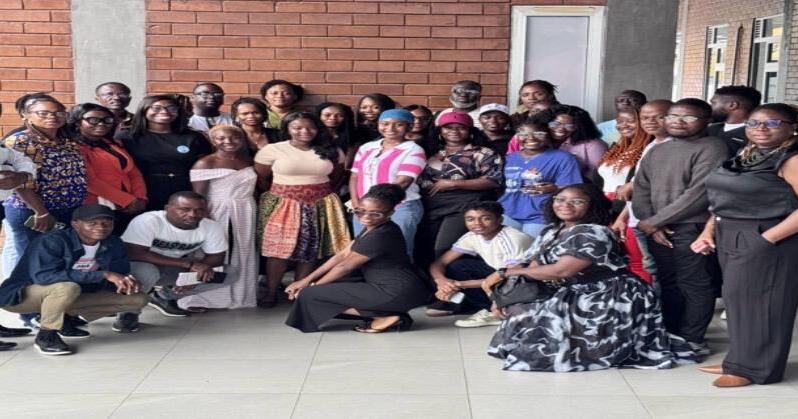
A local reproductive health and rights working group has raised an alarm over the lack of transparency in a five-year, US$176 million bilateral health agreement signed between Liberia and the U.S. government in December 2025.
Members of the Informal Working Group on Reproductive Health and Rights—a coordination platform of civil society actors, advocates, and health partners working together to protect and advance reproductive health, rights, and access to services in Liberia—said there hasn’t been a clear explanation of the deal to educate the populace on the agreement. They noted that the deal excluded critical maternal health issues such as contraceptives and safe abortion services.
While countries including Ghana and Zambia have rejected the U.S. health deal proposed to fourteen African nations, Liberia has moved forward with it. According to Reuters, those nations rejected the United States’ terms for bilateral health assistance, particularly due to the mandatory requirement to share sensitive health data.
Similarly, late last year, Zimbabwe rejected the U.S. terms for health assistance, specifically opposing the demand to share national pathogen data without any corresponding guarantee of access to any medical innovations—such as vaccines, diagnostics, or treatments—that might result from that shared data. Consequently,
Liberian CSOs are expressing deep concerns over data sovereignty, funding commitments, and the future of maternal health, areas that the Liberian government otherwise heavily promotes.
Under the agreement, the United States will provide up to US$125 million in health assistance over the next five years to support HIV/AIDS, malaria, and maternal and child health. While Liberia will increase its domestic health spending by nearly 51 million dollars.
“Currently, as we speak, we have this package that we don’t know what is in it,” said Naomi T. Solanke, executive director of the Community Health Initiative (CHI), who served as a panelist on the topic “Does the U.S.-Liberia Health Compact put Liberians at risk?” The discussion was moderated by Lela Precious Dolo.
Solanke was joined on the panel by Dwede Tarpeh, who served as Gender Focal Point at the Swedish Embassy in Monrovia, and Owens Lavall, a tech enthusiast and CEO of Easy Tech Solutions. Their discussion focused on how the deal—valued at $176 million over five years—places an unrealistic financial burden on Liberia, threatens the nation’s data sovereignty, and leaves critical areas like women’s reproductive rights and maternal health entirely in the dark. All panelists shared these pressing concerns.
The U.S. Global Health Agreement is part of a new approach to health support. It moves from long-term donor support through NGOs and contractors to time-bound government agreements, expecting countries to assume greater responsibility over time.
What has changed?
Under the agreement, unlike USAID, where their support was through NGOs and CSOS, the U.S government has shifted its support from NGOs and international contractors to direct government-to-government agreements. Support is time-limited, with a defined end date. Liberia must contribute a growing share of the health program costs over time. The focus is mainly on HIV, malaria, tuberculosis, and polio.
Focused areas of the agreement
Key areas of the agreement are HIV/AIDS treatment and prevention, malaria medicines, bed nets, and testing. Tuberculosis diagnosis and treatment, polio vaccines, disease surveillance, and outbreak response. Some frontline health workers’ salaries for covered disease areas.
What is not covered?
Maternal and newborn health, family planning, and contraceptives. Routine child immunization, excluding polio. Nutrition programs, health system strengthening, and community health NGO support.
CSOs are concerned
As an advocate whose work focuses on improving access to care for women, girls, adolescents, and underserved communities, Solanke pointed out that the decision to leave out support for maternal health, family planning, adolescent health, nutrition, and community health puts many women and girls at risk who already have too little access to basic health services.
“I feel that we are in a space where we need help. But when people who are in a position of power are getting us the help that they think is good for us, they are just going to grab anything. One of the things that’s stuck in my head right now is, are we, as a country, able to raise our quota to match the US$176 million? she asked?
“We all know that. And if we are pushed to raise our quota [ Liberia share of the U.S health deal] then who is going to pay for it? The poor people. We are all going to pay for it indirectly.”
She further noted that health systems are currently struggling. Just before the recent USAID funding cut-offs, community health workers’ services had proven highly effective; they were following up on complicated cases, pushing referrals, and motivating Traditional Trained Midwives (TTMs) to report cases because they were being compensated. This structured support created a visible downward shift in maternal death rates across Liberia.
Tarpeh focused her presentation on health financing, co-financing, and long-term sustainability. Her analysis examined what self-reliance truly means for Liberia, whether the government can realistically take on escalating health costs, and what civil society should demand to ensure health financing remains transparent, properly planned, and protective of vulnerable communities.
She believed the agreement is “transactional” and mainly benefits the U.S. “The compact is one thing, but other agreements and other discussions are happening around the compact,” she said.
Drawing from her decades of experience working on donor projects, she stated that Liberia has failed to meet other existing co-financing agreements. Now that key donors, including USAID, have shut down specific funding streams; she questioned whether the country will be able to meet its financial commitments for this deal.
“Liberia has to be clear about what this is going to cost—not just to contribute, but where are you taking the money from, and how are you going to manage your package of essential services? What are you going to do if you can’t meet your target?”
Owens Lavall helped explain the concept of data sovereignty, focusing on why health data must be protected, who should control Liberians’ health information, and what specific safeguards are needed as digital health systems expand.
“My biggest concerns have to do with the protection of our health information, because the compact is not vividly explained, so we do not know what the end-to-end statements are,” Lavall warned.
“For us, it’s important to focus on the sovereignty of our information because we know we do not want just anybody to have access to our data; we believe health information is very, very important. So for us, it is very vital to know who’s handling our data collection and where that data is being stored.”
Lavall added that the text of the health compact remains scanty regarding these crucial digital safeguards.
The Strategy Moving Forward: Decentralized Advocacy
Despite the Memorandum of Understanding (MOU) already being signed, the implementation plan remains hidden from the public eye. Activists stated that while international NGOs have not fully begun executing the compact, local civil society is preparing a coordinated pushback.
Rather than lobbying senior ministry leadership directly, activists plan to decentralize their advocacy. They intend to target specific divisions within the Ministry of Health—such as the Family Health, Mental Health, and Community Health divisions—to hold officials accountable to Liberia’s existing national policies, which run through 2032.
“We can push back,” Solanke said. “It’s holistic. You cannot treat one and leave the other. The more we understand, the more we can organize, educate the population, and challenge what is happening.”
Long before CSOs publicly voiced their concerns about a lack of transparency, Nimba County District #9 Representative Taa Wongbe had already called on the government to disclose the full, unrestricted details of the agreement.
“We warmly welcome the US$176 million MOU,” Representative Wongbe said in an official statement published to his social media page. “But partnership does not replace responsibility. Liberians deserve to know exactly what’s in this agreement.”
Credit: Source link
Comments are closed.