

Criminal Court C Takes Charge of US$19.2M Cocaine Case | Legal
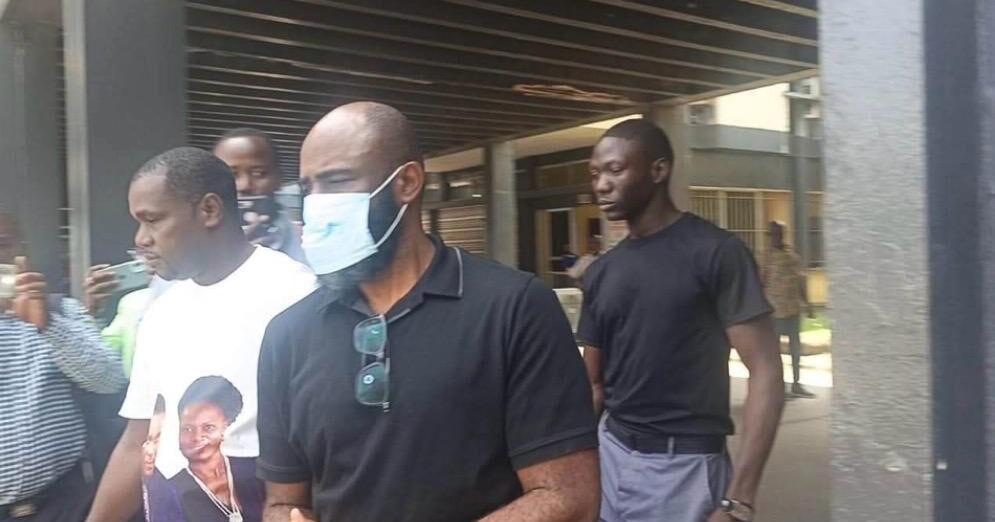
The Monrovia City Court has found sufficient evidence to forward Global Logistics Services (GLS) Operations Manager Paul J. King and several co-defendants to Criminal Court “C” for trial in the landmark US$19.2 million cocaine trafficking case.
In a ruling delivered on Monday, Stipendiary Magistrate Ben Barco held that prosecutors from the Ministry of Justice and the Liberia Drug Enforcement Agency (LDEA) had established probable cause to prosecute the defendants under Liberia’s Amended Controlled Drugs and Substances Act.
The ruling marks a significant development in one of the country’s largest narcotics prosecutions, clearing the way for a full criminal trial.
However, the court’s decision has also drawn attention to the absence of the alleged shipper of the intercepted consignment from the current indictment, despite the individual being identified in investigative documents presented during the preliminary examination.
King has been charged alongside Michael U.S. Brown, Raheem Ousman Ali, Oscar Brown, Emmanuel Kpeh, and others yet to be identified.
The ruling followed weeks of preliminary hearings during which state prosecutors presented witnesses, documentary evidence, and investigative findings linking the accused to an alleged attempt to traffic cocaine through Roberts International Airport (RIA).
Magistrate Barco ruled that the prosecution had met the legal standard required at the preliminary stage.
“The court finds that probable cause exists. The evidence adduced so far, if unrebutted, is sufficient to warrant the defendants to answer to the charges of drug trafficking,” the magistrate ruled.
The court emphasized that a finding of probable cause does not amount to a conviction but merely establishes that sufficient evidence exists for the defendants to stand trial.
The defendants have pleaded not guilty to charges including unlawful possession, importation, conspiracy, and trafficking of controlled narcotic substances.
Lead defense counsel Cllr. Amara Sheriff argued that the prosecution’s evidence was largely circumstantial and insufficient to sustain the charges. He subsequently sought bail for his clients and vowed to challenge the government’s case during trial.
Under Liberia’s amended anti-drug law, trafficking narcotics above the statutory threshold is classified as a non-bailable offense and carries severe penalties, including lengthy prison terms and substantial fines upon conviction.
The prosecution’s case centers on the interception of six cargo boxes at Roberts International Airport in early June 2026.
Testifying as the government’s first witness, LDEA Chief Investigator Col. Moses L. Meah said the investigation began on June 5, 2026, after King allegedly contacted Arthur Abdullah, Chief Executive Officer of Express Handling Services, requesting an airway bill for six boxes destined for England.
According to Meah, the shipment was processed under Airway Bill No. 020070040960, listing “EM Van Group of Companies” on 20th Street, Sinkor, as the shipper and Ousman Ali as the consignee.
The investigator testified that King instructed Express Handling Services to collect the cargo from his residence on VP Road in Old Road, Sinkor.
Before company personnel arrived, Meah alleged that co-defendant Emmanuel Kpeh delivered the six boxes to King’s residence, where they were received by King’s housemate, Marie Garbiah. Kpeh allegedly handed Garbiah US$2,150, which investigators say was intended to cover cargo processing fees.
According to the testimony, Garbiah later turned both the six boxes and the money over to an employee of Express Handling Services, after which the cargo was transported to Roberts International Airport.
At the airport, the cargo underwent routine security screening by GLS Menzies personnel.
Meah testified that screener Ruth Gbarpaywhea became suspicious after scanning the boxes and requested a mandatory physical inspection.
During the search conducted on June 7, investigators allegedly discovered a white powder concealed inside boxes declared as containing “Maggie cubes and lappers.”
The substance later tested positive for cocaine using a United Nations Office on Drugs and Crime (UNODC) field testing kit.
Authorities said the seized narcotics weighed approximately 237.6 kilograms, with an estimated street value exceeding US$19.2 million.
The shipment was immediately seized and transferred to the Joint Security for further investigation.
During his testimony, Meah alleged that King used his position at GLS to facilitate an organized drug trafficking operation disguised as legitimate cargo handling.
He also challenged the defense to verify the existence of the companies listed on the shipping documents.
“I challenged the lawyers representing him to go and locate EM Van Group of Companies located on 20th Street… including the Asha Group of Companies…,” Meah testified.
Investigators further alleged that co-defendant Michael U.S. Brown had previously been investigated and prosecuted on drug-related charges and was operating under multiple identities.
The defense has denied all allegations.
With the preliminary examination concluded, the case will now be transferred to Criminal Court “C” at the Temple of Justice for trial on the merits.
During the trial, prosecutors are expected to present additional evidence, including laboratory analysis of the seized substance, financial records, telephone records, and CCTV footage from Roberts International Airport.
If convicted, King and his co-defendants face penalties that could include life imprisonment under Liberia’s strengthened anti-narcotics laws.
Credit: Source link