

Court Throws Tweah Acquittal Into Limbo | Legal
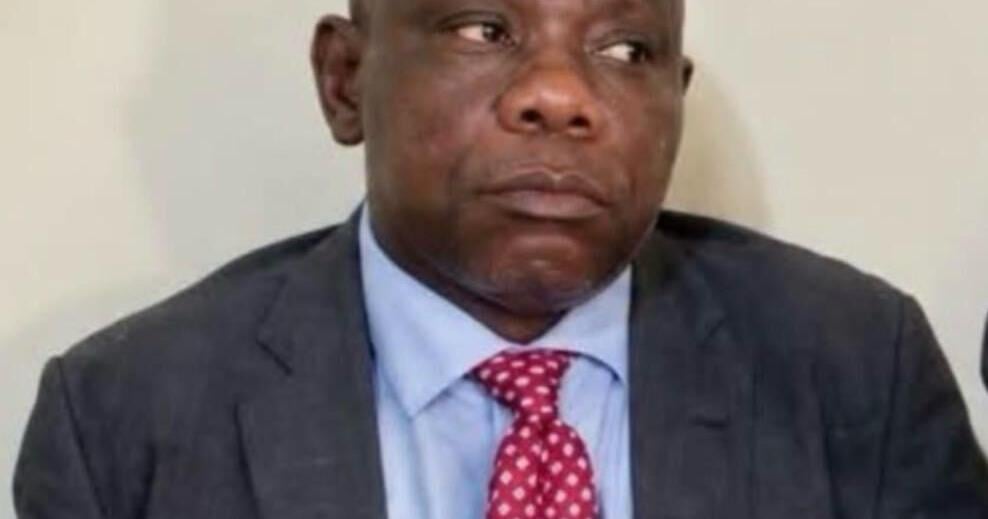
In an extraordinary judicial development with far-reaching legal and constitutional implications, Criminal Court “C” has thrown out the acquittal of former Finance and Development Planning Minister Samuel D. Tweah Jr. into uncertainty after ordering the immediate arrest and criminal investigation of the entire 15-member jury that acquitted him in the high-profile US$6.2 million economic sabotage case.
The unprecedented order, issued Tuesday by Resident Judge Ousman Feika, comes less than three months after the jury returned a verdict of not guilty for Tweah and effectively places one of Liberia’s most politically significant corruption cases back into legal limbo.
Judge Feika ruled that the acquittal cannot stand unchallenged while serious allegations questioning the integrity of the jury’s deliberations remain unresolved.
“All of the jurors will go through a full criminal investigation by the Ministry of Justice,” Judge Feika ordered, directing the immediate arrest and detention of all 12 jurors who served on the panel.
The court’s ruling followed an investigation that uncovered what Judge Feika described as prima facie evidence suggesting possible jury tampering during the trial.
The allegations emerged after the court received sworn affidavits from three former jurors detailing what they claimed were serious violations of court procedures during deliberations.
According to the affidavits, jurors allegedly breached sequestration rules, gained unauthorized access to mobile phones, attended social gatherings while under sequestration, and may have communicated with individuals interested in the outcome of the case.
Those allegations prompted Judge Feika to summon all jurors, along with the court sheriff, bailiff, and jury management officers, for questioning after the May 8 verdict.
The inquiry has now culminated in the arrest order that has dramatically altered the legal status of Tweah’s acquittal.
Tweah, who served as Finance Minister under former President George Manneh Weah, was acquitted on May 8, 2026, after the jury found him and former Financial Intelligence Agency (FIA) Comptroller Moses Cooper not guilty of charges including economic sabotage, theft of property, money laundering, criminal conspiracy, and criminal facilitation.
The same jury, however, convicted former National Security Advisor Jefferson Karmoh and former Solicitor General Cllr. Nyanti Tuan on selected counts, while returning a split verdict involving former FIA Director General Stanley Ford.
Judge Feika initially discharged Tweah in accordance with the jury’s decision.
However, in his latest ruling, the judge concluded that the acquittal could not be treated as final while the legitimacy of the verdict itself is under investigation.
The court’s decision has ignited what legal analysts describe as one of the most significant constitutional debates in Liberia’s recent judicial history.
Immediately after the ruling, Tweah’s lead defense lawyer, Cllr. Arthur Johnson, objected to the court’s action, arguing that it violates Liberia’s constitutional protection against double jeopardy.
Johnson relied on Article 20(a) of the 1986 Constitution and Section 3.2 of Liberia’s Criminal Procedure Law, both of which provide that no individual shall be placed in jeopardy twice for the same criminal offense.
According to the defense, once a properly constituted jury reaches a verdict of acquittal and the trial judge formally discharges the accused, the matter is legally concluded and the court loses jurisdiction over the case.
The defense has argued that any attempt to revisit the acquittal would amount to an unconstitutional second prosecution.
Legal practitioners following the case note that while allegations of juror misconduct may warrant criminal investigation, existing Liberian jurisprudence generally treats an acquittal as final unless overturned by a higher court.
They argue that an investigation into juror conduct does not automatically invalidate the verdict itself.
State prosecutors, however, are advancing a fundamentally different legal argument.
According to the prosecution, constitutional protection against double jeopardy cannot shield a verdict allegedly obtained through corruption or improper influence.
Prosecutors contend that if jurors were bribed, improperly influenced, or otherwise compromised, the proceedings were fundamentally defective and therefore never constituted a lawful trial.
Under that legal theory, reserving the acquittal does not amount to retrying Tweah but instead seeks to determine whether the original verdict was legally valid.
The prosecution has also cited international legal principles recognizing limited exceptions that permit retrials where acquittals were allegedly secured through fraud or corruption.
The controversy had already reached Liberia’s Supreme Court before Judge Feika’s latest ruling.
After the trial court initiated its inquiry into possible jury misconduct, the defense filed a petition for a Writ of Prohibition, arguing that Criminal Court “C” had become functus officio—meaning its authority over the case ended once the defendants were discharged.
Justice-in-Chambers Yussif D. Kaba initially granted a stay order halting the investigation.
However, the Justice later lifted that stay, allowing Criminal Court “C” to continue examining allegations of jury tampering.
At the same time, Justice Kaba directed that all proceedings be conducted in open court rather than in chambers to ensure transparency and public confidence in the judicial process.
It was those public proceedings that ultimately led Judge Feika to conclude that sufficient evidence existed to warrant a criminal investigation of the jurors.
As a result of Tuesday’s ruling, Tweah’s acquittal now remains in legal suspense pending the outcome of the Ministry of Justice investigation.
The former Finance Minister is expected to be summoned back before Criminal Court “C” as the court determines the legal consequences of the alleged jury misconduct.
The Ministry of Justice will now investigate whether members of the jury violated criminal laws or compromised the integrity of one of Liberia’s most closely watched corruption trials.
Legal experts say the case is almost certain to return to the Supreme Court, where the country’s highest tribunal may be required to settle two historic constitutional questions: whether a trial court may reserve or revisit an acquittal after a defendant has been discharged because of alleged jury tampering, and whether an acquittal allegedly procured through fraud or corruption is protected by Liberia’s constitutional prohibition against double jeopardy.
The Supreme Court’s eventual decision is expected to establish a landmark precedent that could shape the future of criminal justice, jury integrity, and constitutional protections in Liberia.
For now, what had appeared to be the final chapter in the government’s prosecution of the US$6.2 million economic sabotage case has been dramatically reopened. The jurors who once delivered the verdict are now themselves the subjects of a criminal investigation, while the legal fate of Samuel D. Tweah Jr. once again hangs in the balance.
Credit: Source link