

Cotton can kickstart Africa’s industrial age
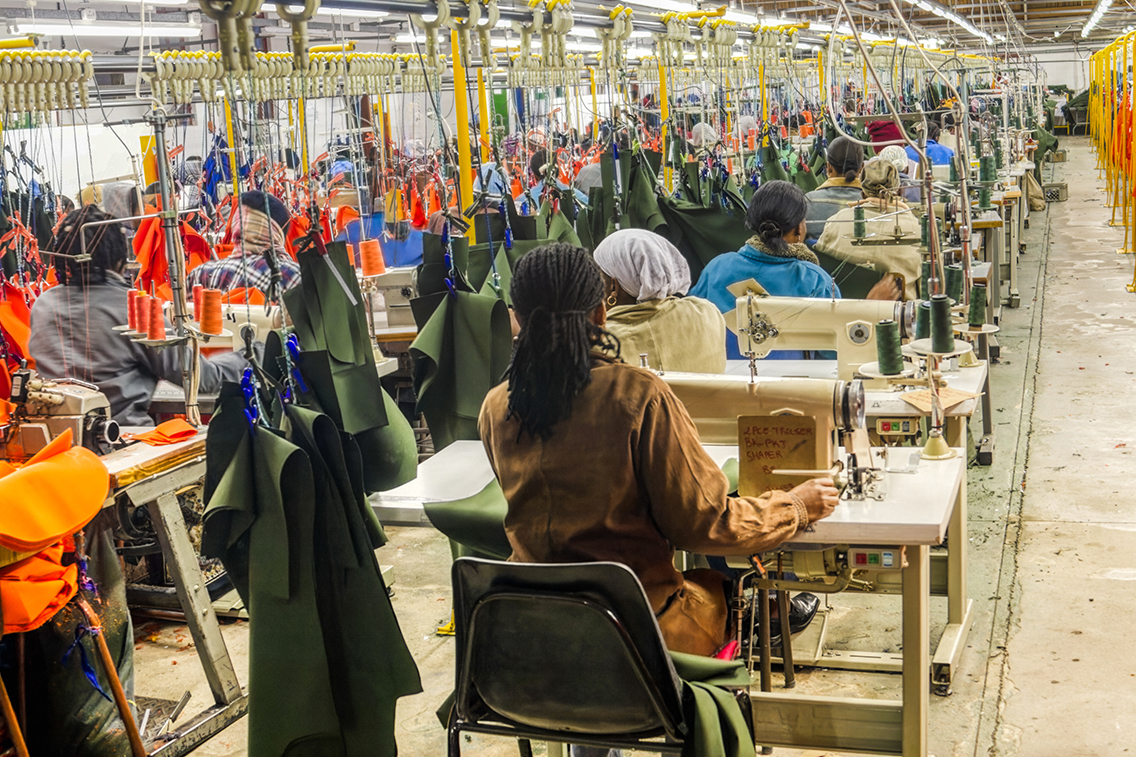
The concerted efforts across the continent to do more at home with cotton may be the trigger that kickstarts an industrial revolution, but it’d need more coordination to work.
“Major global economies like China, America, and Europe all began their industrialisation with textile manufacturing before advancing to high-tech sectors,” says Teboho Kobeli, founder and Managing Director of Afri-Expo Textiles (Pty) Ltd, a 15-year -old company based in Maseru, Lesotho’s capital.
To get there, though, he adds, African textile markets need to move beyond the current basic cut, make, and trim function to full end-to-end operations.
This would include the entire process from sourcing and processing Africa’s own raw cotton to manufacturing and supplying finished textiles and apparel. But this is impossible currently, according to Kobeli, because the different nodes are not working together.
“African countries and cotton producers currently operate in fragmented silos without centralised coordination,” the Basotho entrepreneur says in an interview with New African.
“We have to stop working in silos,” he adds.
Kobeli’s decision to set up a textile factory in Maseru began in China in the mid-2000s, after years of importing from South Africa. China’s model, he says he thought at the time, of setting up multiple factories and structuring ecosystems for production and export, would work perfectly for Lesotho.
In the decade and a half since operations began, Kobeli has had a front-row seat in not just the opportunities in the sector, but also the many challenges of running an export-oriented business.
According to Kobeli, the fragmentation has meant that his company, like other players in Lesotho’s vibrant textile manufacturing sector, imports the bulk of its raw textiles from China and other Asian countries.
The irony, of course, is that a significant proportion of the cotton from which the imported textiles are made is grown in African countries. It is then shipped out in raw form, processed, and sent back the other way.
“I am tired of importing from China. We want to do A to Z, but right now we are doing what we can,” Kobeli says.
Lesotho’s core
Textile and apparel is one of Lesotho’s main industries, which has made the country one of the biggest beneficiaries of the African Growth and Opportunity Act (AGOA). The country has consistently ranked among Sub-Saharan Africa’s top exporters of apparel to the US, in value and volume, with exports reaching $237.3 mn in 2024.
Manufacturing in general, mainly textiles and footwear, is now the second-largest employer after the state in the country of 2.4mn people. That scale means that any disruptions have immediate macroeconomic effects, and there have been several in recent times.
Pandemic shutdowns in 2020, for example, led to immediate job cuts, and the industry only began recovering in 2021.


The sector faced its next existential crisis with US President Donald Trump’s ‘Liberation Day’ tariffs, which slapped Lesotho’s exports with a 50% rate, one of the highest in the world at the time. The rate was eventually lowered to 15% but even that was still high enough to force the country’s central bank to cut its growth projections for 2025 and 2026.
For Kobeli, both events should have prompted introspection about how the country views long-term investment in the critical sector.
Lesotho, he points out several times, is primarily a cut, make and trim base where only 20 percent of manufacturing occurs, while high-value tasks like merchandising, designing, and fabric development still happen in Asia. Add to that the fact that a large chunk of the country’s factories are foreign-owned and run, which means even more value does not stay within its borders.
“AGOA created a lot of jobs but people were earning minimum wage,” he says, “and the people investing in the factories were not making long-term investments. They were just paying wages, utilities, and rents.”
Can cotton power Africa’s industrialization?
Made in Africa
The way Kobeli sees it, African governments have been outdoing themselves when offering incentives to foreign investors, but haven’t been doing the same for homegrown entrepreneurs.
“Foreign investors flee COVID, tariffs, yet if we had built this sector for ourselves, we would continue doing the work even after they leave,” he says.
His model of choice would be China’s approach, which incentivises manufacturers and supports exporters with rebates, allowing the country’s goods to stay competitive even amid tariffs and uncertainty.
In Kobeli’s experience, for African-owned enterprises like his to grow at scale, they need solutions such as trade finance and structured incentives to support equipment and raw material acquisition.
Given Lesotho’s recent experiences, he adds that the first export focus should be the vast local and regional demand before trying to compete globally.
Lesotho’s recent experiences with the US market have triggered a rapidly growing view in Maseru that it needs to find other markets, a shift Kobeli believes will help build something more sustainable. Lesotho has increased exports to neighbouring South Africa and is exploring other markets on the continent.
“We can produce for ourselves first,” Kobeli says, “the opportunity is already there for Africans to take care of their own people.”
The entrepreneur believes that building full end-to-end operations in Africa would kickstart the industrial age. Even more importantly, he adds several times, Lesotho’s experience has shown the textile industry can create mass employment and become a central economic pillar. With this, he mulls, perhaps political stability across the continent is also achievable.
“Production of apparel will always be relevant,” he mulls, “because clothes are a basic need.
Crédito: Link de origem