

COP17 | IUCN welcomes COP17 biodiversity commitments but warns funding gaps threaten 2030 targets

COP17 | IUCN welcomes COP17 biodiversity commitments but warns funding gaps threaten 2030 targets
2026 UN Biodiversity Conference venue in Yerevan, Armenia. PHOTO/IUCN.
By PATRICK MAYOYO
newsdesk@africaeconews.co.ke
The International Union for Conservation of Nature (IUCN) has welcomed a series of landmark decisions aimed at accelerating global efforts to halt biodiversity loss, following the conclusion of the 2026 United Nations Biodiversity Conference (COP17) in Yerevan, Armenia, while warning that insufficient funding and slow implementation continue to threaten the achievement of international conservation targets by 2030.
The two-week conference, which concluded on 31 October, delivered important progress towards implementing the Kunming-Montreal Global Biodiversity Framework (KMGBF), including stronger recognition of the contributions of Indigenous Peoples and local communities, local and regional governments, women, young people, businesses and other non-state actors.
IUCN welcomed the strengthened recognition of Indigenous Peoples and local communities, sub-national governments, women, young people, businesses and other non-state actors in biodiversity governance. However, the organisation cautioned that COP17’s outcomes did not fully match the ambition and financial resources required to address the global biodiversity crisis.
With only four years remaining until 2030, IUCN stressed that countries must translate political commitments into practical conservation action, supported by adequate funding, stronger partnerships and effective monitoring systems.
The organisation also commended Armenia’s COP17 Presidency for its leadership in steering complex negotiations towards a conclusion.
A major outcome of COP17 was the first worldwide assessment of collective progress towards the goals and targets of the Kunming-Montreal Global Biodiversity Framework, adopted at CBD COP15 in Montreal, Canada, in December 2022.
The framework provides an international roadmap for halting and reversing biodiversity loss by 2030, with a longer-term vision of living in harmony with nature by 2050.
It contains 23 targets, including the commitment to conserve at least 30 per cent of the world’s terrestrial, inland water, coastal and marine areas by 2030, widely known as the 30×30 target.
Other priorities include restoring degraded ecosystems, reducing pollution, tackling invasive alien species and addressing unsustainable consumption and production.
The global review exposed significant gaps between international commitments and actual implementation, highlighting the need for urgent action, particularly in areas where progress has been weakest.
IUCN welcomed the adoption of the Yerevan pathway for accelerating implementation, alongside decisions advancing marine biodiversity conservation and reviewing the programme of work on inland waters biodiversity.
IUCN delegation at COP17. PHOTO/IUCN.
These decisions are intended to strengthen efforts in ecosystems where implementation challenges remain significant.
Despite progress on conservation commitments, financing remains one of the biggest obstacles to implementing the global biodiversity framework.
IUCN welcomed the adoption of criteria for permanent arrangements for the Convention’s financial mechanism, alongside progress on digital sequence information (DSI) and the Cali Fund.
The conference established an open-ended ad hoc working group to advance the operationalisation of the Cali Fund ahead of COP18 in 2028.
The fund is designed to ensure that benefits arising from the commercial and other uses of digital sequence information on genetic resources are shared fairly and equitably, including with Indigenous Peoples and local communities.
COP17 made progress on contribution rates, certificates and funding allocation mechanisms, although further negotiations will be necessary.
The wider financing challenge remains substantial. The KMGBF calls for at least US$200 billion annually to be mobilised from all sources for biodiversity by 2030, including increased international financial support for developing countries.
Germany, Spain and the United Kingdom made new pledges through the Global Environment Facility and the Global Biodiversity Framework Fund. The Netherlands also announced a similar investment in the Tropical Forest Forever Facility.
IUCN emphasised that these commitments must translate into sustained financial flows and practical investments, particularly in countries with significant biodiversity resources but limited conservation funding.
Another important COP17 outcome was the strengthened recognition of Indigenous Peoples and local communities as essential partners in biodiversity conservation.
These communities play a significant role in protecting forests, wetlands, grasslands and other ecosystems through traditional knowledge, customary governance and sustainable natural resource management.
IUCN noted that their contributions were not fully reflected in the first global progress report because of its reliance on national reporting.
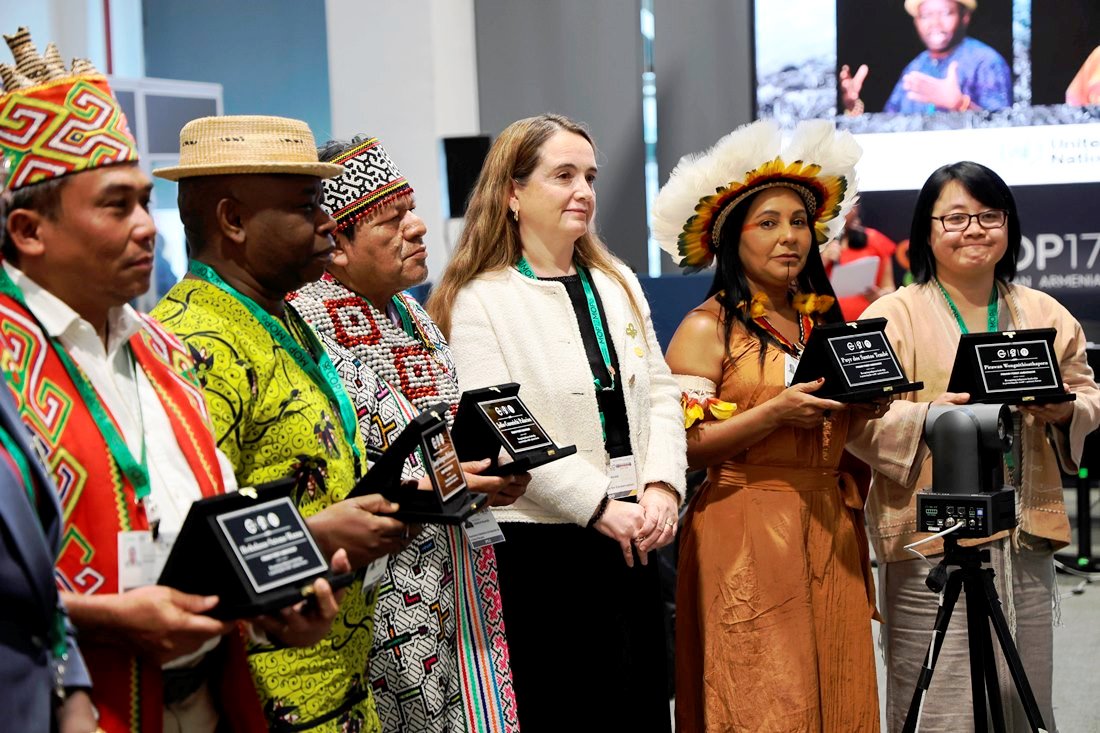
Indigenous primary forest ambassador awards recipients. PHOTO/IUCN.
The organisation therefore welcomed the adoption of the modus operandi for the Subsidiary Body on Article 8(j), which provides a framework for strengthening the full and effective participation of Indigenous Peoples and local communities in biodiversity governance.
COP17 also recognised Indigenous and Traditional Territories as important contributors to biodiversity conservation.
This could strengthen recognition and support for community-managed territories and their contribution to the 30×30 conservation target.
Meanwhile, cities, regions and other sub-national governments demonstrated growing leadership in global biodiversity action, highlighting the importance of local-level implementation in achieving international conservation commitments.
Despite the progress, IUCN expressed disappointment that COP17 did not formally welcome the entry into force of the Agreement on the Conservation and Sustainable Use of Marine Biological Diversity of Areas Beyond National Jurisdiction, commonly known as the BBNJ Agreement or High Seas Treaty.
The agreement establishes an international framework for protecting marine biodiversity in areas beyond national jurisdiction, including through marine protected areas, environmental impact assessments and cooperation on marine genetic resources.
IUCN stressed that cooperation between the Convention on Biological Diversity and the BBNJ Agreement is essential to achieving global ocean conservation targets.
The international community is preparing for the first BBNJ Conference of the Parties, scheduled for January 2027.
The organisation also regretted the removal of references to advisory opinions issued by the International Tribunal for the Law of the Sea and the International Court of Justice concerning states’ obligations in respect of climate change.
The concerns highlight the importance of addressing biodiversity loss and climate change through coordinated international action, given their interconnected impacts on ecosystems, species and natural resources.
IUCN also highlighted two flagship initiatives launched under Armenia’s COP17 Presidency: the Yerevan Global OECM Action Hub and the Yerevan Tech for Biodiversity Monitoring Hub.
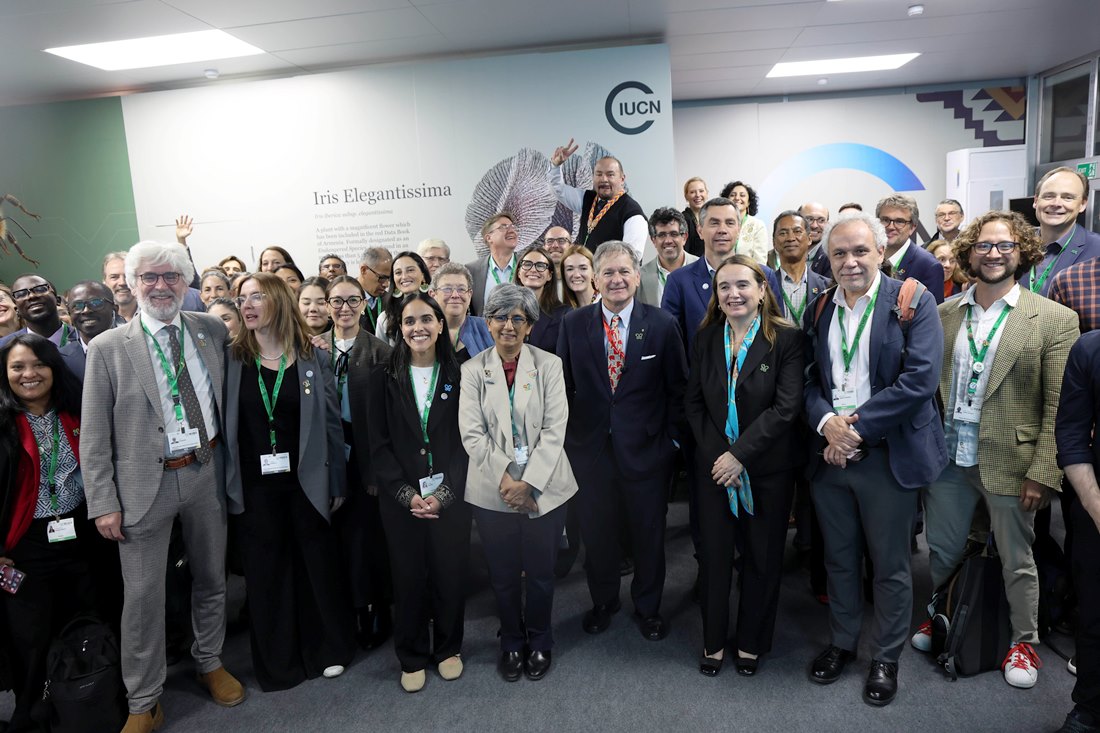
IUCN World Protected and Conserved Areas congress reception group photo. PHOTO/IUCN.
Developed with the Food and Agriculture Organization of the United Nations (FAO) and the CBD Secretariat, the initiatives aim to accelerate and measure progress towards global biodiversity targets.
The OECM Action Hub focuses on other effective area-based conservation measures, which recognise areas outside formally designated protected areas that deliver effective and sustained biodiversity conservation.
These include qualifying community-managed territories and sustainably managed landscapes, expanding opportunities to achieve the 30×30 target.
The biodiversity monitoring initiative seeks to strengthen the use of technology and innovation in tracking conservation progress, improving access to reliable data and supporting evidence-based decision-making.
Following the conclusion of COP17, attention is shifting towards the implementation of its decisions and preparations for future international conservation meetings.
COP18 will take place in Quito, Ecuador, in 2028, providing another opportunity to assess progress and advance outstanding issues, including biodiversity financing and the operationalisation of the Cali Fund.
In 2027, IUCN will also convene the World Protected and Conserved Areas Congress in Panama City, Panama, in September. The sixth International Marine Protected Areas Congress will provide another important platform for advancing global ocean conservation.
IUCN reiterated its commitment to working with governments and partners to address implementation gaps, strengthen capacity-building and improve biodiversity monitoring.
The organisation said COP17 had established a stronger foundation for effective, equitable and participatory biodiversity action but acknowledged that significant challenges remain.
As the 2030 deadline approaches, the success of the Kunming-Montreal Global Biodiversity Framework will depend on whether governments can mobilise sufficient resources, strengthen partnerships and turn international commitments into measurable conservation results.
The central message from Yerevan is that the world has a global framework for protecting nature, but urgent and adequately funded action is needed to ensure its ambitions become reality.
Crédito: Link de origem