

Consequential Revenue Audit In Sight | News
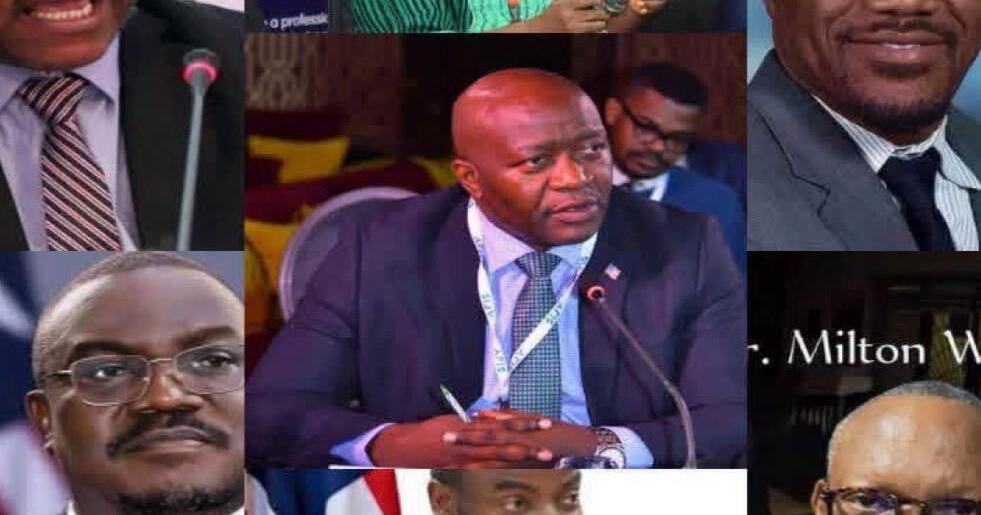
The Legislature is set to launch one of its most consequential public financial oversight hearings in recent years, summoning current and former leaders of the country’s principal economic institutions to explain how billions of Liberian dollars and U.S. dollars in government tax revenues were collected, managed, reconciled, and transferred over a six-year period.
The Joint Public Accounts, Expenditure and Audit Committee (PAC) of the 55th Legislature will convene the hearing on Wednesday, July 15, 2026, following the release of a Special Reconciliation Audit conducted by the General Auditing Commission (GAC). The investigation covers government tax revenues processed through government transitory bank accounts and consolidated government accounts between July 1, 2018, and December 31, 2024.
The hearing, scheduled for 11:00 a.m. in the Chamber of the House of Representatives at the Capitol Building, is expected to bring together current and former officials of the Ministry of Finance and Development Planning (MFDP), the Liberia Revenue Authority (LRA), the Central Bank of Liberia (CBL), and several commercial banks that maintained government transitory accounts during the audit period.
Far more than a routine legislative exercise, the proceedings could become a defining test of Liberia’s public financial management architecture, examining whether the country’s revenue collection and banking systems functioned in accordance with national laws and internationally accepted accounting standards.
Unlike many legislative investigations that focus on a single administration, this audit spans two governments, several finance ministers, multiple revenue commissioners, and successive Central Bank governors.
Those summoned include LRA Commissioner General James Dorbor Jallah, LRA Commissioner for Internal Audit Rufus Mahn, Finance Minister Augustine Kpehe Ngafuan, Former Finance Ministers Samuel D. Tweah Jr. and Boima S. Kamara, and MFDP Controller General Elwood T. Netty. Others are Deputy Controller and Accountant General Prince Lighe Sr., former Controller General Janga A. Kowo, CBL Executive Governor Henry F. Saamoi and former CBL Governors Milton Alvin Weeks, Nathaniel R. Patray, and J. Aloysius Tarlue.
The Committee has also invited representatives of commercial banks that managed government transitory accounts during the audit period, including Afriland First Bank Liberia, Ecobank Liberia, Bloom Bank Africa Liberia, International Bank (Liberia) Limited, GTBank Liberia, LBDI, UBA Liberia, and First International Bank Liberia.
According to the Committee, the hearing seeks to examine the Auditor General’s findings, clarify issues surrounding government revenue management, and determine whether established financial management laws, regulations, and accounting procedures were consistently followed.
Why the Audit Matters
At the center of the inquiry are government transitory bank accounts—temporary accounts through which taxes, customs duties, fees, and other public revenues often pass before being transferred into the government’s Consolidated Account.
While the use of transitory accounts is common in public financial systems worldwide, they require rigorous reconciliation and oversight because delays, recording errors, unauthorized withdrawals, or incomplete transfers can distort government financial statements and undermine fiscal transparency.
The Legislature’s examination therefore goes beyond identifying accounting discrepancies.
It seeks answers to broader questions: Were all revenues collected by government agencies ultimately deposited into the Consolidated Account? Were transfers completed promptly and accurately? Did reconciliation processes comply with Liberia’s Public Financial Management Law? And were sufficient internal controls maintained to prevent leakages or misstatements?
These are questions that directly affect the credibility of government finances.
Implications for Fiscal Policy
Economists note that government revenue serves as the foundation of fiscal policy.
Without reliable revenue data, policymakers risk preparing budgets based on inaccurate assumptions regarding available resources.
If revenues are overstated, governments may authorize expenditures that exceed actual income, widening fiscal deficits.
Conversely, if revenues are understated or improperly recorded, critical sectors—including education, healthcare, infrastructure, and security—could receive less funding than the government can genuinely afford.
A thorough reconciliation therefore helps ensure that national budgets reflect actual fiscal capacity rather than estimates clouded by accounting inconsistencies.
It also enables lawmakers to exercise more informed budgetary oversight when approving annual appropriations.
Although the audit focuses primarily on tax revenue, analysts say its implications extend to monetary policy as well.
The Central Bank relies heavily on accurate government financial information when managing liquidity in the banking system, forecasting government cash flows, coordinating debt issuance, and maintaining macroeconomic stability.
Government deposits constitute a significant component of banking sector liquidity.
Unreconciled balances or inaccurate reporting can complicate liquidity management and reduce the effectiveness of monetary policy decisions.
For this reason, the participation of both current and former CBL governors reflects recognition that sound fiscal management and monetary stability are closely interconnected.
The hearing also comes amid continuing public calls for stronger accountability in the management of state resources.
Over the past decade, reports issued by the General Auditing Commission (GAC) have frequently highlighted weaknesses in internal controls, delayed reconciliations, documentation deficiencies, and compliance challenges across various public institutions.
Whether those findings resulted from administrative weaknesses, procedural shortcomings, or systemic governance failures has often remained unclear because many audit recommendations have not received comprehensive public follow-up.
Lawmakers appear intent on changing that pattern.
By conducting the hearing publicly, the Committee is providing citizens, civil society organizations, development partners, and the media an opportunity to observe firsthand how officials respond to questions arising from the audit.
Such openness, governance specialists argue, strengthens democratic accountability by allowing public scrutiny rather than limiting discussions to closed-door proceedings.
The significance of the hearings will ultimately depend less on assigning responsibility than on determining how Liberia can strengthen its financial management systems going forward.
Experts say the process presents an opportunity to identify institutional weaknesses in revenue collection, banking arrangements, reconciliation procedures, internal auditing, and inter-agency coordination.
Should lawmakers use the findings to recommend stronger controls, improved digital reconciliation systems, clearer reporting standards, and stricter compliance with public financial management laws, the hearings could produce reforms extending well beyond the audit period itself.
Conversely, if the proceedings become politicized or fail to produce concrete recommendations, an opportunity to improve fiscal governance could be lost.
A Test of Oversight
In announcing the hearing, the Joint Public Accounts, Expenditure and Audit Committee emphasized that the proceedings form part of its constitutional oversight mandate and broader agenda to strengthen transparency, accountability, and public confidence in Liberia’s governance institutions.
The Committee has encouraged citizens, civil society organizations, development partners, government institutions, and the media to attend, describing public participation as essential to promoting accountability.
As current and former custodians of Liberia’s economic management prepare to testify, the hearings promise to shed light on one of the country’s most important public finance questions—whether government revenues collected over six years were fully accounted for, properly safeguarded, and managed in accordance with the law.
The answers could not only clarify the audit’s findings but also shape future reforms aimed at strengthening Liberia’s fiscal discipline, improving revenue integrity, and reinforcing confidence in both the country’s financial governance system and its broader macroeconomic management.
Credit: Source link