

Congo’s Ebola outbreak set to become deadliest on record, warns WHO
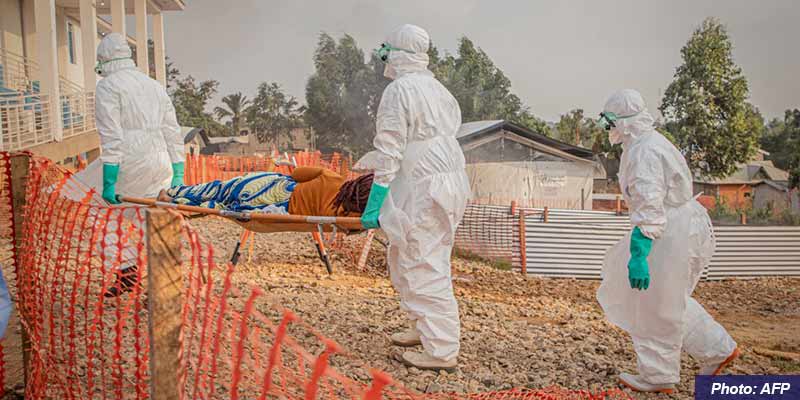
• The ongoing Ebola outbreak in Democratic Republic of the Congo (DRC) is on track to surpass the deadliest one in history, World Health Organisation (WHO) chief Tedros Ghebreyesus warned on August 12.
Situation in DRC
• Local officials in DRC reported that deaths from the Ebola virus disease have surpassed 2,000, with half of that number in the last 20 days.
• The current Ebola outbreak caused by the Bundibugyo species, was declared by DRC health officials on May 15.
• Two days later, the WHO declared it a public health emergency of international concern.
• With more than 4,000 confirmed cases, it is both the second-largest and the fastest-growing on record.
• Children and women continue to bear a disproportionate share of the outbreak in Ituri, the most affected province.
• Only West Africa’s 2014 to 2016 outbreak, which saw more than 11,000 deaths, was larger.
• Just three months into this Ebola emergency, the death toll is already close to the total number of people killed in the 2018 to 2020 epidemic, which saw fewer overall cases.
• Alarmed by the virus’s rapid spread, local health officials have recently raised concerns that the virus could be mutating.
• The Ebola Bundibugyo virus is proving hard to control in eastern DRC because of ongoing violence by non-State armed groups in the remote and mineral-rich region and a lack of accessible healthcare for vulnerable populations.
• In addition, at least a dozen facilities treating Ebola have been attacked, largely due to fear, misinformation and deep community mistrust of outside authorities.
• There are no approved vaccines or treatments for the Bundibugyo strain.
• Vaccine trials have been authorised in Canada and the UK, though results are likely several months away.
• Treatment trials are underway in the DRC’s Ituri province – the epicentre of the outbreak.
Ebola virus disease
• Ebola virus disease (EVD), formerly known as Ebola haemorrhagic fever, is a severe, often fatal illness affecting humans and other primates.
• The virus is transmitted to people from wild animals (such as fruit bats, porcupines and non-human primates) and then spreads in the human population through direct contact with the blood, secretions, organs or other bodily fluids of infected people, and with surfaces and materials contaminated with these fluids.
• Ebola enters the body through cuts in the skin or when touching one’s eyes, nose or mouth.
• The symptoms of Ebola infection can be sudden and include fever, fatigue, muscle pain, headache and sore throat. These are followed by vomiting, diarrhoea, rash, and internal and external bleeding.
• The average EVD case fatality rate is around 50 per cent. Case fatality rates have varied from 25 per cent to 90 per cent in past outbreaks.
• EVD first appeared in 1976 in two simultaneous outbreaks, one in what is now Nzara, South Sudan, and the other in Yambuku, Democratic Republic of the Congo (DRC). The latter occurred in a village near the Ebola River, from which the disease takes its name.
• The 2014-2016 outbreak in West Africa was the largest Ebola outbreak since the virus was first discovered in 1976.
• Community engagement is key to successfully controlling outbreaks.
• There is as yet no proven treatment available for EVD. Supportive care — rehydration with oral or intravenous fluids — and treatment of specific symptoms improves survival. However, a range of potential treatments including blood products, immune therapies and drug therapies are currently being evaluated.
Credit: Source link
Comments are closed.