

Congo Ebola Now Second Largest in History: Contact Tracing Gap Fuels Crisis
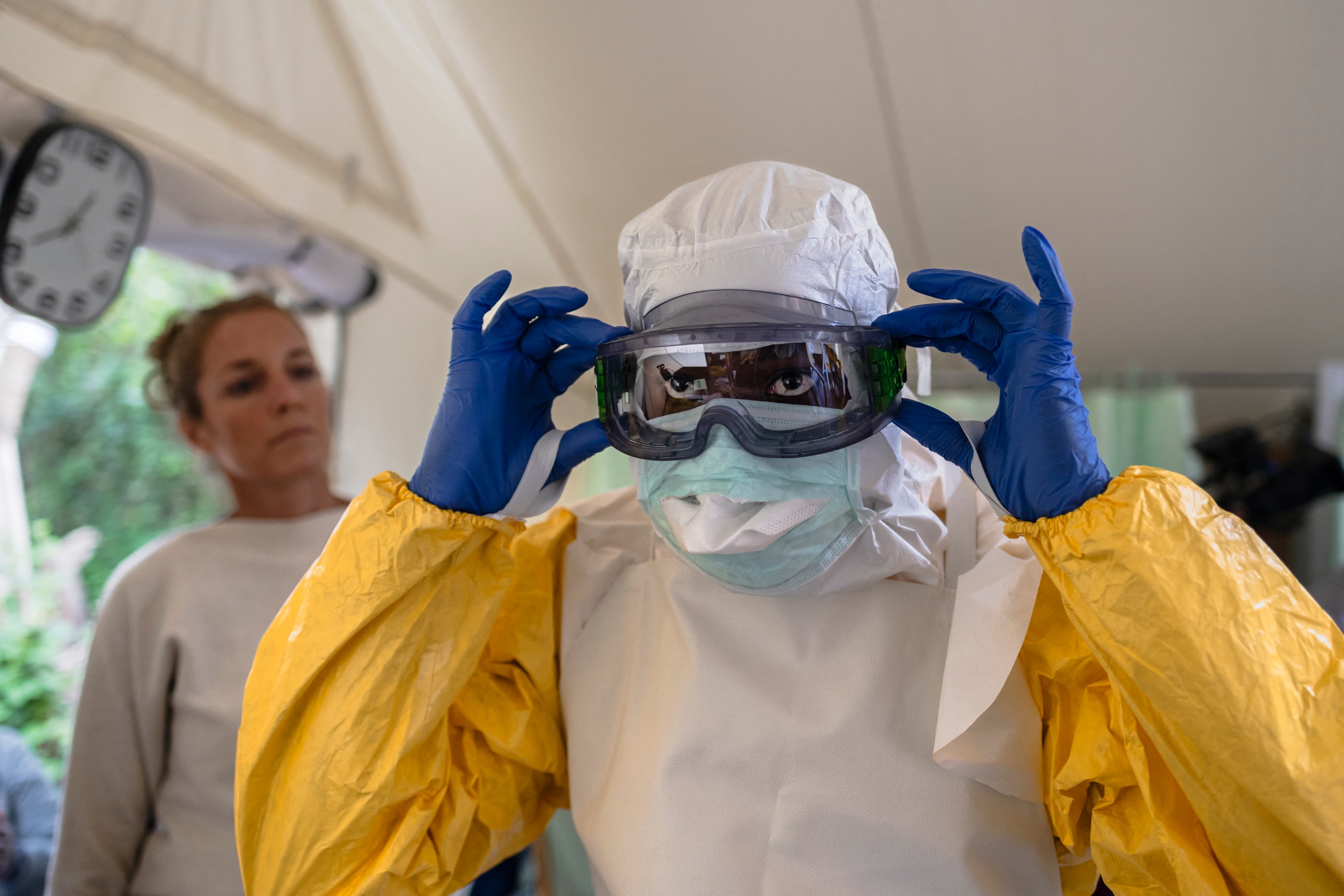
The Democratic Republic of Congo’s Ebola outbreak officially became the second-largest in the disease’s recorded history on Friday, surpassing the case total of the country’s devastating 2018–2020 epidemic in just over two months — while the two containment tools that stopped prior outbreaks are either missing or running far below the minimum threshold needed to work.
The DRC Ministry of Communications confirmed 3,532 cases and 1,556 deaths as of Friday morning. The World Health Organization, which rounds figures from slightly different reporting windows, placed the count at 3,553 confirmed cases and 1,558 deaths. Both figures surpass the 3,481 total cases recorded during the 2018–2020 eastern DRC outbreak — which lasted nearly two years. The current outbreak was declared on May 15, 2026. Only the 2014–2016 West Africa epidemic, which ended with more than 28,616 cases and 11,310 deaths across Guinea, Liberia, and Sierra Leone, was larger.
As of July 29, 3,442 confirmed cases and 1,521 deaths had been recorded, with 797 people hospitalized or in isolation across five provinces, according to the DRC’s Ministry of Health. The death toll’s roughly 50-percent jump in a single week partly reflects a backlog of previously unconfirmed or unrecorded cases finally entering the official count, the Africa Centres for Disease Control and Prevention said.
By the Numbers: Scale of a Historic Emergency
The outbreak is concentrated in Ituri Province in northeastern DRC, which accounts for approximately 90 percent of all cases — more than 2,988 confirmed infections and 1,238 deaths spread across 28 of its 36 health zones, according to the European Centre for Disease Prevention and Control. Transmission has spread into North Kivu, South Kivu, Haut-Uélé, and Tshopo — a total of 46 health zones across five provinces. More than 100 healthcare workers have been infected since the outbreak’s declaration on May 15.
Why Containment Is Failing: Two Missing Tools
Understanding why this outbreak is growing faster than any prior Ebola emergency requires understanding what stopped prior outbreaks — and what isn’t available here.
The 2018–2020 DRC outbreak, which killed 2,287 people, was caused by the Zaire strain of Ebola virus. That strain had two licensed tools that worked in tandem: Ervebo, the only approved Ebola vaccine in the world, which was used to vaccinate the contacts of known cases in a “ring vaccination” strategy; and two approved monoclonal antibody therapies that reduced fatality among hospitalized patients. Together, these allowed responders to interrupt transmission chains even when contact tracing was imperfect — vaccinating identified contacts meant that even if some contacts were missed, those who were found could be protected pharmacologically.
The current outbreak is caused by Bundibugyo ebolavirus (BDBV), one of four Orthoebolavirus species that infect humans. No approved vaccine exists for Bundibugyo. WHO reviewed the available evidence and determined that Ervebo’s cross-protection against a genomically distinct species is insufficient to recommend its use. No approved antiviral or monoclonal antibody therapy exists for Bundibugyo either. As a result, containment depends entirely on one tool: contact tracing — identifying every person exposed to a confirmed case and monitoring them for 21 days.
The problem is that contact tracing coverage stands at 78.3 percent as of the latest available data. WHO says the minimum required for outbreak control is 90 to 95 percent — a threshold cited in a prior TechTimes analysis of this outbreak. The gap means roughly one in five exposed contacts is not being monitored — and those unmonitored contacts are undetected transmission chains. In prior DRC outbreaks, ring vaccination compensated for contact tracing gaps by protecting the contacts who were found. That compensation mechanism does not exist in 2026.
The result is a compounding failure: the one available containment tool is running below the minimum threshold for success, and the pharmaceutical backstop that could offset its shortfall does not exist for this viral species.
A Rare Strain, a Diagnostic Blind Spot, and a Three-Week Head Start
Bundibugyo virus was first identified in 2007 in the Bundibugyo district of western Uganda, where it caused 149 cases. A second outbreak in Isiro, DRC, in 2012 produced approximately 57 confirmed cases. Those prior outbreaks were too small to generate the commercial demand that pharmaceutical companies require to justify clinical development of a vaccine or treatment — a documented market failure in global health preparedness that a prior TechTimes report examined in detail. No Bundibugyo-specific vaccine, diagnostic, or therapeutic was ever developed before 2026.
The case fatality ratio has held at approximately 25 to 50 percent in prior Bundibugyo outbreaks. The current outbreak’s observed case fatality ratio among confirmed cases — roughly 39 to 44 percent — falls within that historical range, though WHO has warned that the true toll may be two to four times higher than reported figures, reflecting community deaths that occur before patients ever reach a treatment center.
Compounding the pharmaceutical gap was a diagnostic blind spot that gave the outbreak a critical head start. The most widely deployed molecular diagnostic platform in DRC — the Cepheid GeneXpert — was calibrated for Zaire ebolavirus only. Its PCR probes are designed to bind to the glycoprotein gene sequences of the Zaire strain; because Bundibugyo ebolavirus’s genome differs from Zaire by more than 30 percent at the nucleotide level, those probes cannot hybridize with Bundibugyo’s corresponding sequences, as TechTimes reported when the blind spot was first disclosed. Every initial GeneXpert test returned negative. The virus circulated undetected in Ituri for approximately three weeks before WHO received an alert on May 5 about an unknown high-mortality illness in Mongbwalu Health Zone. The International Pandemic Preparedness Secretariat estimated that diagnostic delay cost the response approximately one month of containment time.
The first known symptomatic case — a health worker in Bunia — developed symptoms on April 24, 2026. The outbreak was not confirmed until May 15, when INRB laboratory results identified Bundibugyo virus. By that time, the virus had already spread through multiple health zones in Ituri.
Two-Thirds of Deaths Are Happening in Communities
Among the most alarming metrics in the current outbreak is where people are dying. Africa CDC data indicate that 63 percent of confirmed deaths in recent reporting periods have occurred outside treatment centers — meaning most people infected with Bundibugyo are dying at home or in community settings before they can be isolated, their contacts traced, or their remains safely buried.
This matters beyond the individual deaths. Ebola-positive corpses remain highly infectious. When deaths occur in communities and families conduct traditional burials without the safe burial practices that trained response teams use, the body becomes a transmission event. Africa CDC Director-General Dr. Jean Kaseya confirmed this dynamic in a July 30 statement, warning that approximately two-thirds of deaths were occurring in communities — among people who never reached a health facility — making it impossible to enforce the burial practices that would interrupt transmission.
Africa CDC Director-General Dr. Jean Kaseya identified the combination of contact tracing delays, poor roads, active hostilities, and deep-seated community mistrust as structural drivers of this failure. Armed conflict involving the Allied Democratic Forces and other militia groups in eastern DRC restricts humanitarian access, limits health worker movement, and has historically fueled community mistrust of outside responders. In July, an attack on a hospital and treatment center in Ituri’s Nyakunde health zone forced international partners to temporarily evacuate, disrupting surveillance and supply operations at a critical moment, as TechTimes reported.
Health Workers Strike Over Wages Owed Since May
On July 27, approximately 100 doctors, nurses, and support staff at the Elikya Ebola Treatment Center in Bunia voted unanimously to stop work, demonstrating outside the facility and demanding wages they had not received since the outbreak was declared in May. A similar action had taken place the prior week at Bunia General Hospital — the region’s largest medical center — where workers told the Associated Press they had received no payment at all since the outbreak began.
“Since the Ebola virus disease outbreak was declared, we’ve been demanding payment for our work,” Dr. Biensi Kano, a member of the epidemiological surveillance committee in Bunia, told the Associated Press.
A strike at an Ebola treatment center is not a labor dispute — it is a containment failure. Case isolation, contact tracing, infection prevention, and safe burial operations all depend on the workers who walked off the job. When those workers are absent, exposed contacts go untraced, infectious patients go unmonitored, and the transmission chains multiply.
Dr. Adelard Lufungula, operations manager for the DRC’s Ebola response, said on July 26 that the payment backlog was “being resolved,” with workers now being paid via mobile money rather than cash, and that arrears would be cleared within days. Congo’s Prime Minister Judith Suminwa visited treatment hubs in Rwampara and Mongbwalu in late July, where she faced direct demands from striking staff and cited more than $50 million disbursed by the government alongside international partner funding. Health Minister Roger Kamba said delays were partly the result of fraudulent names added to payroll lists, creating a verification backlog, as TechTimes reported in detail.
What Funding Has Reached the Ground
The WHO and Africa CDC launched a joint six-month continental response plan in June, seeking $518 million to fund surveillance, treatment infrastructure, community engagement, and cross-border preparedness through November 2026. The United Kingdom committed £20 million (approximately $27 million USD, at the July 31, 2026 mid-market rate of £1 = $1.34 USD) on May 21. The European Union pledged €15 million (approximately $17 million USD, at the July 31, 2026 mid-market rate of €1 = $1.15 USD). The United States committed $112 million in bilateral assistance and announced plans to fund up to 50 Ebola clinics — though that proposal met resistance from Uganda’s government and prompted public backlash in Kenya, where a proposed US isolation facility was rejected.
As of the response plan’s June launch, Africa CDC Director Kaseya reported that less than $2 million had actually reached affected countries at that point, despite pledges of approximately $315 million. More than 1,400 Médecins Sans Frontières staff are currently deployed across Ituri, North Kivu, South Kivu, and Tshopo provinces.
Oxford Vaccine Trial Launched — Too Late for This Outbreak
On July 24, a 37-year-old Oxford University volunteer named Ed Hunt became the first person in history to receive a vaccine specifically designed for the Bundibugyo strain. The candidate, known as ChAdOx1 BDBV, uses the same chimpanzee adenovirus vector platform as the Oxford/AstraZeneca COVID-19 vaccine. That platform specifically sidesteps a common immunological problem: when researchers use a common human adenovirus as a vaccine delivery vehicle, many patients already carry antibodies against it, which attack the vector before it can deliver its cargo. A chimpanzee adenovirus bypasses this pre-existing immunity. The vector has been modified to be replication-incompetent — its E1 gene deleted — meaning it can enter cells and deliver its payload but cannot spread further.
The genetic payload is the gene encoding Bundibugyo’s glycoprotein — the protein the virus uses to enter human cells. After vaccination, the recipient’s cells briefly produce this protein, training the immune system to recognize and respond rapidly to BDBV. The vaccine is stable at standard refrigeration temperatures of 2–8°C (36–46°F), rather than requiring ultra-cold storage infrastructure that does not exist in Ituri.
The Coalition for Epidemic Preparedness Innovations (CEPI) committed $8.6 million to the Oxford/Serum Institute of India partnership. The Serum Institute manufactured approximately 620,000 doses in two weeks — enabled by the platform’s modularity, which requires changing only the antigen insert rather than the entire manufacturing backbone. The current Phase I trial, named BD-Ebov, is enrolling 50 healthy adults in Oxford, UK, to assess safety, tolerability, and immune response. Efficacy testing awaits Phase II and III trials, meaning no vaccine will be available for this outbreak — but the pace of development represents the fastest mobilization in Bundibugyo’s recorded history.
Two additional vaccine candidates are in parallel development: IAVI’s rVSV-based candidate, which demonstrated 100 percent protection in nonhuman primate studies with a single dose; and Moderna’s mRNA platform, applying the same technology as its COVID-19 vaccine. A therapeutic trial, PARTNERS, is also enrolling patients in DRC and Uganda, testing remdesivir and two monoclonal antibody candidates.
Travel Guidance for Americans
The CDC currently maintains a Level 3: Reconsider Nonessential Travel advisory for DRC’s Haut-Uélé, Ituri, North Kivu, and Tshopo provinces. US entry restrictions implemented May 18 — barring non-citizen foreign nationals who have been in DRC, Uganda, or South Sudan in the prior 21 days — were renewed on July 13 for 30 days, through approximately August 12. Americans returning from those countries must enter through one of four designated airports — Washington Dulles (IAD), Atlanta Hartsfield-Jackson (ATL), Houston George Bush Intercontinental (IAH), or JFK — for enhanced public health screening.
Uganda, which confirmed 20 travel-related cases and two deaths without ever establishing community transmission, declared its outbreak over on July 28, twelve days after its last patient was discharged. Uganda’s success — every case traceable, geographic containment complete, institutional muscle memory from prior outbreaks applied immediately — underscores both what effective Ebola containment looks like and how difficult it is to replicate in DRC’s conflict-affected, infrastructure-strained environment.
As long as DRC’s outbreak continues to accelerate, the virus that crossed into Kampala twice in ten weeks this spring will be looking for another opportunity.
Frequently Asked Questions
Has the Congo Ebola outbreak now surpassed the 2018–2020 DRC record?
Yes. On July 31, 2026, the DRC Ministry of Communications confirmed 3,532 confirmed cases, surpassing the 3,481 total recorded during the 2018–2020 eastern DRC outbreak. The 2018–2020 outbreak lasted nearly two years; the current outbreak reached the same caseload in approximately 11 weeks of official tracking. Only the 2014–2016 West Africa epidemic — which ended with more than 28,616 cases across Guinea, Liberia, and Sierra Leone — remains larger.
Why is there no vaccine or treatment for this strain of Ebola?
The absence of an approved Bundibugyo vaccine is a documented market failure, not a scientific one. The prior two Bundibugyo outbreaks — 149 cases in Uganda in 2007–2008 and approximately 57 confirmed cases in DRC in 2012 — were too small to generate the commercial demand that pharmaceutical companies require to justify clinical development. After the 2014–2016 West Africa emergency, the entire post-crisis Ebola investment cycle focused on the Zaire strain that had just killed 11,000 people. No Bundibugyo-specific vaccine, diagnostic, or antiviral was developed. Oxford University’s ChAdOx1 BDBV trial — which enrolled its first volunteer on July 24, 2026 — represents the first Bundibugyo vaccine ever to enter human testing.
What can someone with recent travel to DRC or Uganda do to protect themselves and others?
Monitor for fever, severe headache, muscle pain, vomiting, diarrhea, unexplained bleeding, or bruising for 21 days after departing affected areas. If any symptoms develop, call a healthcare provider before going to a clinic or emergency room and disclose your travel history; do not use public transit. US travelers returning from DRC, Uganda, or South Sudan must enter through one of four designated airports — Washington Dulles, Atlanta Hartsfield-Jackson, Houston George Bush Intercontinental, or JFK — for enhanced health screening. Ebola spreads only through direct contact with the bodily fluids of a person who is visibly ill or who has died from the disease — not through the air. Uganda declared its outbreak over on July 28; the CDC continues to advise precautions for border-area travelers.
Does the contact tracing gap mean the outbreak cannot be contained?
Not necessarily, but it explains the trajectory. WHO considers 90 to 95 percent of exposed contacts successfully followed up to be the minimum required to halt an Ebola outbreak; DRC currently stands at 78.3 percent. In past outbreaks of the Zaire strain, ring vaccination of identified contacts compensated for imperfect contact tracing coverage by pharmacologically protecting those who were found. No such compensation mechanism exists for Bundibugyo, making contact tracing the sole containment tool — and it is operating far below the minimum threshold for success. Closing that gap requires resolving the workforce stability crisis (paying health workers), addressing community mistrust, and improving humanitarian access in conflict-affected zones. None of those has a fast solution, which is why every major public health institution monitoring the outbreak has assessed that transmission will continue to outpace the response in the near term.
Credit: Source link