

Colombia’s Transitional Justice Was Built to Survive de la Espriella
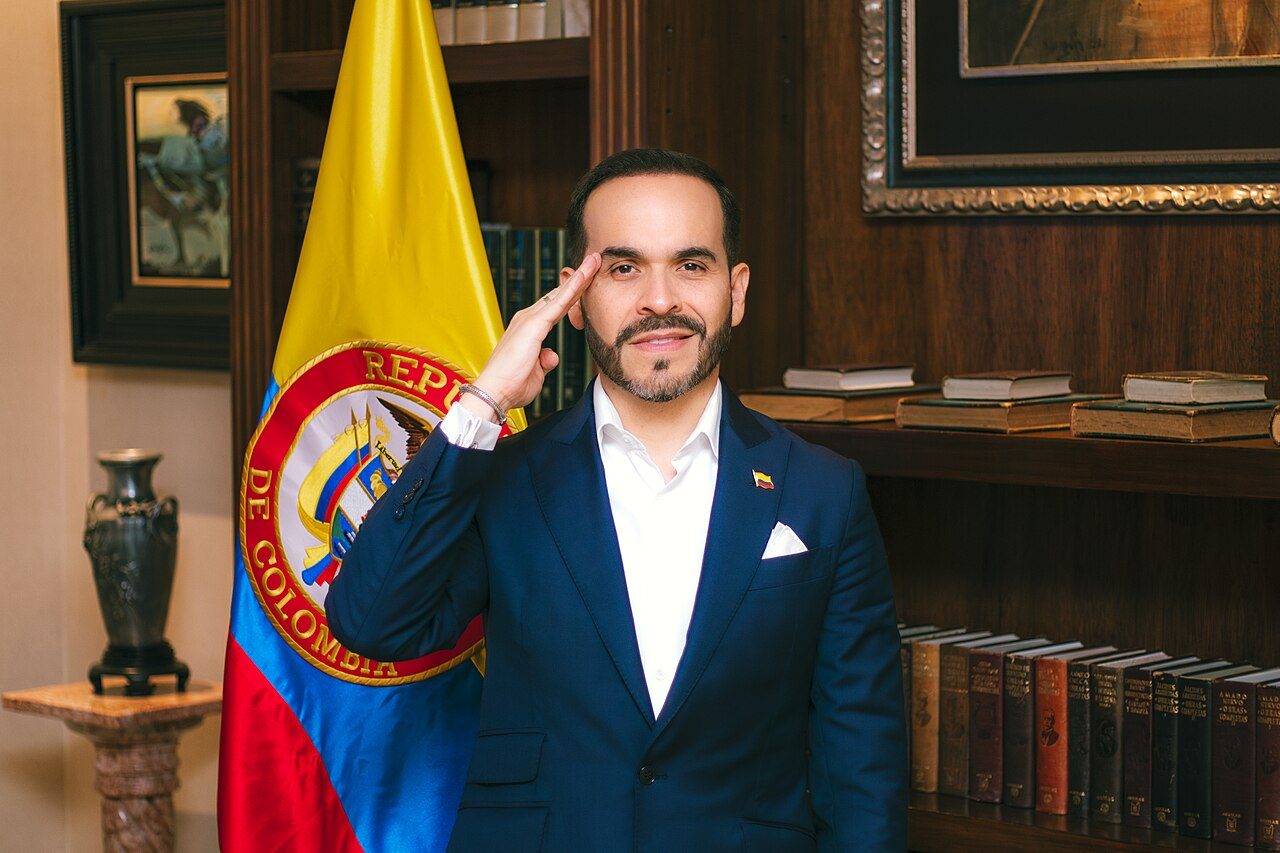
On Aug. 7, Abelardo de la Espriella was sworn in as Colombia’s president. His inauguration speech reiterated campaign promises to unravel Colombia’s transitional justice, decades in the making. His administration will not “accept under any circumstances that justice is converted into a mechanism of indulgence.” “The option of dialogue,” with respect to Colombia’s armed groups, “is exhausted.”
This inauguration-day language echoes de la Espriella’s attacks on the 2016 Final Agreement with Fuerzas Armadas Revolucionarias de Colombia-Ejército del Pueblo (FARC-EP)—a deal that set a historical precedent by demobilizing 13,000 guerrillas and creating a robust criminal accountability system. De la Espriella has repeatedly derided the deal as a “false peace” that “tricked” the country. Its centerpiece, the Special Jurisdiction for Peace (JEP), is, to de la Espriella, a fiscal waste and a “political directory disguised as a court.” As early as August 2025, de la Espriella vowed that “all I can do to eliminate that piece of junk, I am going to do.” Nothing has changed: His inauguration speech reaffirmed his “duty” to review the JEP’s “nature and effects.”
This rhetoric found fertile ground among Colombians who blame outgoing President Gustavo Petro’s Total Peace strategy for rising violence, associating it with the FARC accord because both prioritize negotiations. While aimed at simultaneous dialogue with as many armed groups as possible, Total Peace instead coincided with waves of violence as groups fractured over whether to participate in talks, resulting in new factions competing for territory and illegal economies. De la Espriella seized on public discontent toward the violence, promising a mano dura approach. This is a reversal for de la Espriella, a defense attorney who previously represented paramilitary members and drug traffickers. In fact, in 2015, he published a book arguing for more lenient transitional justice terms than the 2016 FARC-EP deal provided, proposing that demobilized irregular forces serve sentences at liberty and be treated as political actors.
Since his runoff victory, campaign promises have hardened into policy. De la Espriella plans to eliminate 229 government offices, including the High Commissioner for Peace and the Implementation Unit that enforces the FARC-EP accord. As president-elect, he vowed to withdraw from the United Nations and the Organization of American States.
But what can de la Espriella actually do to attack transitional justice institutions, and how will his attacks impact peace prospects with active armed groups in the current criminal landscape? On examination, the answer hinges on the domestic approach that made Colombia’s peace process a global model in the first place.
Written at Home, Watched From Abroad
Colombia’s transitional justice “laboratory” stems, in part, from a tension: Strong domestic institutions authored its peace through new legislation, balancing messy national realities against universalist standards monitored by the International Criminal Court (ICC).
Unlike its transitional justice contemporaries—such as Cambodia, Uganda, and Sierra Leone, whose frameworks were top-down and exogenous—Colombia’s transition was bottom-up and endogenous. In the afterglow years of the Rome Statute’s 2002 signing, international bodies channeled new inertia to step in and establish special tribunals or directly exercise jurisdiction where domestic institutions were unable or unwilling to combat impunity. The result was a degree of cynicism toward domestic judiciaries and a tendency to promote formulaic notions of justice divorced from the particular needs of the country in transition.
By contrast, Colombia did not require top-down intervention because its citizens and state were taking initiative on their own. Colombian institutions possessed the technical capacity to execute trials, and the government actively pursued accountability in dialogue with armed groups. Yet the specter of ICC intervention, present in Colombia following a preliminary investigation opened in 2004, incentivized domestic institutions to “speak international law.” The resulting peace was the “best case scenario” for positive complementarity, the principle that the ICC should encourage, rather than compete with, national proceedings.
Colombia’s first legal authority relevant to this discussion is Law 975, the Justice and Peace Law. Passed in 2005 following the Santa Fe de Ralito Agreement with the far-right paramilitary United Self-Defense Forces (AUC), the law established a Justice and Peace Unit within the attorney general’s office. It also launched special chambers within selected district courts to hear gross human rights violations.
In 2011, Congress passed Law 1448, creating the most comprehensive victim reparations system worldwide to date—the program registers 15 percent of the population as victims, compared to most peer reparations programs, which register less than 1 percent. The law established implementing bodies: the Victims’ Unit, overseeing a national victim registry and financial and social reparations; the Land Restitution Unit, processing civil claims to private land dispossessed in the armed conflict; and the National Center for Historical Memory. In 2021, Law 1448 was extended past its 10-year expiry into 2031.
With the Havana negotiations (2012-2016) on the horizon, Colombia’s Congress embedded transitional justice further into domestic law by amending the constitution to create the Framework for Peace. This amendment, Act No. 1 of 2012, was extraordinary less for what it designed than for what it deferred: Congress bound itself to future legislation enabling “judicial or extra-judicial transitional justice instruments,” without knowing what these bodies would look like, instead leaving their shape to be haggled out in negotiations with combatants.
In 2016, the Congress followed through on the Framework for Peace’s vision, passing a batch of laws and constitutional amendments implementing the negotiation’s Final Agreement, which Congress approved directly. Law 1820 extended amnesty, pardon, or special penal treatment to low-level officers of both FARC-EP and the state. Constitutional amendment Act No. 1 of 2017 created the Comprehensive System of Truth, Justice, Reparation and Non-Repetition, encompassing the JEP, a Truth Commission, and the Missing Persons Search Unit. Constitutional amendment Act No. 2 of 2017 bound state institutions to comply in good faith with the deal across the three presidential terms following signing, which would include de la Espriella’s term. The Constitutional Court upheld this amendment, applying the sustitución de la Constitución doctrine to hold that when peace conflicts with other constitutional pillars, it receives “preponderant importance.”
The Limits of Executive Power on a Legislative Peace
Despite global praise for its innovative methods, transitional justice has long divided Colombians. Notably, when the Final Agreement was put to a plebiscite, 50.2 percent of Colombians voted “no.” Then, as now, skeptics claim that confessed war criminals escape meaningful punishment. There is some logic to this.
Colombia’s peace is paradoxically highly judicialized, yet limitedly punitive. To comply with international standards and avoid ICC intervention, the agreement requires judicial evaluation of demobilized forces. But to keep guerrillas at the table, the agreement establishes an alternative sentencing regime: Those who cooperate in truth-seeking and victim reparation receive sanciones propias—restricted liberty restorative work entailing designated, surveilled housing and mobility confined to the set geographic area where a convict is, for example, demining or searching for mass graves. The JEP has applied sanciones propias to both FARC-EP leaders guilty of engineering a kidnapping policy affecting 21,000 and army officers guilty of extrajudicial executions known as “false positives”—knowingly misidentifying lawful citizens as guerillas and murdering them to meet body count quotas.
Public criticism of transitional justice matters: In Colombia, citizens can repeal laws and reform the constitution by referendum. In practice, almost insurmountable procedural requirements—including signatures from 5 to 10 percent of the entire voter rolls within a tight deadline, administrative review by the electoral council, and question review by the Constitutional Court—kill many attempts at referenda each year. No national repeal referendum has ever occurred. Only one referendum has ever cleared the signature and administrative barriers: former President Álvaro Uribe’s 2003 referendum on fiscal austerity. Of 19 questions, four were tossed by the Constitutional Court, 14 failed to meet the 25 percent voter threshold, and only one passed. Even for a sitting president with strong party machinery, a referendum is a reach.
Critics have already tried—and failed—to repeal transitional justice bodies by referendum. In 2018, lawmakers pursued a repeal referendum to tear down the FARC-EP accord, and failed to collect the required signatures. Members of de la Espriella’s party, Salvación Nacional, have since revived the effort. Even if they clear every hurdle, the Constitutional Court’s precedent defending Act No. 2 of 2017 and affirming peace’s “preponderant importance” could make it a dead end regardless.
On the institutional track, de la Espriella’s legal path is severely constrained by Congress’s central role in legislating peace, and the Constitutional Court’s expansive oversight. Much ink has already been spilled by legal scholars clarifying that no president can unilaterally close the JEP or other mechanisms established by constitutional amendment. De la Espriella would need Congress to alter the constitution, and even then the Constitutional Court has the power of review; under the sustitución de la Constitución doctrine, reforms or amendments that conflict with foundational constitutional pillars cannot stand even if procedurally proper. Repealing statutory laws requires an absolute majority of each chamber, plus prior court review.
Congress likely won’t cooperate. Petro’s Pacto Histórico holds the most seats, closely trailed by Uribe’s Centro Democrático—which may not join de la Espriella’s coalition due to internal anxieties that his maverick style threatens Centro Democrático’s hegemony over the Colombian right. De la Espriella has publicly criticized Uribismo, and Uribistas grumble that their second-round endorsement of the president, which delivered a crucial voting bloc, has not been adequately reciprocated in cabinet appointments. The remaining seats are divided among parties that tilt Congress toward the center-right but leave the center-left a wide path to block legislation. A recent Senate upset demonstrated that the upper house will not bend to de la Espriella’s iconoclasm. For the first time since the 1991 constitution, a president-elect’s preference for Senate president was rejected, with Pacto Histórico and Centro Democrático—bitter rivals fresh from insult-throwing on the campaign trail—united behind an institutionalist candidate.
Relevant precedent establishes that the president cannot simply refuse to enforce objectionable legislation: In 2019, then-President Ivan Duque refused to sign Law 1957, the JEP’s implementing legislation, referring it back to Congress. Congress rejected his objections, and the Constitutional Court ordered Duque to enforce the law as written.
Unable to muster the votes for an absolute Senate majority, repealing constitutional amendments or statutory laws is likely off the table for de la Espriella. The Comprehensive System of Truth, Justice, Reparation and Non-Repetition—including the JEP, Truth Commission, and Missing Persons Search Unit—and Act No. 2 of 2017’s requirement that the government implement the Havana negotiation’s Final Agreement in good faith, will likely remain legally intact.
The ordinary laws creating the Justice and Peace Unit, Victims’ Unit, Land Restitution Unit, National Center for Historical Memory, and low-level officer amnesty face greater risk. Notably, these bodies appear on a leaked list of offices planned for elimination. Repealing ordinary laws requires a simple majority at a valid quorum. De la Espriella could coordinate with members to quorum repeal votes when key left-leaning members are absent or during known periods of low attendance. Steamrolls like this have ample precedent. A particularly colorful example in 2018 on the last Sunday of Advent at the same time as Miss Universo and a soccer championship saw five bills passed with many members absent. And, of course, midterm election gains for de la Espriella would only sharpen that exposure.
Eager to deliver immediate results in his honeymoon phase, however, de la Espriella is more likely to strangle targeted institutions financially or gamble on rule by decree. All institutions discussed here receive funding from the national budget, submitted annually by the president to Congress for approval. De la Espriella has floated cutting the JEP’s budget by 90 percent, and will likely apply the same logic to other implementing bodies, framing reductions as fiscal responsibility. Paired with the president’s power to appoint some units’ directors—which de la Espriella could use to empower peace skeptics—defunding would hollow out the operational capacity of transitional justice institutions he cannot legally erase. While Congress still plays a critical role in budget approval, presidents can bypass this check: When Congress rejected Petro’s 2025 budget, he ordered it by decree. However, that move was widely read as a sign of Petro’s political weakness, so de la Espriella may want to avoid the comparison.
De la Espriella’s team has prepared 90 decrees for his first 100 days in office. Decreeing an end to bodies established by legislation would be a stretch, likely drawing an immediate Constitutional Court challenge. But even if he reasonably believes that the court will rule against him, de la Espriella may try anyway. A classic strongman tactic, ruling by decree would appeal to his base. If the court strikes down the decree, de la Espriella at least gains fresh rhetorical fodder to denounce the corrupt “political caste” and posture himself as an outsider, rerunning the gambit that endeared him to supporters in the first place.
Future Uncertainty
Colombia’s transitional justice model has earned its reputation. Embedded in legislation and constitutional law, it is insulated from swings in public opinion and executive whim by Colombia’s checks and balances, even when faced with de la Espriella’s existential threats. Yet that durability belies the broader stakes: Every armed group still weighing demobilization is watching whether Colombia’s commitments to yesterday’s combatants survive a hostile government.
A handful of scenarios illustrate the current moment’s uncertainty and consequence. In an optimistic scenario, de la Espriella’s demand for harsher sentencing finds surprising allies in left-leaning victim advocates who have long voiced similar criticisms. (Human Rights Watch urged a “no” vote against the negotiation’s Final Agreement due to lenient sentencing.) Pressure from both ends of the spectrum strengthens accountability rather than eroding it.
A middle scenario is strategic malpractice. De la Espriella’s mano dura policies could succeed in weakening armed groups, giving the government the coercive credibility to negotiate with the upper hand, creating conditions for a deal that could reduce violence long term. But his attacks on transitional justice undercut that opportunity by setting a precedent that future politics can undo any agreement. Convinced a deal could become worthless, armed groups may refuse to participate, squandering the government’s leverage.
In a worst-case scenario, de la Espriella’s security gains are cosmetic, and insurgents continue territorializing. With the bodies that implement promised peace incentives closed or defunded, formerly demobilized guerrillas rejoin armed groups for a slice of the growing illicit economy.
Colombia’s transitional justice system may be built to outlast de la Espriella, but whether it can still serve as a credible North Star for future peace is an open question. Its survival, or its unraveling, may matter less to the guerrillas and state forces it was built to hold accountable than to combatants still deciding whether to negotiate or escalate.