

Colombia Swears In New President De la Espriella on Friday — Without Petro, and Without the Usual Ceremony
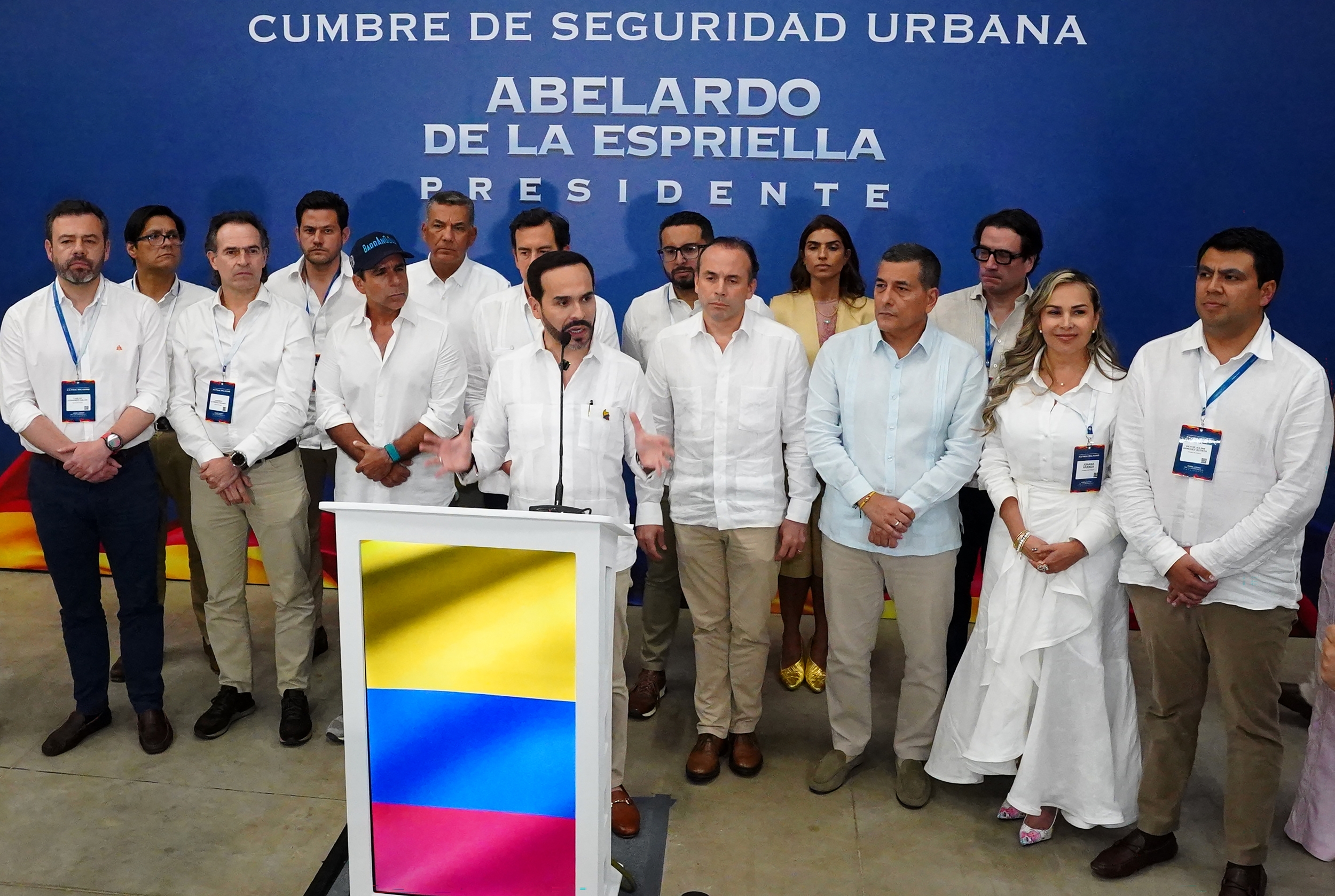
Photo by Vanexa Romero / AFP via Getty Images
CALI, Colombia — When Abelardo de la Espriella raises his right hand on Friday, Aug. 7, he will do something no elected Colombian president has done in more than a century: take the oath somewhere other than Bogotá. The venue shift is only one break with custom. Outgoing President Gustavo Petro is boycotting the event outright, a decades-old medal ceremony has quietly been dropped, and the transition has unfolded against unproven fraud claims and warnings about the country’s stability. It all arrives as Colombia positions itself for a warmer relationship with Washington under its incoming right-leaning leader.

JOAQUIN SARMIENTO / AFP via Getty Images
Cali hosts a first for modern Colombia
Congress has relocated to Cali for the day, and De la Espriella will be sworn in at 3 p.m. at Arena USC, a university venue that seats roughly 2,230 people, plus an auxiliary hall for another 300. Afterward, the new president heads to a nearby army garrison for a troop review. It’s a striking break from tradition, though not quite an absolute one — the last comparable exception came in the 19th century, when poor health kept President Rafael Núñez from making the trip to the capital and he was sworn in at Cartagena instead. Roughly 6,000 guests are expected, including Secretary of State Marco Rubio, Argentina’s Javier Milei and Ecuador’s Daniel Noboa, along with FIFA president Gianni Infantino. Notably absent from the guest list: former presidents Ernesto Samper and Juan Manuel Santos, a snub that has drawn its own round of criticism.
Why the ceremony left Cauca behind
De la Espriella first wanted to take his oath at a military garrison in Cauca department, but Petro, still commander-in-chief until the handover, refused to let any army installation host the event. Around the same time, recurring eruptions from the nearby Puracé volcano kept shutting down Popayán’s airport — closed for more than a third of the previous 20 days by the time the switch to Cali was announced. De la Espriella insists the volcano, not the standoff with Petro, forced his hand, though critics call that framing convenient given how the military-venue dispute was already stalling the plan.
Cali has mobilized more than 11,000 security personnel, banned private drones for the day, and posted a reward of up to 500 million pesos — close to $150,000 — for tips on possible threats. The stakes were underscored days before the ceremony, when authorities near Palmiraarrested a suspected member of an armed group who was carrying 20 explosive devices and a drone.

JOAQUIN SARMIENTO / AFP via Getty Images
Petro’s fraud claims remain unproven
The tension traces back to a June 21 runoff that De la Espriella won by 251,854 votes, under one percentage point — one of the tightest margins the country has certified. Petro has refused to accept it, describing what he calls coordinated, algorithm-driven manipulation of vote-tabulation forms and, at various points, claiming anywhere from 1.8 million to 7 million votes were affected. He has filed a nullity suit before the Council of State, though even that filing, according to reporting on the document, does not allege proven fraud so much as a lack of independent verifiability in the process. Colombia’s civil registry has directly rebutted his central technical claim, stating that the cryptographic “hash lock” protecting the vote forms was never removed and in fact remains one of the system’s core safeguards. Election observers have not echoed Petro’s allegations either; international monitors backed the integrity of the count, and Cepeda’s own campaign said its internal review found nothing significant enough to challenge the result. Days before the handover, Petro escalated further, declaring flatly, “It’s clear what this could become — a civil war in Colombia,” a warning neither electoral authorities nor his own government have echoed.
The friction has also cost Colombia a four-decade custom, formalized under a 1982 decree, in which the outgoing president decorates his successor with the Order of Boyacá and two lesser honors on the eve of the handover — the same tribute Petro himself received from his predecessor, Iván Duque, in 2022. With the two men barely speaking, officials now consider that protocol act effectively shelved, even though the law lets an incoming president assume full authority the moment he’s sworn in, medals or not. Petro has confirmed he will skip the ceremony entirely, a break with modern precedent, leaving his farewell remarks as his last act in office.
Washington sees an opening
For the United States, the succession looks like a reset. President Trump publicly backed De la Espriella before both rounds of the vote, and the two share a preference for hard-line security policy and market-friendly economics. Colombia is set to join Washington’s “Shield of the Americas” security coalition once De la Espriella takes office, with Medellín serving as the alliance’s regional headquarters in the country. That marks a genuine shift: relations between Bogotá and Washington had soured badly back in January 2025, when Trump ordered emergency tariffs of up to 50 percent after Petro blocked two U.S. military deportation flights from landing — a standoff resolved only after Colombia agreed to accept the flights. Roughly 650 American firms already operate in Colombia, supporting some 150,000 jobs, and the Atlantic Council expects that footprint to grow as the incoming government courts fresh investment.
The diaspora’s leverage — and its price
The roughly 1.6 million-strong Colombian community in the United States, concentrated in Florida, New York and New Jersey, delivered De la Espriella about 80 percent of the vote cast stateside — a margin that helped offset losses in Spain and much of Europe, where Cepeda’s Historic Pact ran strongest. That support has come with expectations attached. Diaspora leaders in New York and New Jersey have already formally pressed the incoming government to use its rapport with Trump on behalf of undocumented Colombians, and to expand and speed up consular services, pointing out that remittances from the diaspora overtook foreign direct investment as a source of dollars flowing into Colombia in 2025 for the first time in two decades. Whether the new administration delivers may determine how durable that overseas support proves once Friday’s ceremony in Cali is over.
© {{Year}} Latin Times. All rights reserved. Do not reproduce without permission.