

Colombia Launches 3-month Subsidy Plan to Quake Victims Amid Criticism
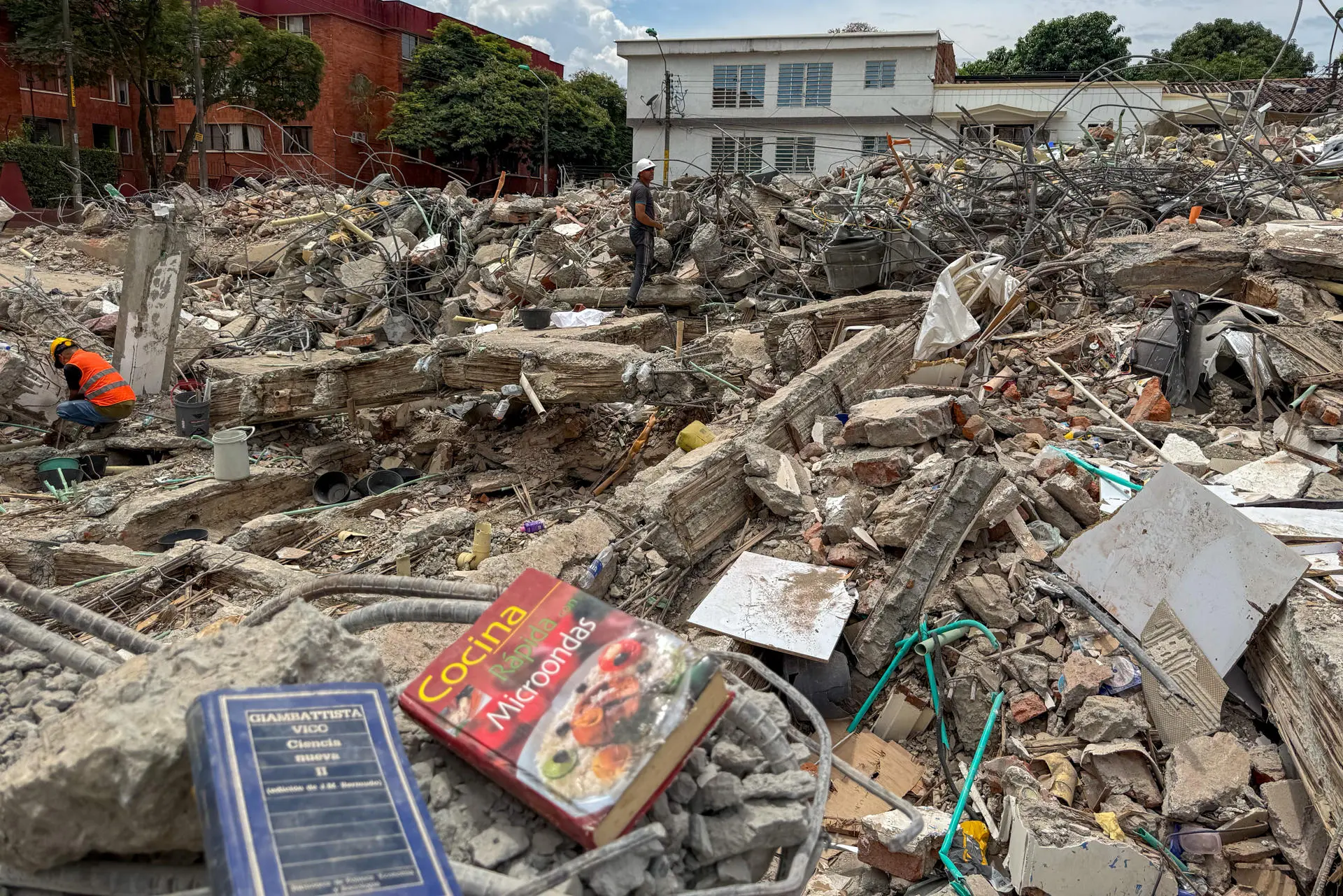
Citizens labeled that the amount does not cover the current cost of living for those who lost everything. Photo: EFE.
August 24, 2026 Hour: 8:32 pm
-
-
-
-
-
-
PDF
🔗 Comparte este artículo
Colombia’s President Abelardo de la Espriella presented the “Miracle Fund” reconstruction plan from Chocó, offering a three-month monthly subsidy of 875,452 Colombian pesos (about 285 U.S. dollars) to families affected by the magnitude 7.4 earthquake of August 10.
The Colombian President announced the second phase of reconstruction during a visit to Quibdó, capital of the Chocó department, one of the regions most affected by the seismic event that struck the country on August 10.
The plan contemplates business coordination and the creation of the Miracle Fund, the mechanism that will finance the direct delivery of economic support to damaged families.
RELATED: Colombia Declares Economic, Social and Ecological Emergency After Earthquake
“Starting August 26, the delivery of direct economic support of 875,452 pesos will begin, which will be delivered for three months for a total of 2.6 million pesos (about $855) per family. The money will arrive directly to the head of that family,” De la Espriella announced this Monday, 14 days after the earthquake.
The announced subsidy shall be intended for households whose dwellings have been destroyed or rendered uninhabitable.
The ministerial cabinet is working on drafting the decree that will provide the legal framework for the measure, which will be integrated into the economic and social emergency declaration. Beneficiaries will be identified through the housing censuses that departmental administrations have already delivered to the National Unit for Disaster Risk Management (UNGRD).
President De la Espriella said days ago that the country faces a severe fiscal deficit, although he did not specify its amount. By that time he had already announced that he will not implement new taxes and that he will reduce taxes on large fortunes, which raises the question of whether he will resort to cuts in social programs to close the alleged fiscal gap.
Text reads: “I came to Buenaventura to put in motion the reconstruction plan that this land deserves. Starting from 26 August, we delivered direct financial support of 1,050,000 pesos per month for three months through National Unit for Disaster Risk Management (UNGRD) to those affected. Also, I launched the Miracle Fund, articulating entrepreneurship, banking with historical rates of 8%, and guilds like Eternit and Corpocero, which already add up the first houses donated for this port. In addition, I delivered the first 270 tons of building materials and we maintain health care without a break. Buenaventura has President with the Tiger.”
Subsidy Sparks Outrage
The Miracle Fund Plan will also finance part of the subsidies for new housing that the Government will grant through the Ministry of Housing. This process will operate in coordination with insurers, compensation funds, territorial entities, national banks and construction companies.
To lead this effort, the Colombian President appointed businessman Jaime Uribe, stating that he “has much to do in a short time” at the head of “one of the largest reconstruction operations that our nation has had to face in its entire history.” On oversight, the De la Espriella affirmed that “the fund will set priorities and every cent executed must be followed from the moment it enters the fund until it becomes a house, school, hospital or any work.”
However, citizens described the amount as “alms” that does not cover the current cost of living for those who lost everything. Public indignation increased upon confirming that the financial aid will be granted only for a period of three months, a time they consider negligible given the magnitude of the disaster.
The earthquake left a devastating balance: 321 people dead, 4,439 injured, 240 people missing and 364 rescued.
The seismic event also left 178,555 homes damaged and 31,540 destroyed, meanwhile 5,884 buildings were damaged and another 603 collapsed. In this sense, the infrastructure affected includes 378 health centers, 3,731 educational centers, 4,170 community centers, 441 roads, five airports, 118 aqueducts, 73 vehicular bridges and 16 pedestrian bridges.
Following these figures, the three-month subsidy, critics argue, contrasts sharply with the scale of destruction and the time required for a full recovery.
Author: Laura V. Mor
Source: Agencies