

Colombia Ends Endless Peace Talks as Armed Groups Keep Growing
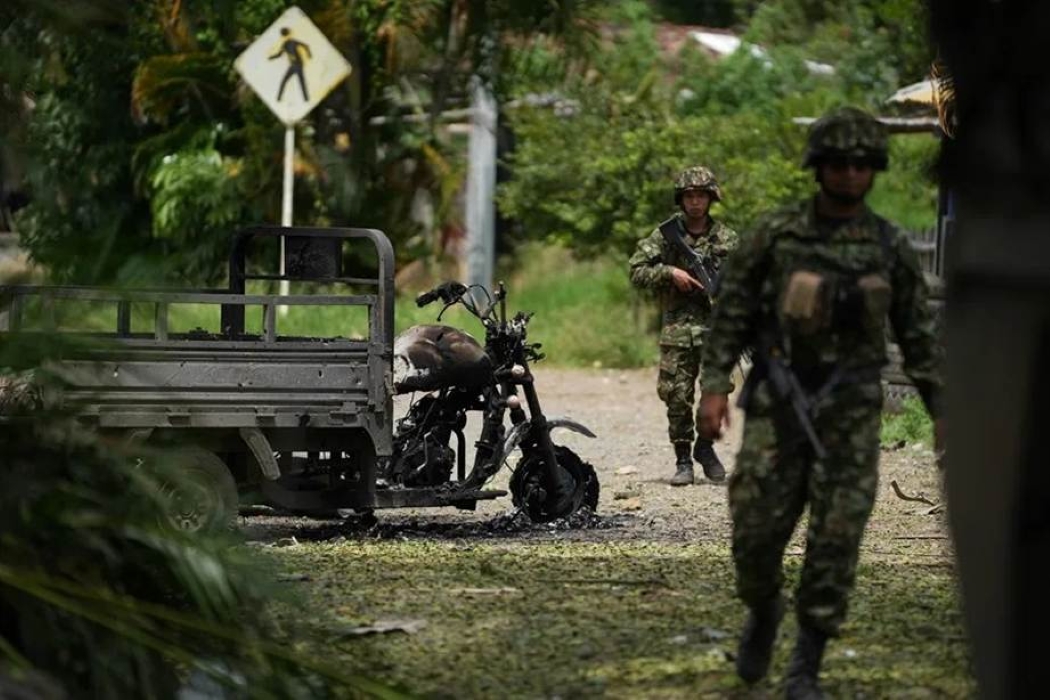
President Abelardo de la Espriella has closed three negotiating tables inherited from Gustavo Petro. The case rests on armed expansion, confinement, and broken ceasefires; its risks depend on what replaces dialogue and how Colombia treats those already disarmed in practice.
When Talking Stops Meaning Progress
In Colombia, a peace table carries the memory of villages emptied overnight, kidnapped relatives waiting beside silent telephones, and the improbable 2016 agreement that persuaded thousands of FARC combatants to leave the jungle.
That history makes ending negotiations grave. It also makes pretending they work dangerous.
De la Espriella terminated talks with the Estado Mayor de Bloques y Frentes, the Coordinadora Nacional Ejército Bolivariano and the Autodefensas Conquistadores de la Sierra Nevada. He revoked government negotiators’ credentials and the recognition granted to armed-group delegates. In an address reported by EFE, he said there was “no real and verifiable willingness for peace” sufficient to continue.
The record explains why closure gained political force. Petro’s Total Peace policy attempted simultaneous engagement with guerrillas, FARC dissidents, successor paramilitary structures and urban gangs. The ambition was historic. The architecture was often improvised.
Some ceasefires lacked clear protocols, territorial boundaries and credible monitoring. Talks paused, restarted, or splintered as commanders divided. Petro’s government eventually suspended the ELN and the main Estado Mayor Central process after renewed violence. ACLED found that truces reduced clashes between armed groups and security forces, but fighting among rival armed organizations rose 40 percent during Petro’s first 27 months.
That distinction explains why official communiqués and village experience told different stories. Fewer firefights with the Army did not necessarily mean less coercion. A group could respect a ceasefire with the state while recruiting children, taxing shopkeepers, moving cocaine and fighting for the next river corridor.
The strongest argument for closure begins when a negotiating table shields expansion instead of securing demobilization.
The Numbers Refuse an Easy Story
The claim that all crime worsened under Petro is too broad. National homicide trends, extortion reports, and battlefield deaths did not move together. ACLED recorded 11 percent fewer fatalities linked to armed-group violence during the administration’s first 27 months than in the preceding comparable period. Dialogue and restraint sometimes saved lives.
But the territorial picture deteriorated. Estimates cited by International Crisis Group indicate armed and criminal organizations nearly doubled their combined membership between 2022 and 2025, from about 15,132 to roughly 27,000. Other estimates are lower, but point in the same direction: these organizations grew while the state struggled to convert talks into surrender.
Kidnapping also surged. Authorities recorded 651 cases in 2025, a 108 percent increase, although reported extortion declined 12 percent. Colombia did not face one uniform crime wave. Violence was reshaped and concentrated where armed actors control communities, routes, and illegal economies.
The humanitarian data are harder to soften. During January and February 2026, the Ombudsman’s Office recorded 6,006 people displaced and 20,765 confined by conflict. In May alone, another 2,799 people fled mass displacement while 15,045 were trapped by armed violence, often without reliable access to food, health care, or schools. Indigenous and Afro-Colombian communities were disproportionately affected.
Confinement is peace’s quietest failure. People remain home, but armed men decide when they travel, fish, farm, study, or seek medicine. Territory stays populated while sovereignty disappears.
Supporters can plausibly describe closing these three nonperforming tables not as rejecting peace, but as rejecting process without measurable return. Their proposed standard is verifiable disarmament, release of captives, an end to recruitment, freedom of movement, and submission to justice. Attendance at meetings is not progress.
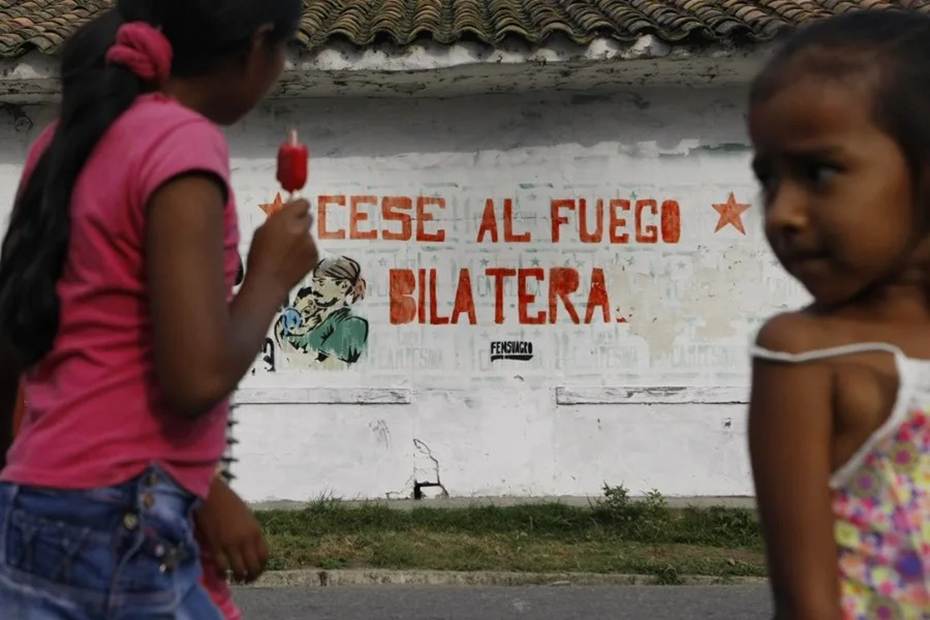
Force Must Not Become the Whole State
There is still danger inside De la Espriella’s language. He says peace must be imposed through the legitimate force of arms and law. The phrase captures the state’s duty to protect, but can revive Colombia’s temptation to mistake military pressure for a political solution.
The 2016 FARC accord proved negotiated disarmament can change history. More than 11,000 former combatants remain in civilian life, although hundreds have been killed since signing. That agreement should not be confused with open-ended conversations involving fragmented organizations whose leaders profit from illicit economies. Nor should today’s failures erase what serious negotiation achieved.
The new government also inherits a moral test. Ninety-nine members of a CNEB-linked faction recently surrendered their weapons and entered a temporary transition zone. They now face legal uncertainty. Ending talks with the armed majority cannot justify abandoning people who disarmed under state guarantees. Breaking faith would advertise that surrender is more dangerous than remaining armed.
Any durable doctrine needs two doors. One can close on negotiations exploited for territorial growth. The other must remain available for verified surrender, civilian reintegration and lawful accountability.
Military operations can remove commanders and destroy camps. They cannot register land, protect witnesses, prosecute money launderers, reopen schools or give coca-growing families legal income. Colombia’s recurring tragedy is that troops arrive as the state’s sharp edge, then leave before judges, roads, teachers and clinics establish durable presence.
This analysis concerns negotiating mechanisms, not a comparison between parties or an endorsement of either administration. The evidence supplied by EFE, Colombian institutions and independent conflict monitors suggests a narrower lesson: dialogue earns legitimacy only when civilians receive something concrete in return.
Peace cannot be measured by how long negotiators remain seated. It must be felt outside the room, in a farmer’s freedom to reach market, a child’s ability to attend school and a family’s certainty that no armed organization owns the road. When a table cannot deliver that, ending it does not settle Colombia’s debate. It raises the harder question of what the state will build in its place.
Also Read:
Colombia Puts Southcom Back on the Pacific Drug War Map