

Colombia: 99 former fighters uncertain after disarmament
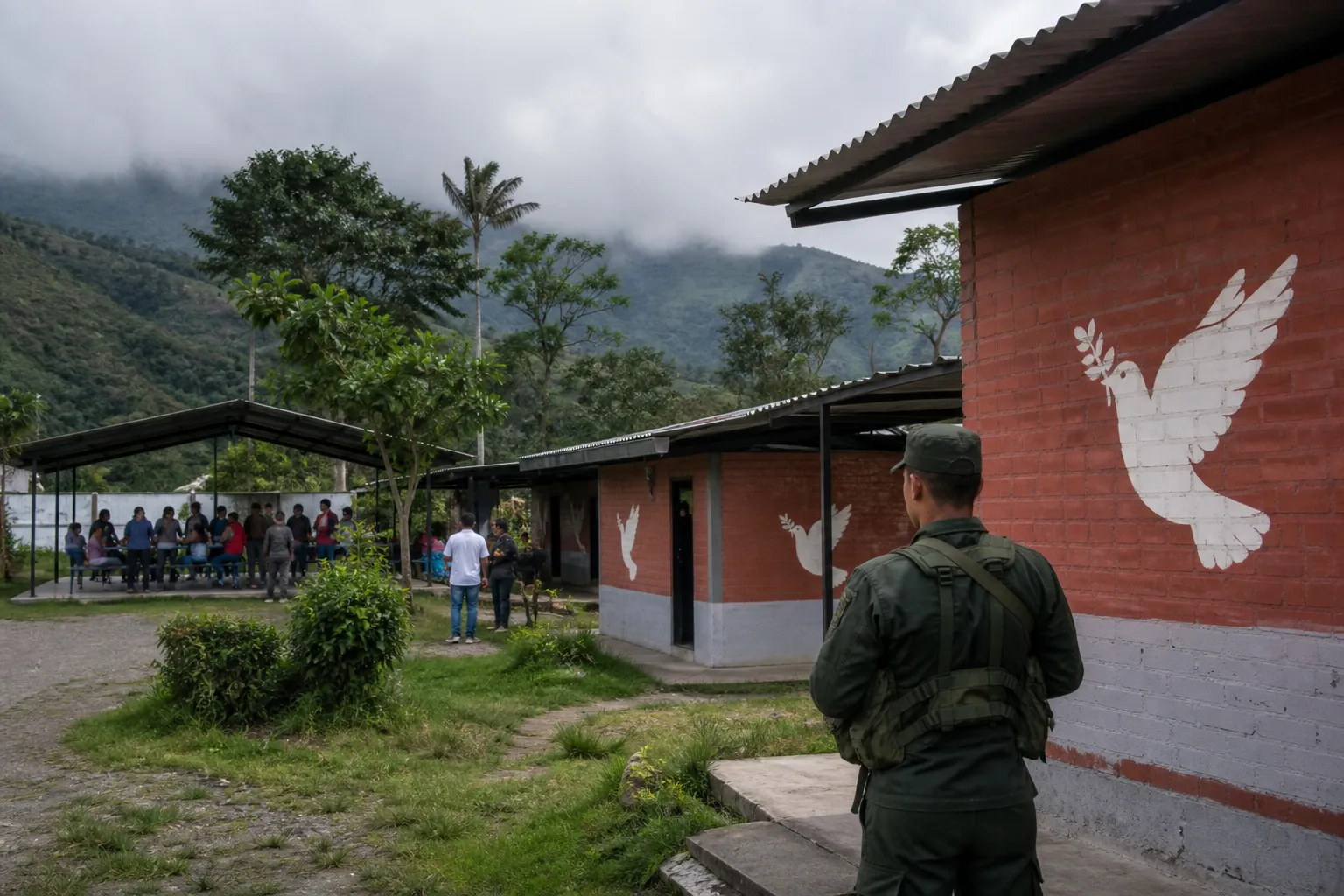
In Colombia, 99 fighters who surrendered their weapons in mid-June as part of former President Gustavo Petro’s “total peace” policy do not know what will happen to them after the change of government. The new president, Abelardo de la Espriella, promised to end the policy and has not yet announced what decision he will make regarding the disarmed group, The Guardian reports.
The group laid down its weapons three days before the second round of the presidential election, which was won by de la Espriella. The fighters were flown by helicopter to a temporary ZUT accommodation zone in a rural area in the south of the country. There, they handed over rifles, pistols, machine guns and grenade launchers to government representatives, and also burned tactical vests, field backpacks and camouflage uniforms.
The group’s status until December
At the ZUT, former members of the armed group were expected to transition to civilian life, including vocational training and psychosocial support. Natalia Bríñez, one of 13 women in the group, said its members are in a state of uncertainty.
Under Petro’s current decree, which created the ZUT, the group’s members are under state protection until December 25. According to the publication, warrants for their arrest have theoretically been suspended. At the same time, de la Espriella can revoke the decree at any moment.
More current news is available on the UA.News Telegram channel Telegram.
Former government official Armando Novoa, who led negotiations with the group, said the worst-case scenario could be the closure of the zone, a military operation and an attempt to capture or kill unarmed people. Paula Tobo, a researcher at the Ideas for Peace Foundation think tank, called the decision to disarm hasty, as there is no legislative framework for these people’s transition to civilian life.
The only disarmed group
The 99 disarmed people were part of approximately 1,000 fighters from the Border Commandos group, most of whom remain armed. It is part of the National Coordination of the Bolivarian Army (CNEB), a former dissident faction of the Revolutionary Armed Forces of Colombia. The CNEB has about 2,500 members and controls territories on the border with Ecuador.
Petro’s “total peace” policy provided for negotiations with and the disarmament of criminal armed groups, whose total number in Colombia was estimated at nearly 30,000 people. The group of 99 people became the only one to lay down its weapons. Its members have also not yet received the promised monthly financial support of about £425 and had considered starting a chicken-breeding business.
Download our app
