

Climate-Smart Villages build resilience in Cameroon
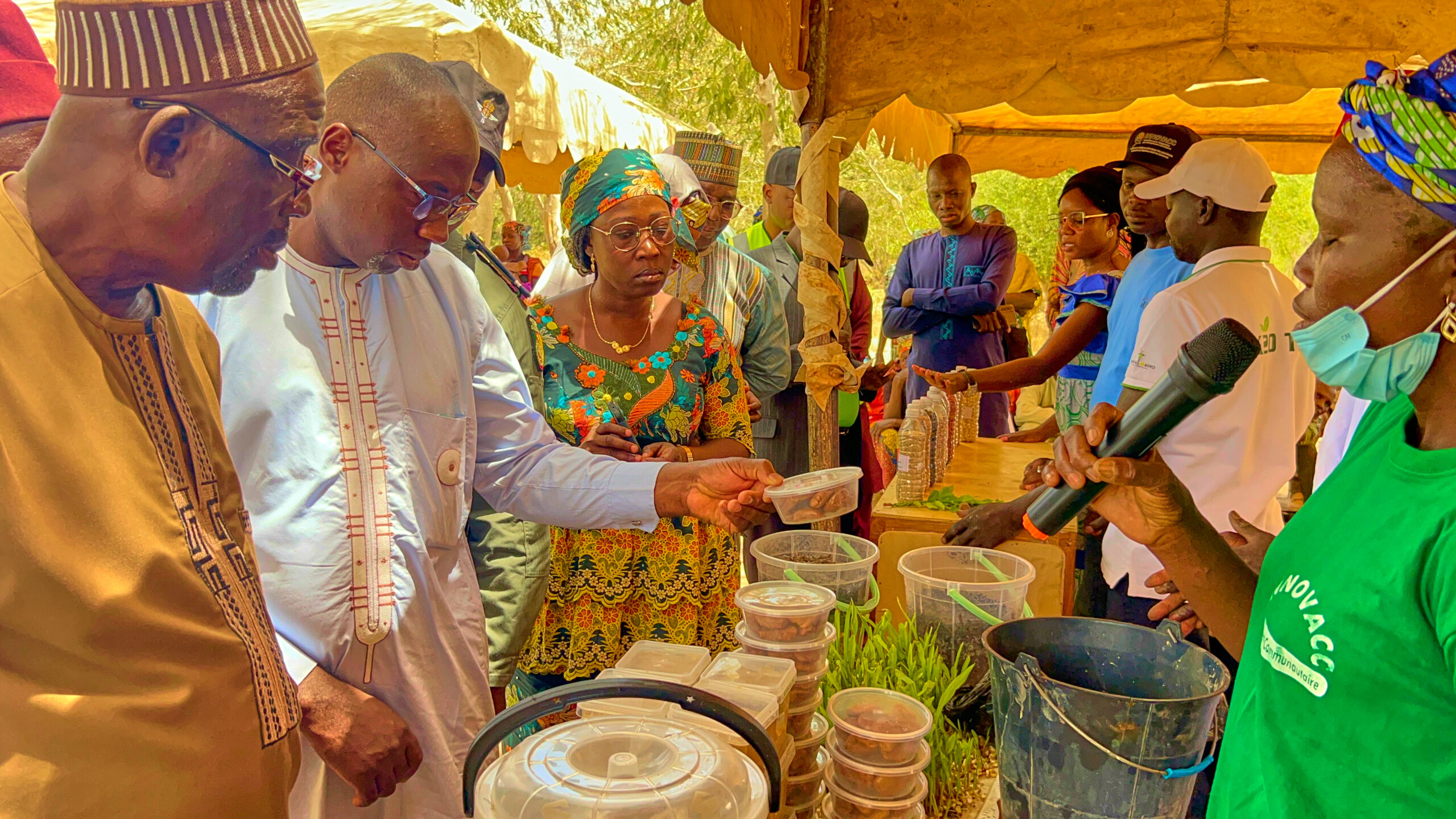
In the village of Gambour, in Cameroon‘s Far North region, the Open Day began with the familiar energy of community gathering: neighbours talking, officials moving between demonstration stands and visitors taking in the display. Standing before the crowd, the Lawan — or traditional chief — waited for the rumbles of the visitors to quiet, then spoke.
“Three years ago, we were still talking about famine in our lawanat. Thanks to what we learned through INNOVACC, we no longer do.”
Three words — no more famine — that speak to years of drought, failed harvests and chronic food insecurity in one of the world’s most climate-exposed regions. They also describe what has been happening, quietly and concretely, in six villages across Cameroon’s North and Far North, where the Innovation for Adaptation to Climate Change (INNOVACC) project has spent four years implementing practical responses to climate vulnerability with the communities.
In March 2026, the project opened two of its six pilot sites — Gambour in the Far North and Tolloré in the North — to local authorities, national institutions, neighbouring communities and the general public.
The Open Days offered a rare look at what a Climate-Smart Village (CSV) can become over time: a place where weather data, tree nurseries, improved seeds, livestock feed, cookstoves, solar technologies and women-led cooperatives are woven into everyday decisions about farming, food, energy and income.
Participants at the Gambour Open Day. Photo by Laurianne Mefan / Landscape Alliance.
In the initiative’s pilot villages, adaptation is visible in everyday details: the trees planted around homes and fields, the seeds farmers choose, the fodder kept for dry periods, the cookstoves used in the kitchens, the cooperatives processing crops locally and the weather information shared before decisions are made.
Agroforestry and community nurseries are among the most visible changes. Across the six pilot sites, nearly 37,000 seedlings of different tree species have been distributed to help restore degraded landscapes, provide shade and fodder, and replenish wood resources. Trees carry a practical value but also a deeper meaning. As one community member in the North region put it: “If you haven’t planted a tree, you’ve lived in vain.”
Climate-smart farming practices are helping farmers adjust to shorter, hotter and less predictable growing seasons. They include composting, biological seed coating, direct seeding, cover crops, half-moons, small dams and other soil and water management techniques. Farmers are also working with improved short-cycle varieties of maize, groundnut and sorghum, crops better suited to the erratic rainfall and raising temperatures.
Photo by Laurianne Mefan / Landscape Alliance.
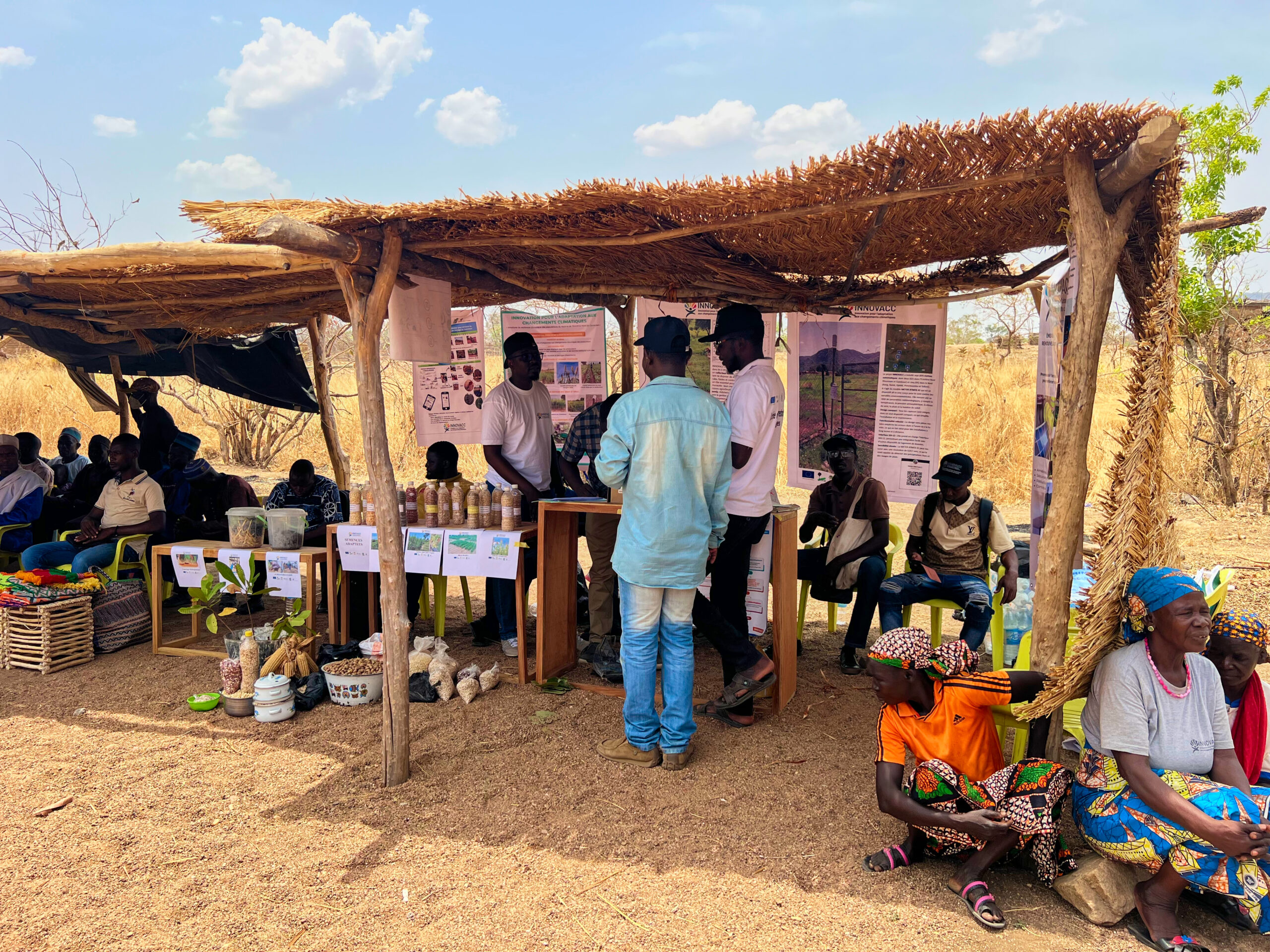
Photo by Laurianne Mefan / Landscape Alliance.
Livestock innovations respond to one of the hardest pressures of the dry season: keeping animals fed and healthy when pasture is scarce. Hydroponics fodder production and mineral lick blocks are giving pastoralists new tools to maintain herd health through increasingly brutal dry months.
Energy technologies are reducing the pressure on wood resources and easingthe daily burden of fuelwood collection. So far, 1,210 households across the six sites have adopted improved cookstoves, helping reduce both deforestation and the time women spend gathering wood. Solar energy solutions have also been piloted in areas without reliable grid access, including to support processing activities within cooperatives.
Women’s entrepreneurship and green jobs have been developed through eight agricultural cooperatives, involving 171 active members, working across cashew, groundnut, milk and other value chains. The cooperatives provide access to inputs, credit and collective marketing power that individual farmers rarely achieve alone.
Agroclimatic services are changing how farmers plan. Through the Participatory Integrated Climate Services for Agriculture (PICSA) approach, communities receive localized weather forecasts and historical climate data. A network of automatic weather stations and rain gauges collects information, which is then shared via a dedicated WhatsApp group, “Météo INNOVACC”. For farmers, that information can help determine when to sow, apply fertilizer or harvest — decisions that have become harder as rainfall patterns shift.
From demonstration to daily use
During the Open Days, visitors could see the Climate-Smart Village innovations in use, understand their relevance, hear from the communities using them and consider how similar approaches could be adapted elsewhere.
At Gambour, visitors gathered around demonstrations on composting and hydroponic fodder. Local authorities stood alongside farmers as the project team explained how the practices worked and how they could help communities respond to longer dry seasons.
A few days later in Tolloré, a women’s cooperative processing unit drew particular attention. Its processing unit now allows groundnuts to be transformed locally into oil, instead of being transported to Kaélé.
“Before, we would grind our groundnuts in Kaélé,” said one member of Tolloré’s women’s cooperative. “Now, thanks to INNOVACC, we grind and transform right here in Tolloré.”
The mayor of Tolloré’s commune pointed to the weather stations as one of the project’s most important innovations.
“The collection of agrometeorological data through rain gauges is at the heart of the project,” the mayor said. “It is an innovation that needs to be under every roof.”
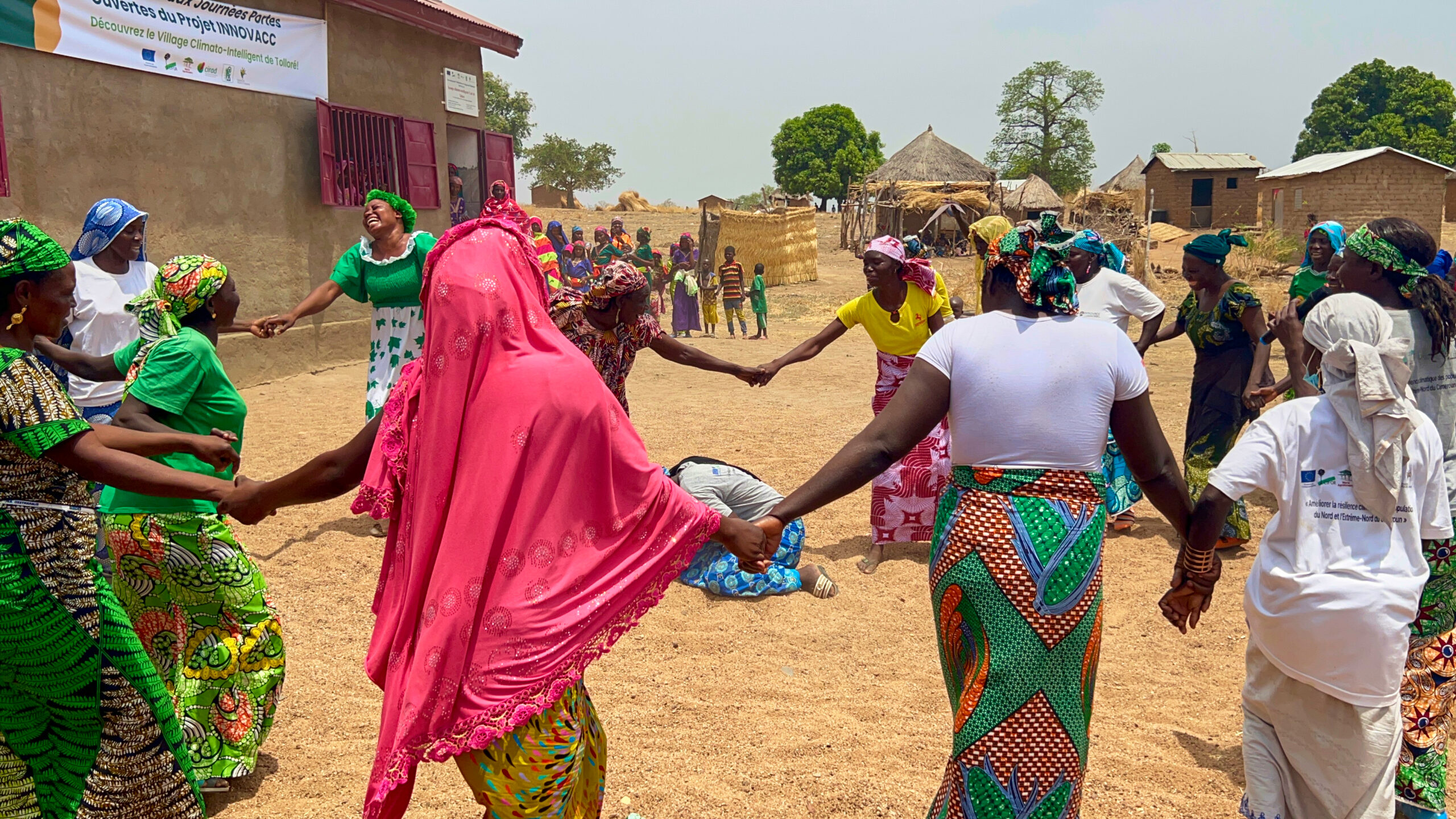
The day also showed how important communication can be when an approach brings together so many different practices. A short skit by local actors translated the CSV model into familiar scenes: the choices farmers make, the questions households ask and the practical changes communities can see. Humour made the ideas easier to comprehend. The crowd laughed, recognized situations from village life and began asking questions, including some who had been standing at the edge of the gathering.
For the team, that was a sign the message had reached beyond the demonstrations. Visitors were beginning to connect individual tools and technologies with a wider model that could fit into everyday village life.
The interest did not end with the questions from the crowd. After visiting the demonstrations, a representative from the regional office of the Ministry of Women’s Promotion and Family turned to the project team with a direct request.
“What I have seen here today is exactly what our communities need,” she said. “I am asking you to come and create a Climate-Smart Village in my village.”
Participants at the Tolloré Open Day. Photo by Laurianne Mefan / Landscape Alliance.
What makes a Climate-Smart Village?
A Climate-Smart Village begins with co-design. Communities help identify the options that fit their land, livelihoods and priorities.
As Ann Degrande, senior scientist at Landscape Alliance, has described the philosophy: “We’re trying to expose men, women and youth to many climate-smart options so that they can choose what best fits their personal interests, needs and capacities.”
In INNOVACC’s six pilot Climate-Smart Villages — Tolloré, Pintchoumba, Bamé and Bang in the North, and Gambour and Douroum in the Far North — that co-design has taken three years of work: training sessions, cooperative formation, field demonstrations, nurseries, weather stations and Open Days that invite neighbouring communities and institutions to see the work for themselves.
The aim is to build resilience within the six villages while creating a model that neighbouring communities can observe, understand and adapt to their own contexts.
The Lawan of Gambour said it more simply: no more famine.
For communities facing drought, erratic rainfall and food insecurity, those words carry the weight of what adaptation can mean in everyday life.
Acknowledgements
The INNOVACC project is funded by the European Union and implemented by a consortium of CIFOR-ICRAF, CIRAD, IRAD and FONDEM.
Credit: Source link