

China’s latest export: values
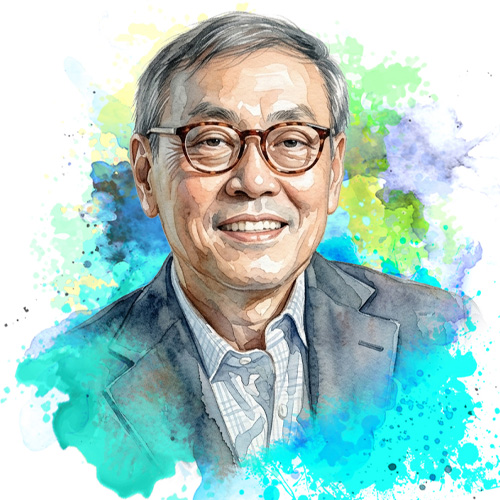
Edward Tse says numerous changes have given the nation’s foremost intellectuals and entrepreneurs the basis to readjust their coordinates
“Going overseas” has become one of the most frequently discussed topics in China’s business community today. Whenever I travel around the Chinese mainland, whether I am speaking at a large conference, meeting with a small group of people, or simply having a one-on-one conversation, going overseas — together with other topics such as AI, innovation and international relations — is almost always one of the topics that concerns people the most.
In fact, Chinese companies have been going out for quite some time. In the mid-1990s, after a business talk in a city in southern China, a couple of representatives from a telecommunications equipment company told me that their leaders were thinking about going international and wanted to learn how they could do it properly. The company was still relatively small at that time; today it has become a world-leading technology company. Around 2002, we were commissioned by a Chinese technology business to conduct a study on its international expansion strategy. This was probably one of the earliest studies on the overseas expansion strategy of a Chinese company carried out in China’s management consulting industry.
Over the past several decades, Chinese companies have gone through different stages of going overseas. In the beginning, they mainly exported products. Later, they began to invest overseas, build factories and establish sales operations. Over time, some of them set up operations in multiple locations. Today, a small number have also achieved globalized status.
Wave after wave of Chinese companies have gone out. While quite a number of them have achieved good results, many others are still learning and improving along the way.
Today, as we are entering into a new era in the world; Chinese companies are facing more opportunities as well as more challenges in their international operations. Overall, the environment has become more complicated.
Several major forces are driving this growing complexity: a more complicated geopolitical environment, a more diverse group of economic players, a broader and more complicated range of issues, and increasingly intense competition among major powers over values, interests and power.
The good news is that today quite a number of Chinese companies have already entered the top tier globally. Hi-tech firms like ByteDance (particularly TikTok) and DeepSeek, car manufacturer BYD, Shanghai Zhenhua Heavy Industries Co., drone specialist DJI and CATL — the world’s largest producer of lithium-ion batteries for electric vehicles —are some of the leading examples.
However, strictly speaking, Chinese companies as a whole have not yet reached the overall level of development of more mature Western multinational corporations.
Recently, a former senior executive of Procter & Gamble told me: “P&G is indeed a great company. It teaches you skills in every aspect of business — sales, brand management, supply chain and so on. At the same time, it gives you some of the best training and career planning. It has a very good culture. I would strongly recommend young people to join P&G.”
Objectively speaking, I do not think any Chinese company today has reached this level in every respect.
Not long ago, I was asked by a Brazilian business magazine: “Why do Chinese people do things so differently from us? The Chinese seem to really like working. Is it because you follow Confucius and Laozi (Lao Tzu) in the way you do things?”
I thought this was a very representative question. When Chinese companies go overseas and establish businesses in different parts of the world, they must become more sensitive to local cultures and local ways of doing things. How to work with people from different cultures is something Chinese companies need to pay much more attention to.
I believe whether a company can do this well will become an important test of whether it has truly become an international company, or even a multinational corporation.
Today, Chinese companies are no longer exporting only products. They are also exporting innovation, technology, business models, knowledge, standards and capital. In this sense, the internationalization of Chinese companies has already undergone a qualitative change. At the same time, another and perhaps even more important change is quietly taking place.
Since DeepSeek burst onto the scene, China’s AI large language models have begun to change the world.
Besides DeepSeek, other major Chinese AI models such as Kimi and Qwen are also open-source or open-weight. Compared with the leading US frontier models, Chinese models generally charge much less per token. However, in terms of overall performance, the gap between the leading Chinese models and the most advanced American models is actually not very significant.
If we look at token usage, the share of Chinese models is increasing rapidly and taking share from American models. This is particularly the case among small and medium-sized enterprises and in the Global South, where Chinese open-source models have become increasingly popular.
From this perspective, Chinese companies are not only exporting technology. They are also beginning to export values. These are values that emphasize open source, accessibility, doing good and giving greater consideration to the interests of the majority.
On the other side is another set of values: closed source, premium pricing, less emphasis on doing good, and a stronger orientation toward serving the interests of the capitalists.
The values being expressed by some Chinese entrepreneurs are consistent with the theme of President Xi Jinping’s remarks at the World Artificial Intelligence Conference held in Shanghai in July. Xi said: “As a responsible major country, China is always committed to providing international public goods relating to AI. We should seize this rare, historic opportunity to encourage open source, openness, collaboration and sharing.”
Of course, this does not mean that all Chinese entrepreneurs are already practicing these values. Some have not yet reached this level. But we can clearly see that something is changing.
More and more outstanding young entrepreneurs are emerging, particularly in AI. When they think about their businesses, they inevitability have to also think about market demand, competition and rapid iteration of technologies and business models. At the same time, many of them are also beginning to think about questions from the perspectives of national development, society and humanity. When these different considerations come together, a certain set of Chinese values will naturally begin to emerge.
As Chinese AI models become more widely used around the world, particularly in the Global South, these values will also be understood and appreciated by more people. Over time, they may even become a new standard.
Chinese companies have gone through different stages in their journey of going overseas. As with many things that have happened in China, progress at every stage has come with its own challenges and problems.
But it is often in such a changing and difficult environment that new thinking emerges. Chinese can look back on China’s own development experience. They can draw on numerous reference points from China’s own history. The country has gone through continuous changes since reform and opening up, while also experiencing a global environment that has kept changing.
All of this has given China’s best intellectuals and entrepreneurs the basis to readjust their coordinates. In a natural way, they are beginning to ask what kinds of values are appropriate for this new world and in this new era.
This is a tipping point in the evolution of the quality of the Chinese entrepreneurs.
The author is founder and CEO of Gao Feng Advisory Co, a strategy and management consulting firm with roots in China.
The views do not necessarily reflect those of China Daily.