

China’s Hormuz lessons – by Zhu Yutao and Yuxuan JIA
This roundtable discussion was published in Issue No. 10, 2026 of World Affairs released on 16 May 2026. It is also available on the official WeChat blog of World Affairs. The discussion was moderated by Ms. Du Wenrui, editor at World Affairs.
The participants were
Drawing on field observations and professional experience, the experts show how quickly the U.S.-Israel-Iran war hit Chinese enterprises — from Middle East orders plunging to less than one-tenth of normal levels, to higher shipping costs, longer delivery times and growing pressure on exporters to assume end-to-end logistics responsibilities.
They also make a broader point: the crisis has vindicated China’s earlier strategic judgments. Its efforts to diversify energy imports, expand strategic reserves, develop new-energy capacity and invest in overseas ports, industrial parks and logistics links have given it a degree of resilience that many economies lack. Assets that may once have looked like “strategic redundancy” in peacetime — from Hambantota and Gwadar to Duqm and Piraeus — could prove valuable backup nodes in a crisis.
They argue that China’s preparations need to go further. It should diversify import sources and transport routes, expand strategic reserves beyond oil to natural gas, critical minerals and key components, strengthen Chinese-controlled shipping and insurance capacity, and develop independent maritime situational awareness systems. The Belt and Road Initiative should increasingly assessed by whether its ports, industrial parks, and logistics facilities have the capacity to serve as backup nodes in a crisis.
But they caution against seeking absolute security or copying the U.S. model of military control over chokepoints. For the world’s largest goods trader and energy importer, the task is to build relative security by keeping trade open while making vital flows more resilient.
—Yuxuan Jia
Hu Bo: Around the world, there are about 25 straits and waterways of major significance, among which roughly nine can be considered critical chokepoints. At present, direct control over these chokepoints rests mainly with the littoral states. After World War II, as countries across the developing world gained independence, these maritime passages were no longer directly controlled by major powers.
For some time, there has been a claim in public discourse that “the United States controls most of the world’s strategic chokepoints.” That is not really consistent with reality. The Strait of Hormuz, for example, is shaped more directly by Iran and Oman.
The importance of these maritime routes is determined mainly by two factors: geography and economic value. Take the Strait of Hormuz. It connects the Persian Gulf with the Indian Ocean, and the Persian Gulf is one of the world’s key energy-producing regions. These two factors together make Hormuz an irreplaceable passage.
During the U.S.-Israel-Iran war, the situation in the Strait of Hormuz caused what has been described as “the largest supply disruption in the history of the global oil market”, raising worldwide concern about the security of maritime routes. Still, the world’s maritime chokepoints remain broadly stable and secure. We should not exaggerate the risks facing other passages simply because of the current situation.
Hormuz is a highly exceptional case. It has almost no alternative. Once it is blocked, it is effectively sealed off. But that also means the case is not easy to replicate. Other countries would find it difficult to copy Iran’s approach to blocking a strait. Other maritime routes, such as the Strait of Malacca, generally have alternative routes. Even if they were blocked, the impact would not be as severe as a blockage of Hormuz.
At the same time, the global trading system still operates mainly on international economic rules and international law. Over the past two years, geopolitical conflicts have led to a marked deterioration in the Black Sea, the Red Sea, and the Strait of Hormuz. But their negative impact has not yet reached the point of overturning the global trading system or the overall security of global strategic chokepoints. The situation as a whole remains within a manageable range.
Since the U.S.-Israel-Iran war broke out, there has been a lot of domestic and international discussion about whether strategic chokepoints can be controlled by military means. On this question, we need to be clear about four things.
First, diplomacy and law remain the main means of safeguarding maritime passage security. Even though the global geopolitical environment has become more strained, and even though the Trump administration has taken military action against countries such as Venezuela and Iran, no country can fully control a strategic chokepoint by military power alone.
Second, there are clear limits to controlling maritime chokepoints through military means. Since the beginning of the 21st century, advances in military technology, the development of international norms, and changes in the political environment have all placed greater constraints on the overseas projection and use of military power by major countries. In military-strategic terms, the balance is shifting. It is becoming easier to deny others access to a maritime area, but harder to maintain control over it. Even the United States, with the world’s most powerful navy, has no particularly effective way to respond to Iran’s blockade of the Strait of Hormuz, even though Iran does not have a conventional navy in the usual sense.
Third, what the Trump administration is trying to do is, in effect, to revive the 19th- and 20th-century pattern of great powers controlling maritime passages. But that runs against the characteristics of the current era, the direction of military-technological development, and today’s political environment. It is therefore difficult to achieve.
Fourth, military power is a backstop. As maritime passage security becomes more important, countries may pay growing attention to military means, and safeguarding maritime routes may gradually become an important responsibility of national armed forces. But military action will not be launched lightly unless diplomatic and legal means have already been exhausted.
The key point is that no major power today has the ability to comprehensively control strategic chokepoints. If the United States finds it difficult to exercise effective control even over the Strait of Hormuz, it certainly cannot control the world’s major maritime routes.
Wang Cheng: One important lesson from the U.S.-Israel-Iran war is that the most important strategic assets of the 21st century are no longer limited to physical resources such as energy and minerals. The ability to keep resources, energy, data, and supply chains flowing has also become a key factor in a country’s strategic competitiveness.
In today’s major-power competition, controlling a strategic chokepoint is like controlling the “valve” of resource flows. At the same time, building diversified alternative routes beyond traditional chokepoints gives a country significant strategic resilience in geopolitical competition. The Strait of Hormuz crisis shows clearly that future major-power competition will not only be about the contest for physical resources. It will also be about control over the movement of those resources.
Traditionally, people understood strategic chokepoints mainly as maritime passages. Today, however, they have evolved into a multi-layered system. This system includes not only traditional sea routes, but also overland transport corridors, cross-border energy pipelines, major hub ports, submarine cable landing points, global data exchange centres, and transport channels for critical industrial chains such as semiconductors.
The core reason is that globalisation today is fundamentally different from what it was over a decade ago. What moves across the world is no longer only oil, natural gas, and physical goods. It also includes capital, data, high-end chips, and entire industrial chains.
Different chokepoints have different functions. The Strait of Hormuz is crucial to global energy transport. The Strait of Malacca carries East Asia’s manufactured goods to the world. The Suez Canal is the main artery connecting trade between Europe and Asia. The Taiwan Strait carries the world’s most critical semiconductor supply chains.
Moreover, more than 95 per cent of international data traffic is transmitted through submarine cables. The Gulf region, especially the Strait of Hormuz, is a key hub for submarine cables linking Asia and Europe, as well as Asia and Africa. These routes are not only transport lines for energy and goods. They are also support lines for data, chips, and industrial chains. Together, they form the global network of strategic chokepoints today and for the foreseeable future.
Based on their importance and scope of impact, I would divide global strategic chokepoints into four tiers.
The first tier consists of global strategic chokepoints. Disruption in these passages directly affects the global economy. The main examples are the Strait of Hormuz, the Strait of Malacca and the Suez Canal.
The second tier consists of regional strategic chokepoints. These mainly affect interregional trade and secondary energy flows. Examples include the Bab el-Mandeb Strait, the Panama Canal, and the Strait of Gibraltar.
The third tier consists of industrial-chain strategic chokepoints. These are directly related to the supply-chain security of specific industries. The Taiwan Strait, which is closely tied to semiconductor transport, is one example. The Turkish Straits — the Bosporus, the Sea of Marmara and the Dardanelles — are another, because they affect energy and grain transport from the Black Sea region.
The fourth tier consists of future-oriented strategic chokepoints. These include Arctic shipping routes, global submarine cable nodes, and critical mineral supply-chain networks.
In terms of control, the dominant forces over global strategic chokepoints can be understood as having three layers.
The first layer is the United States. With its globally leading blue-water power projection capability and overseas military base network, the United States still has more influence over the global maritime security system than any other country.
The second layer consists of the littoral states with strategic chokepoints. Relying on their geographic advantages, these countries have the practical ability to impose partial blockades or exercise control over nearby passages.
The third layer consists of emerging major powers. These countries are gradually gaining substantive influence over key chokepoints through ports, railways, energy infrastructure, and cross-border investment networks.
But one point must be made clear: in reality, control is not the same as sovereignty, and the right of passage is not the same as the right to security. We need an objective and rational understanding of what countries can and cannot do when it comes to controlling strategic chokepoints.
Tang Tianbo: Among the world’s strategic chokepoints, the Strait of Hormuz stands out in several important ways.
First, the materials that pass through it are simply too important. According to the International Energy Agency, in 2025, more than one-quarter of the world’s seaborne crude oil and petroleum products, and around one-fifth of global LNG shipments, passed through the strait. Oil and gas are among the world’s most important bulk commodities. At the same time, Hormuz also carries key materials such as fertilisers, sulphur, aluminium, and helium, which are essential for semiconductor production. That makes the Strait vital not only to global energy security, but also to the wider industrial system.
Second, the alternatives are far from ideal. If the Suez Canal, the Bab el-Mandeb Strait or the Panama Canal is disrupted, vessels can still reroute, even if that means longer journeys and higher costs. Hormuz is different. It is the only maritime outlet from the Persian Gulf to the wider world. Saudi Arabia’s East-West Pipeline and the UAE’s Habshan-Fujairah pipeline can bypass the strait for some oil exports, but their theoretical maximum capacities are 7 million barrels per day and 1.8 million barrels per day, respectively. Combined, that is still far below the strait’s normal daily traffic. These pipelines also face the risk of being disrupted by attacks.
Third, its geography makes it easy to block and difficult to reopen by force. The strait is only 33 kilometres wide at its narrowest point and less than 100 kilometres wide even at its widest. Blocking it is much easier than forcing it open. Many outside observers once assumed that the United States would be able to restore passage quickly through military means. In reality, the United States adopted a “dual blockade”: both Washington and Tehran imposed their own forms of control over passage through the strait. That has further confirmed that for Hormuz, the threshold for disruption is low, while the cost and difficulty of countermeasures are high.
In recent years, disruptions to physical strategic passages have become increasingly frequent, whether because of geopolitical conflicts, accidents, or other factors. Major-power rivalry has also intensified interference in chokepoints. For example, the United States has shown a growing desire to assert control over global strategic passages. Trump has publicly questioned the Carter administration’s 1977 decision to transfer control and defence responsibilities for the Panama Canal to the Panamanian government, even considered taking back control of the canal, and claimed that the United States should be allowed to pass through both the Panama Canal and the Suez Canal free of charge. Such moves directly challenge the existing international regime governing maritime chokepoints.
In assessing maritime strategic chokepoints today, Western analysts tend to focus on four main factors.
First, whether the surrounding littoral areas involve so-called “revisionist” states, such as Iran, or non-state actors, such as the Houthis. Such states or non-state actors, they argue, are either isolated within the existing international system or see themselves as insecure, and therefore have a stronger incentive to disrupt passage in pursuit of political objectives.
Second, strategic chokepoints are not necessarily physical. If a country has total dominance over a certain category of critical products and is able to effectively control or even block their supply, then it controls a non-physical strategic chokepoint.
Third, the difficulty of finding alternative routes in the short term is one criterion for identifying a strategic chokepoint.
Fourth, for the party imposing control or a blockade over a strategic chokepoint, the benefits must outweigh the losses it incurs. Only then can such actions be sustained.
An Yukang: The importance of traditional strategic chokepoints is determined by objective factors such as geography and geoeconomics. But U.S. assessments also contain a great deal of subjective threat perception and strategic anxiety.
Since the Trump administration began its second term, it has paid much closer attention to key straits and maritime areas. Its core objective is to control all maritime spaces that it believes could threaten U.S. security interests. That reflects a very strong level of strategic anxiety.
It is worth noting that “maritime blockade” and “maritime embargo” are two similar concepts that are easily confused. The term “maritime blockade,” which the United States now uses frequently, comes from the law of war. Article 3 of the Definition of Aggression adopted by the UN General Assembly in 1974 clearly states that the blockade of the ports or coasts of a State by the armed forces of another State constitutes an act of aggression.
At the same time, the U.S. military has also made broad use of maritime embargoes and boarding inspections. Strictly speaking, a maritime embargo refers to coercive or confrontational measures in peacetime. Since Trump returned to the White House, the United States has sharply increased the pursuit and seizure of vessels linked to Russia, Iran, and Venezuela. From Operation Southern Spear against Venezuela and the maritime embargo on Cuba, to the so-called “maritime blockade” of Iran around the Strait of Hormuz, the United States has openly expanded the wartime concept of “maritime blockade” and turned it into a routine instrument of pressure against hostile countries.
This way of thinking and acting is highly aggressive and destructive. It could have far-reaching effects on U.S. overseas military operations, major-power relations, global energy, and geopolitics.
As the United States escalates its maritime blockade against Iran, security linkages among global strategic chokepoints have become much stronger. For example, while imposing a blockade on Iran around the Strait of Hormuz, the United States has also deployed some forces to the Strait of Malacca and waters near Malaysia. It has held the Balikatan joint military exercise with the Philippines. U.S. amphibious assault ships did not go to the Middle East, but remained in the Indo-Pacific. In April, the United States also signed a Major Defense Cooperation Partnership (MDCP) with Indonesia. Some media reports said Indonesia was considering allowing U.S. military aircraft to fly over its territory, which would make it easier for the United States to conduct maritime and air surveillance around the Strait of Malacca.
The core U.S. calculation behind these moves may be to create two-way linkage between the Strait of Hormuz and the Strait of Malacca, using the latter to prepare for possible maritime interdiction against its competitors.
China should pay close attention to strategic passages related to its core interests, such as the security of iron ore transport. For example, the main routes for China’s iron ore imports from Western Australia involve key waterways such as the Lombok Strait, the Makassar Strait and the Mindoro Strait. The security and stability of these passages are directly related to the supply-chain security of China’s steel industry and broader industrial system.
Tang Tianbo: Both the United States and Iran claim to have the upper hand and to exercise actual control over the Strait of Hormuz. At the same time, AI-enabled information warfare and limited access to open-source information, including commercial satellite imagery, have made the real picture somewhat unclear. Still, based on the information currently available, three observations can be made.
First, passage through the strait has largely come to a standstill. After the war broke out, Iran required all vessels passing through the Strait of Hormuz to obtain its permission and considered charging passing ships a fee. The United States, having failed to quickly reopen the strait through negotiations or by force, announced that vessels carrying Iranian cargo or entering or leaving Iranian ports would be barred from passing through the strait. It also said it might intercept or sanction vessels that paid transit fees to Iran.
Under this “dual blockade,” the number of vessels passing through the strait since the start of the war has been extremely limited, at less than 10 per cent of prewar levels. At present, thousands of vessels and more than 20,000 crew members remain stranded.
Second, both the United States and Iran want to project toughness. Both sides have relied mainly on force to exercise control over the strait. In addition to intercepting and turning back vessels, the U.S. military boarded and seized the cargo ship Touska on 19 April after it was suspected of heading toward an Iranian port and refused U.S. instructions to turn around. The United States also expanded the scope of its blockade to the Indian Ocean and even the Pacific.
Iran, while attacking and seizing vessels, is also rumoured to have begun laying more mines in the strait. For Iran, the strait is the most important bargaining chip in its contest with the United States. For the United States, if the strait cannot be restored to free passage, Trump’s “winning” narrative will face even greater scrutiny. Both sides therefore have an incentive to keep testing each other’s limits.
Third, passage through the strait is closely tied to the stop-start negotiation process between the United States and Iran. On 17 April, after the United States and Iran held their first round of talks in Pakistan, Iranian Foreign Minister Abbas Araghchi briefly announced the reopening of the strait. Trump expressed thanks, but then said the U.S. blockade would continue. Iran accused the United States of violating the ceasefire agreement, and within 24 hours the shipping lane had been opened and closed again.
A similar scene played out again on 5 May, when Trump announced a pause in “Project Freedom,” an operation to help stranded vessels leave the strait, little more than a day after it had begun. His stated reason was that the United States and Iran were close to reaching an agreement. The military contest around the strait is therefore inseparable from the political and diplomatic bargaining between the two countries.
As for where the crisis goes from here, three points are worth watching.
First, disruption or even a blockade in the Bab el-Mandeb Strait cannot be ruled out, although the likelihood remains relatively low. If the Houthis in Yemen were to take this opportunity to disrupt Red Sea shipping, the risks would be much higher than during their attacks on “Israel-linked vessels” in the Red Sea from 2023 to 2025. With Hormuz already obstructed, any move to block Bab el-Mandeb as well would likely trigger a much stronger international backlash. The Houthis have also previously faced large-scale U.S. military strikes, so they would have to consider the risk of further heavy attacks by the United States and Israel.
Second, the spillover impact of the Hormuz crisis depends largely on the duration and intensity of the war and the actual blockade. Judging from Brent crude prices as of 5 May, the market is worried but not panicked. Its basic assessment appears to be that the war is unlikely to escalate into a large-scale, long-cycle, high-intensity conflict.
Third, in practice, it would be difficult for the strait to become a long-term “toll station.” Stranded vessels may pay in the short term because they need passage urgently, but over time such a model would struggle to gain legal legitimacy or international acceptance.
In this war, there may be no real winners among the major Middle East countries. Iran has suffered serious losses, and postwar reconstruction could face a sizeable funding gap. Even for Israel, the war has damaged one of its key strategic foundations: the special relationship with the United States. On 17 March, Joe Kent, the Trump-appointed director of the U.S. National Counterterrorism Center, reportedly resigned out of frustration that Israel had dragged the United States into the war against Iran. Such a development would once have been hard to imagine in Republican and conservative circles.
The Gulf Arab states have shown some resilience, but they are no longer a “safe oasis” amid Middle Eastern turmoil. Nor has the Gulf Cooperation Council (GCC) presented a unified position during the crisis. The GCC was founded in 1981 in response to perceived threats from Iran, but today there is little consensus on how to deal with Iran, or even on whether Iran remains the primary threat.
Hu Bo: First, it is important to understand that a “blockade” at sea is always relative. The ocean is vast, and a complete physical blockade is extremely difficult to achieve. Iran’s blockade does not mean stopping every vessel. Rather, by threatening or harassing some vessels, it creates a chilling effect, prompting most shipowners to stay away because of safety concerns and insurance costs.
For merchant vessels, safety is the top priority. If insurers refuse to provide coverage and no one is willing to bear the risk, shipowners will be even less willing to take their chances.
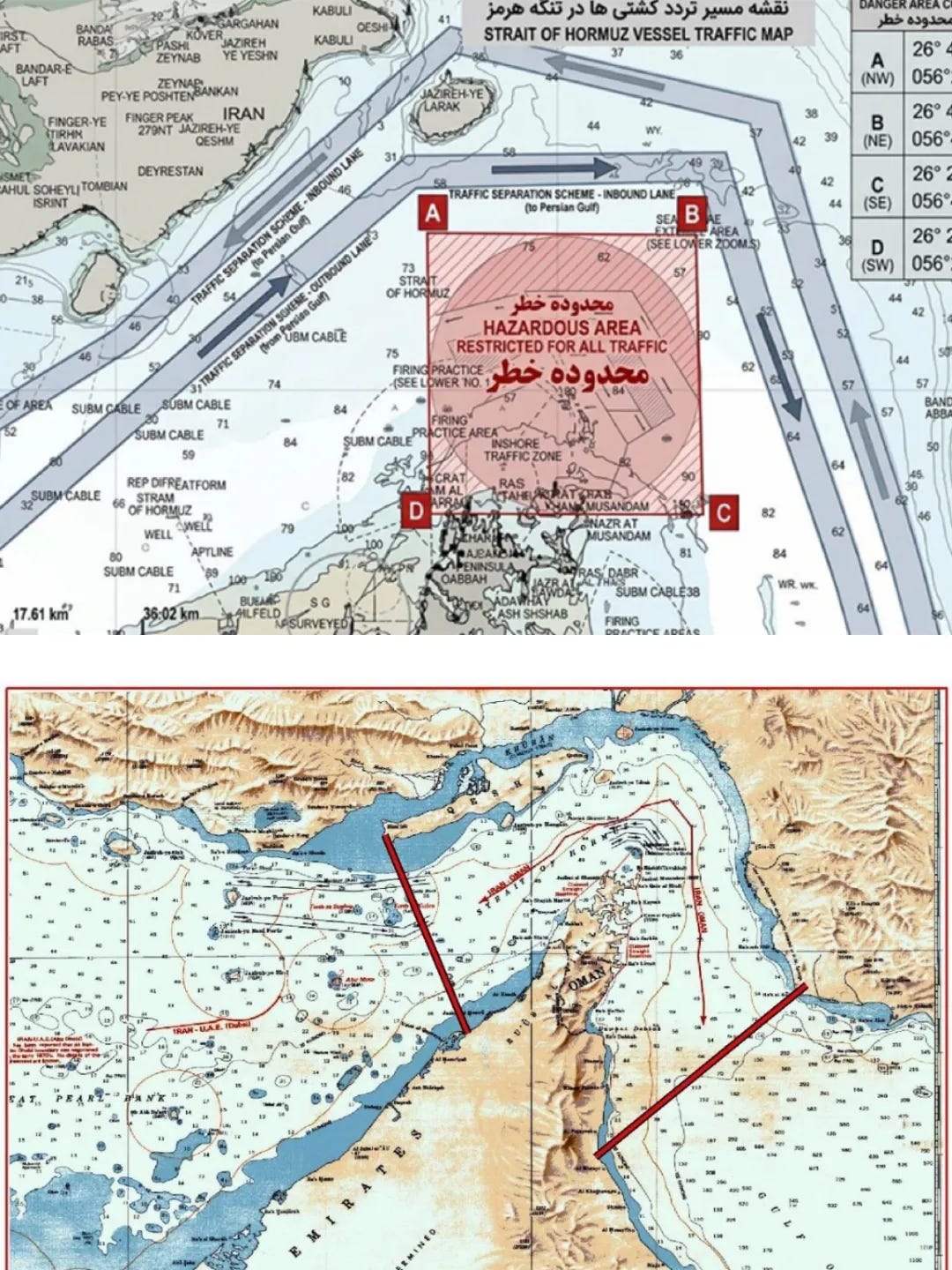
Iran has placed its blockade line at the narrowest point of the Strait of Hormuz, while the United States has placed its line outside the strait, in the Gulf of Oman. Even with many warships and vessels deployed, a complete U.S. naval blockade would require a long time and enormous forces, and the result would still be uncertain. The core purpose of the U.S. move is to force Iran to reopen the strait.
In fact, the strait itself is of limited importance to U.S. passage security. But the obstruction of the strait stems from the war first launched by the United States and Israel, which makes it politically and strategically difficult for Washington to extricate itself. As long as the strait remains closed, the Trump administration’s “winning” narrative cannot hold together. The United States will also pay a heavy price in strategic credibility and diplomacy. It therefore has to reach some degree of compromise with Iran.
Since the United States announced its blockade of the strait on 13 April, around 30 vessels a day have crossed the U.S. blockade line, operating mainly between the “Iranian line” and the “U.S. line.”
It is worth noting that even if the war ends, the Strait of Hormuz will find it difficult to return to its prewar state. After this episode, Iran is unlikely to relinquish control over passage rights through the strait. But its current approach — hurting the other side while also hurting itself — is hard to sustain over the long term.
Looking ahead, Iran may seek a solution acceptable to all parties: charging certain fees and using that arrangement to preserve a greater say over the waterway. That is its core objective.
For the United States, the immediate priority is to get out of the war, so any outcome must be politically and diplomatically defensible. If the two sides can package “appropriate fees” in a way that allows both to claim victory at home, Washington may be able to accept it. But no matter how the war ends, Iran is likely to continue seeking some form of control over the strait. This will have far-reaching implications for international energy corridors, energy security, and global trade.
An Yukang: The Strait of Hormuz could become a long-term “toll station.” This possibility stems from two core issues in U.S.-Iran negotiations: Iran’s right to uranium enrichment — especially the U.S. demand that Iran hand over its highly enriched uranium — and passage rights through the Strait of Hormuz.
Iran may accept a lower level of uranium enrichment in exchange for the United States lifting its maritime blockade. At the same time, Iran could ease its own control over the Strait of Hormuz in phases. If all parties come to recognise Iran’s “special influence” over the strait in political and military terms, the United States and Iran may reach a framework agreement based on “uranium enrichment for passage rights” and “lifting blockade for lifting blockade,” with both sides making concessions.
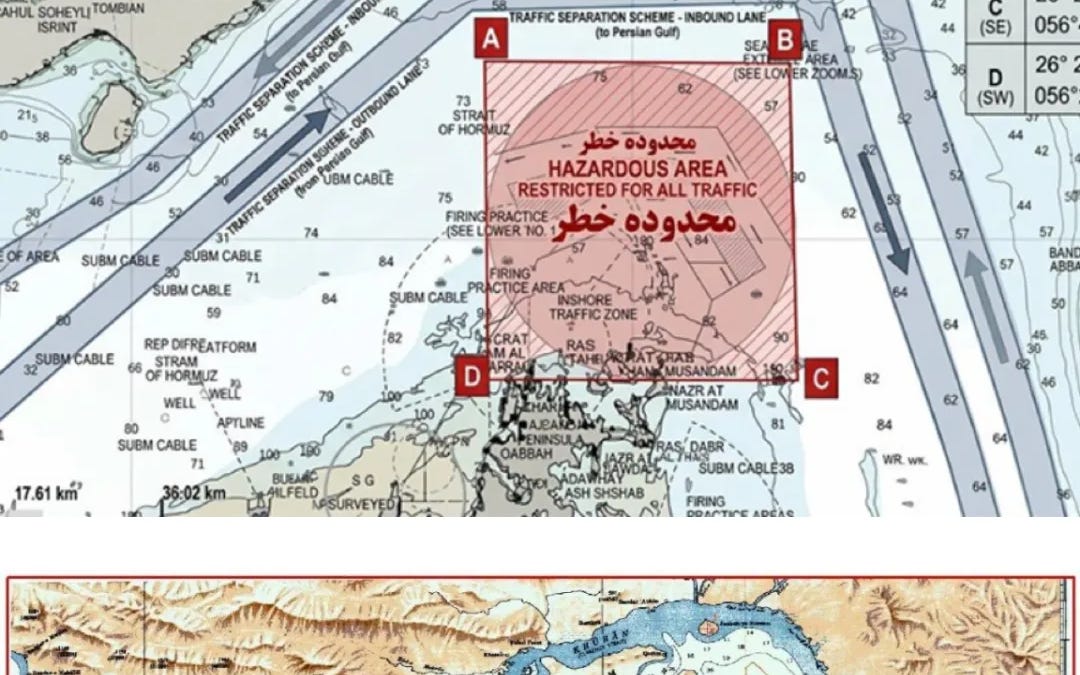
Based on front-line feedback, Iran has opened a “safe corridor” through the strait and released a route map on 8 April. Under Iranian controls, eastbound vessels must pass south of Larak Island, while westbound vessels must detour north through Iranian territorial waters between Larak Island and Qeshm Island and undergo inspection at a checkpoint on Larak Island.
The “safe corridor” has no uniform fee schedule. Oil tankers are charged one U.S. dollar per barrel, and a 300,000-ton supertanker may pay as much as 2 million U.S. dollars. The rate was set with reference to toll levels on the Suez and Panama canals. Given current international oil prices and shipping schedules, shipping companies may not find it entirely unacceptable.
In practice, non-Iranian vessels must contact the Islamic Revolutionary Guard Corps (IRGC) through agents and submit detailed information on vessel ownership, financing, insurance, departure port, destination, charter contract, and cargo, in order to prove that the vessel has no ties to the United States or Israel. Once approval is granted, the IRGC provides a route list and sends speedboats to track and supervise the vessel. Iran also classifies vessels’ countries of origin into five tiers according to the closeness of bilateral relations, granting transit-fee exemptions to friendly countries such as Russia.
Oman once considered opening a “second passage” within its own territorial waters and discussed with Iran ways to ensure smooth passage through the strait. But Iran’s route map designated both the prewar main shipping lane and Omani territorial waters as mine-risk areas and banned vessels from passing through them. At present, vessels publicly transmitting AIS signals are all passing through waters on the Iranian side and are subject to full Iranian monitoring. Vessels not publicly transmitting AIS signals pass through the strait along the Omani coastline.
Pakistan also held talks with Iran to ensure the safety of its own vessels. In fact, Iran has consistently allowed Pakistani vessels to pass directly. In March, Pakistan proposed that large oil tankers stranded in the Gulf reflag under the Pakistani flag to pass through the strait.
The crisis over the Strat of Hormuz is forcing global shipping to reroute and is affecting other chokepoints.
First, alternative logistics corridors built around sea-land transshipment have emerged. Goods from many countries are now being rerouted through Oman’s Sohar Port, the UAE’s Khor Fakkan and Fujairah ports, and Saudi Arabia’s Jeddah Port, before continuing overland. But many of these ports are relatively small, and serious congestion has already emerged.
Second, the disruption in the Strait of Hormuz is now feeding into congestion at the Panama Canal. With Middle Eastern supply disrupted, Asian buyers have turned to crude oil exported from the U.S. Gulf of Mexico, adding pressure on Panama Canal capacity. The Panama Canal Authority’s auction price for priority transit has reportedly risen to 4 million U.S. dollars, allowing winning vessels to move ahead in the queue.
Third, capacity in places such as the Panama Canal and the Red Sea is now being prioritised for oil tankers. This has worsened freight-rate increases and delays for lower-value cargo such as grain.
Fourth, aviation fuel shortages have become more pronounced. Aviation fuel has long been one of the more vulnerable links in the oil supply chain. The global aviation network is now visibly disrupted, with many flights cancelled and both passenger fares and air freight rates rising further.
Wang Cheng: It is not very helpful to describe the current state of the Strait of Hormuz simply as “open” or “closed.” A more accurate description is that it has evolved from a freely navigable international waterway before the war into a highly geopolitical “selective passage filter.”
For most commercial shipowners, however, as long as war risks persist, insurance costs remain high, and confidence in security has not been restored, the strait is effectively closed in commercial terms.
The Hormuz crisis has dealt a severe blow to the transport and logistics networks of the Gulf Arab states. For decades, these networks have been built around the Strait of Hormuz as their core node. The UAE’s Jebel Ali Port, the largest cargo port in the Middle East, and Saudi Arabia’s Dammam Port, the region’s largest energy export port, are both located on the Gulf side of the strait.
This war has highlighted the strait’s role as a “single point of failure.” Even without a complete blockade, the persistent uncertainty created by the chilling effect is enough to reshape market expectations and transport patterns. Its effects will linger and will not disappear with a short-term ceasefire.
It has forced Gulf Arab states to rethink their over-dependence on a single maritime route and to ask whether they can continue relying on the Strait of Hormuz to support their energy trade systems and national economic transformation plans. Previously, this was largely a theoretical discussion. This war has made the costs painfully real, pushing countries to look beyond emergency measures and consider longer-term structural adjustments.
These adjustments mainly involve three areas: alternative maritime routes bypassing the strait, overland energy and logistics corridors across the Arabian Peninsula, and integrated sea-land transport systems.
In this process, the UAE’s weight as the region’s traditional logistics gateway may decline, while Oman and Saudi Arabia may become relatively more important. Oman, with ports such as Sohar and Duqm facing directly onto the Arabian Sea and the Indian Ocean, offers a natural external route that bypasses the strait.
Saudi Arabia, meanwhile, has eastern ports such as Dammam facing the Persian Gulf and western ports such as Yanbu and Jeddah facing the Red Sea, as well as infrastructure connecting the two coasts. It is currently the only country physically capable of large-scale transshipment around the strait, providing an alternative sea-land intermodal route.
That said, all existing alternatives have obvious limits. Fujairah in the UAE and Sohar in Oman are small or medium-sized ports whose transshipment capacity is already saturated, and both are heavily congested. If cargo is rerouted to larger ports such as Jeddah and then transported long distances by land, logistics costs may nearly double, according to estimates by Chinese traders.
These options can serve as emergency responses in the short term, but whether they will become a fixed pattern remains to be seen. This process of structural redistribution depends entirely on how long the U.S.-Israel-Iran war lasts and how it ends. Historically, however, once trade routes, capital flows, and energy pathways have been restructured, it is difficult for them to return to their original form.
The impact on the UAE is especially far-reaching. This is not only a physical shock, but also a fundamental stress test of its development model. In the past, the UAE became a haven for capital and talent in a turbulent Middle East by combining low risk, high openness, and strong mobility. This war has affected all three foundations. Rising geopolitical risk has pushed up risk premiums, and capital flows have become more cautious.
Whether the UAE can continue to function as a regional or even global capital haven and logistics gateway is now an open question. Against this backdrop, the development model and political-economic outlook of the entire Gulf region, and even the broader Middle East, may undergo profound changes.
Wang Cheng: Based on my observations during Phase I of the 139th Canton Fair in April, the war has had at least three effects on China-Middle East trade.
First, transport costs have remained high. In the past, shipping a standard container from Shanghai to the Middle East cost about 3,000 to 4,000 U.S. dollars. The base ocean freight rate has now risen to 5,000 to 6,000 U.S. dollars. With war-risk surcharges, additional costs have increased by around 3,000 to 5,000 U.S. dollars. Total transport costs are now roughly three times normal levels and exceed 10,000 U.S. dollars. As a result, many Chinese exporters are taking a wait-and-see approach unless Middle Eastern buyers are willing to absorb the higher costs.
Second, although alternative routes exist, delivery times have generally lengthened from 30 days to 60 days. This has created significant pressure for sectors such as cross-border e-commerce and has had a real impact on China’s exports to Arab countries.
In 2025, China-Arab trade reached 422 billion U.S. dollars, including 233.6 billion U.S. dollars in Chinese exports to Arab countries, up 13.4 per cent year on year. But because of the U.S.-Israel-Iran war, the 2026 figures are expected to come under pressure.
The war coincided with Ramadan in Arab countries, normally one of the strongest periods for local import demand. In previous years, Middle Eastern importers concentrated their purchases of food, daily necessities, production tools and consumer goods around Ramadan. Some exporters from Zhejiang said Ramadan orders in previous years were 50 per cent higher than usual, or even doubled. Some merchants previously recorded monthly sales of more than 20 million yuan, but this March sold only slightly more than 1 million yuan, less than one-tenth of normal levels.
At this Canton Fair, the number of Middle Eastern buyers declined noticeably. Buyers from Central Asia and South America increased, but both their unit prices and order volumes were lower than those of Middle Eastern buyers. For similar goods sold to these regions, profit per container was only one-fifth of that from Middle Eastern orders.
Third, on the import side, prices of bulk commodities such as energy, industrial helium, and various chemical raw materials have risen across the board. This will also affect China’s imports from Arab countries and transmit imported inflationary pressure into China.
But in my view, the deeper impact of this war is that the Hormuz crisis has shaken the underlying logic of global supply chains. For the past 30 years, globalisation has been built around efficiency. Companies pursued the lowest costs, shortest routes, leanest inventories, and highest turnover through global allocation. This crisis shows clearly that this logic no longer works in an era of high geopolitical risk.
The keyword today is no longer efficiency, but resilience. This means that the movement of both ordinary goods and bulk commodities cannot depend on a single route, supplier, port, or inventory centre. Backup options are essential.
Global supply chains may shift from a single optimal route to a system of parallel routes. For example, the traditional route from the Gulf to Europe passes through the Strait of Hormuz, the Bab el-Mandeb Strait, and the Suez Canal. Its reliability has now been shaken. Some shipowners are already considering rerouting around the Cape of Good Hope. Although this adds 10 to 15 days to the voyage and raises costs by 30 per cent or more, it does provide a safer second option.
The global maritime network will increasingly take on a two-layer structure. The first layer is the traditional trunk network, centred on conventional straits and canals, which is more efficient. The second is a resilience backup network, including sea-land intermodal transport, railway corridors, alternative pipelines, and regional transshipment hubs. In future major-power competition, one key question will be who has more alternative routes to choose from.
In commodity flows, oil and natural gas trade will become increasingly friend-shored and securitised. Political reliability, transport security, and controllable sanctions risk will matter much more. Future energy trade will take into account not only price, but also a premium for geopolitical risk.
For China, around 42 per cent of its crude oil imports in 2025 came from Gulf countries, and most of these imports had to pass through the Strait of Hormuz. Even so, China has shown greater overall resilience than many neighbouring countries in the face of energy supply shocks caused by the war. This is because China’s import sources are more diversified, it has adequate strategic reserves, and the share of new energy in consumption has continued to rise as the country has pushed forward its energy transition.
In my view, the global energy system will undergo three major changes. First, the scope of strategic reserves will expand from oil to natural gas, critical minerals, and even key components. Second, companies will move away from the zero-inventory model of the globalisation era and hold larger safety stocks. Third, global capital will flow more toward infrastructure that offers energy security and supply-chain resilience.
Ultimately, we are witnessing globalisation move from an age of efficiency into an age of resilience.
An Yukang: To some extent, this crisis has forced a “security repositioning” of the Middle East. The region is not only the global centre of energy, but also a major hub for bulk commodities such as chemicals and fertilisers.
Previous studies mostly focused on the resilience of specific products such as oil and gas, or on key infrastructure. But regional and systemic supply-chain security risks also need to be considered as a whole.
For example, when war hits the Middle East, the impact does not stop at the energy market. It quickly spreads along the chain from energy and raw materials to petrochemical cracking, intermediate products, downstream manufacturing, and logistics delivery.
Unlike oil and gas, intermediates such as ethylene, methanol, and para-xylene have very limited inventories. There are also no alternative transport routes outside the Strait of Hormuz, nor idle capacity, for these chemical consumables. This is very different from oil and gas, which can be procured from more diversified sources.
According to industry information, since April, operating rates at some Chinese refineries have already declined, while refinery operating rates in Japan and South Korea have fallen by 5 to 15 per cent. Rising international crude prices have pushed up prices across bulk commodity chains such as coking coal and iron ore. Disrupted natural gas supply has also driven up prices of fertilisers and sulphur, which depend on natural gas, putting pressure on the entire industrial network.
Recently, global urea prices have doubled, ammonia prices have risen by 20 percent, and food-security risks in regions such as South Asia have been rising rapidly. With the spring planting season under way, any disruption to fertiliser supplies would directly affect food security in the second half of 2026 and even into 2027, increasing the risk of political instability in regions such as Africa and South Asia.
The obstruction of the strait, combined with supply-chain disruptions, is further dragging on growth in Middle Eastern countries and the global economy. According to the latest IMF forecast, Gulf Arab states such as Kuwait, Bahrain, and Qatar could see negative growth in 2026, while global growth has been revised down to 3.1 per cent. If international oil prices stay above 100 U.S. dollars for an extended period, global growth could fall further, to 3 per cent or even below 2.5 per cent.
At this stage, views differ on how commodity flows will change. There is both certainty and uncertainty on the supply and demand sides.
On the supply side, it remains difficult to determine whether the Middle East crisis represents a structural shift in energy supply or only a temporary disruption. From the energy industry’s perspective, oil production and transport in the Gulf have certainly suffered a serious blow. But disrupted flows do not mean the supply itself has disappeared. If passage through the strait returns to its prewar state, the impact is expected to fade. Politically and militarily, however, significant uncertainty remains over whether the United States and Israel will continue to launch military strikes against Iran, and whether Iran will again tighten its control over the strait.
On the demand side, slower growth in oil and gas demand is highly likely. This crisis has sharply heightened countries’ awareness of energy security, which will inevitably accelerate the shift away from oil and gas. Previously, Middle Eastern oil producers generally expected global oil demand to reach a plateau and remain stable over the next 20 to 30 years. After the escalation of war in the Middle East, that assumption may change significantly.
As energy-security concerns grow, countries will accelerate their energy transitions and increasingly see energy transition itself as a form of energy security. They will invest more in alternative energy sources and technologies, speed up the clean-energy transition, and localise energy production and consumption. Whether by “near-shoring” oil and gas procurement or reviving domestic hydropower, wind, solar, nuclear or even coal resources, countries will drive profound changes in the global energy landscape.
Hu Bo: No matter how this crisis ends, it may to some extent weaken the Middle East’s role in global geoeconomics and geopolitics.
First, in geoeconomic terms, the crisis is forcing Asian and European countries to look for alternative sources of energy, including oil and gas from other regions. This will weigh on Middle Eastern economies.
Second, even if the war ends, the Middle East is likely to enter a relatively long period of instability. This will weaken its position in global financial markets. Global capital had previously been quite attracted to the Middle East, but that preference is likely to weaken after the war.
Once the region’s geoeconomic position declines, geopolitical consequences will inevitably follow. The Middle East’s influence in global geopolitics will remain significant, but it will decline to some extent. The United States has long wanted to extricate itself from the Middle East. I believe this war, whatever the outcome, may accelerate that process. Nevertheless, the Middle East will remain a focal point of competition among all parties.
Tang Tianbo: The Strait of Hormuz crisis is the fourth major shock to global supply chains or shipping-lane security in recent years.
The first was the COVID-19 pandemic. It halted production in many countries and disrupted transport. The zero-inventory, high-turnover production model temporarily turned from a strength into a vulnerability.
The second was the Ukraine crisis. It affected grain exports as well as Russia’s energy exports to Europe. Oil and gas that Russia had previously sold to Europe were redirected to Asia, while the Middle East filled part of Europe’s supply gap. Some studies suggest that the direct death toll from the fighting in Ukraine may have been lower than the number of indirect deaths linked to disruptions in grain exports and related factors.
The third was the global tariff war launched by Trump after his return to office.
The current shock is reinforcing trends that had already emerged among major countries after the first three waves: building greater security redundancy, strengthening strategic reserves, and seeking to keep supply chains and their key transport nodes under the control of their own countries or friendly states.
An Yukang: The U.S.-Israel-Iran war offers China several important lessons.
First, China should improve supply-chain security mechanisms based on extreme scenarios. At present, the energy and maritime transport sectors still lack a genuine backstop mechanism. China should continue stress-testing its systems against severe shocks and build medium- and long-term backstop mechanisms for key links to ensure operational stability.
Second, China should attach great importance to fertiliser security. One unexpected consequence of this war has been a global sulphur shortage. Sulphur is a by-product of natural gas and mainly comes from sulphur-containing gas producers such as Qatar, the UAE and Iran. A shortage of sulphur would affect not only fertilisers, copper, and nickel smelting, and semiconductor manufacturing, but also food and commodity prices.
Third, China should improve its integrated shipping support system, backed by Chinese-controlled vessels, Chinese shipping capacity, and Chinese insurance coverage. The war has once again exposed the dilemma surrounding war-risk insurance. Marine war-risk insurance is generally divided into ordinary war-risk insurance and special war-risk insurance; once a vessel enters a war zone, it must apply to its insurer for special war-risk cover.
After the outbreak of the U.S.-Israel-Iran war, Western insurers, represented by the International Group of P&I Clubs, invoked war-cancellation clauses, meaning that vessels’ existing ordinary war-risk cover would expire. Shipowners were therefore forced to purchase additional special war-risk cover. In this process, a series of problems emerged, including soaring premiums and the transfer of risk, which in practice made it more difficult for shipping to resume.
On 6 March, the U.S. government announced a 20-billion-dollar plan for maritime reinsurance, seeking to strengthen U.S. influence over navigation in the Gulf. This creates a practical need for China to integrate resources across the shipping and financial sectors, expand the role of Chinese insurance in covering Chinese-controlled vessels, and increase the share of state-owned or nationally controlled maritime capacity.
Fourth, China should make better use of technology and build an independent “AI plus digital logistics” system. The crisis has made clear that AIS, or the Automatic Identification System, is no longer sufficient to capture the real situation in the Strait of Hormuz. At present, the digital tools and infrastructure used by Chinese civilian shipping companies, including the BeiDou Navigation Satellite System, still fall short in providing maritime situational awareness in the Middle East. Real-time maritime monitoring and risk-warning information in the region still depends heavily on Western systems.
Fifth, China should strengthen its blue-water capabilities. It should improve shipping alternatives, optimise energy import and cargo trade routes, and in particular reduce reliance on the single Persian Gulf-Red Sea route.
In the meantime, China and Middle Eastern countries may see new opportunities for cooperation in five areas.
First, in regional planning, the Middle East crisis has created major opportunities for China to coordinate connectivity projects across the Indian Ocean littoral. It has also opened up new possibilities for Middle East–South Asia integration and for trilateral cooperation among ASEAN, China, and the Gulf Cooperation Council.
Projects such as Pakistan’s Gwadar Port, Sri Lanka’s Hambantota Port, and Mattala International Airport have fallen short of expectations in terms of economic returns and operational performance. But as the spillover effects of this war spread, their value as strategic backup nodes has risen sharply, with utilisation rates reaching historic highs. On 12 April, Pakistan formally launched an overland trade corridor through Iran to Central Asia to bypass the Strait of Hormuz, creating new opportunities for Gwadar Port.
Second, in postwar reconstruction, Chinese enterprises could play an important role in the repair and reconstruction of oil and gas facilities in Middle Eastern countries. In midstream pipeline infrastructure, countries in the region are actively discussing the expansion of existing pipelines, as well as the accelerated construction of oil pipelines and export terminals that bypass the Strait of Hormuz. For example, the UAE is accelerating construction of a second oil pipeline from Habshan to Fujairah, while recent progress has also been made on infrastructure projects such as the Saudi Landbridge Railway.
Third, in energy transition, geopolitical conflict has further strengthened the export advantages of China’s new-energy industry. There is great potential for cooperation between China and Middle Eastern countries in this area.
Fourth, in the digital economy, the war has exposed new risks in U.S. overseas digital and AI infrastructure. Since the outbreak of the U.S.-Israel-Iran war, U.S. companies’ digital infrastructure in Middle Eastern countries has frequently come under Iranian attack. Iran has also accused the U.S. military of relying on civilian data centres in Middle Eastern countries for AI workloads and communications. This highlights the militarised, weaponised, and insecure risks of U.S. overseas AI deployment.
Chinese companies such as Huawei and Alibaba have already been deeply involved in digital cooperation with Gulf Arab states. Although they face some pressure from the United States, their strong overall competitiveness in technology, cost, and localised services means they will continue to play an important role in the digital transformation of Gulf Arab countries. China and Arab countries can also explore new scenarios for lightweight AI cooperation and develop new models combining Chinese AI with Arabic-language applications.
Fifth, in energy finance, Middle Eastern countries have become more receptive to non-dollar settlement to avoid geopolitical and sanctions risks. This will create more opportunities for two-way capital allocation and cross-border renminbi flows.
Take the UAE as an example. In 2024, the Central Bank of the UAE completed its first cross-border digital dirham payment via mBridge, conducting a 50-million-dirham transaction with the Bank of China. The following year, the People’s Bank of China authorised First Abu Dhabi Bank PJSC to serve as the renminbi clearing bank in the UAE.
Although the petrodollar remains resilient, as regional countries pursue more independent monetary arrangements under the impact of this war, China and Arab countries are expected to further expand the use of the renminbi in energy cooperation.
Tang Tianbo: When assessing the situation, more cross-regional and interdisciplinary expertise is needed to reach meaningful conclusions.
For example, Pakistan’s role in the U.S.-Israel-Iran war should not be underestimated. Clear linkages have emerged between the Middle East and South Asia. Many Southeast Asian countries have faced energy shortages because of the war, and this impact should not be overlooked. International institutions such as the IMF have warned that while the impact on wealthy countries may be relatively manageable, poorer countries could suffer much more severe shocks.
A deeper study of these issues requires breaking down both regional and disciplinary boundaries, and bringing together expertise on the Middle East, South Asia and Southeast Asia, as well as economics and finance.
In addition, questions of passage through the strait and possible blockades now touch on many relatively new fields, including drones, cognitive warfare, artificial intelligence, and cryptocurrencies. Signal and noise are often hard to separate. To interpret, predict, and even describe the situation accurately, more integrated and forward-looking perspectives are urgently needed.
At the same time, the Strait of Hormuz crisis will prompt the international community to rethink the management mechanisms, security guarantees, and future risks of global strategic passages. It has exposed a governance deficit and will likely intensify existing competition over strategic routes.
The governance model for global strategic passages may not change significantly in the short term, but the crisis will encourage countries to develop alternative routes, prepare alternative supplies, and seek alternative partners. The prospects for these alternatives will be shaped not only by geopolitics, but also by economic and technological feasibility.
Wang Cheng: From the perspective of my own research field, the biggest lesson from this crisis is that, as a major trading country, China should build a security support system commensurate with the scale of its trade.
China is the world’s largest goods trader and energy importer, but it still relies heavily on the international public goods for security in energy, shipping lanes, and overseas supply chains. This may not be a major problem in peacetime, but in an era of frequent geopolitical conflict, the risks can be magnified quickly.
Energy security no longer means simply being able to buy energy. It also means being able to bring it home. In other words, China must have the ability to transport the resources it has purchased back to the domestic market.
The reverse is also true. As a major producer, China must not only be able to make products, but also to sell and ship them abroad.
This was confirmed in my exchanges with buyers at the 139th Canton Fair in April. After the U.S.-Israel-Iran war broke out, many Middle Eastern buyers asked to change trade terms from the traditional CIF model — cost, insurance and freight, under which the seller is responsible for transporting goods to the designated port of destination — to DDP, or delivered duty paid, under which the seller is responsible for end-to-end logistics, customs clearance and door-to-door delivery. This poses a major test for Chinese exporters’ logistics and delivery capabilities.
China therefore urgently needs to build a more complete four-dimensional security system: diversified sources, diversified routes, a stronger and more diversified reserve system, and stronger financial pricing capabilities to hedge risk.
At the same time, the Belt and Road Initiative has entered a 2.0 stage. In the past, the emphasis was on construction. In the future, greater attention should be paid to resilience, security, redundancy, and the ability to convert infrastructure for emergency use.
As the examples of Sri Lanka’s Hambantota Port and Mattala International Airport show, assets that may look like “strategic redundancy” in peacetime can become extremely valuable in a crisis. The China-Oman Industrial Park at Oman’s Duqm Port is a similar case.
In my view, if China thinks in terms of major-power competition, or even preparedness for wartime contingencies, it should focus on building three types of overseas nodes: energy transshipment hubs, logistics and replenishment hubs, and assets that can be converted for emergency functions in a crisis.
From Hambantota to Gwadar, and from Djibouti and Duqm to Piraeus in Greece and ports across Africa, these sites could, under extreme circumstances, become important nodes in China’s future global resilience network.
Hu Bo: First and foremost, this crisis has demonstrated the soundness and foresight of China’s previous strategic judgments and policy preparations on maritime passage security and energy security.
Second, China should attach even greater importance to maintaining the security of maritime passages. But it must also be emphasised that in the 21st century, military means have limits, no matter how powerful a navy may be. To maintain maritime passage security, China should still rely mainly on diplomatic, economic, financial, and legal tools.
China already has strong economic influence and substantial diplomatic capacity, which can be leveraged to help maintain maritime passage security. By comparison, its financial and legal tools are somewhat weaker and need to be strengthened. In other words, safeguarding maritime passage security requires a combination of tools, while the military mainly serves as a backstop and deterrent.
Third, China should pursue relative security rather than absolute security. As the world’s largest goods trader, China cannot seek absolute security in the way the United States does. The cost would be unbearable. China’s economic prosperity depends deeply on an open global trading system. If all parties pursue absolute security and turn inward, the logic of global trade would break down.
Military means play a key role in important missions such as escort operations in the Gulf of Aden. Important nodes and important routes must also have military countermeasures available. But it is unrealistic to pursue such capabilities across all strategic routes worldwide.
Finally, China should maintain strategic resolve. At present, the combined scale of China’s navy and coast guard far exceeds that of the United States. This means that if the United States were to impose a non-war “maritime blockade” against China, it would not necessarily gain the upper hand.
After more than 30 years of military modernisation, China’s strength is no longer what it once was. It should therefore maintain its strategic resolve and avoid excessive anxiety whenever the Trump administration makes tough statements. In fact, some Trump administration policies contain more bluff than substance and have little chance of being implemented. China needs to assess carefully what can actually be implemented, what represents an opportunity and what constitutes a challenge, and then respond rationally.