

China Threatens to Cancel US Summit Over Taiwan Arms
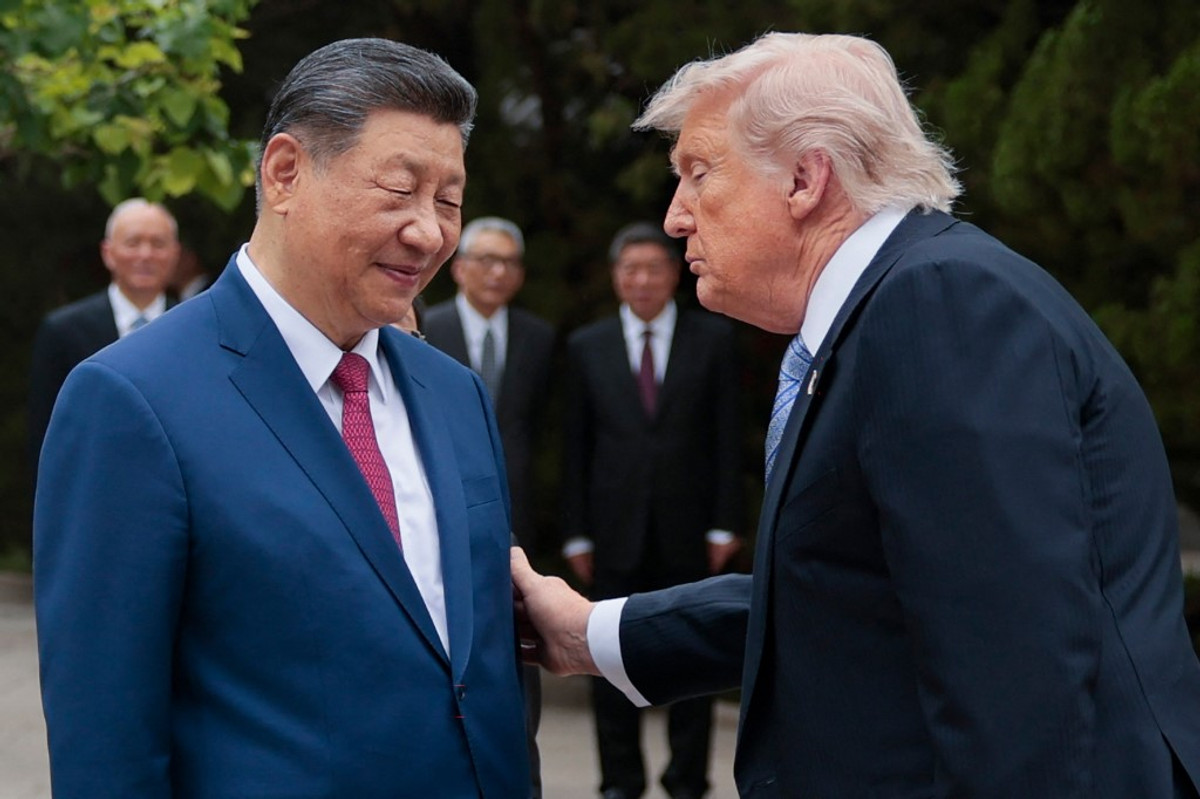
China has warned the US that it will cancel a planned leaders’ summit later this month if Washington approves fresh arms transfers to Taiwan before the meeting takes place, Japanese news agency Kyodo reported.
According to diplomatic sources, Beijing reiterated that Taiwan remains the foremost “red line” in Sino-American relations as preparations continue for Chinese President Xi Jinping to meet US President Donald Trump.
JOIN US ON TELEGRAM
Follow our coverage of the war on the @Kyivpost_official.
Beijing views the self-governed democratic island of Taiwan as an integral part of its sovereign territory, asserting it is prepared to achieve reunification by military force if necessary.
Friction surrounding the status of Taiwan escalated during a bilateral leaders’ meeting in Beijing in May, when Xi designated Taiwan as the most critical issue in bilateral ties and warned of direct conflict if the matter was mismanaged.
In a subsequent television interview, Trump remarked that arms sales to Taiwan could serve as a “very good bargaining chip” in broader negotiations with China – comments that intensified scrutiny among Asian allies over the durability of Washington’s regional security guarantees.
According to Kyodo, Trump places an emphasis on staging a high-profile summit with Xi ahead of November’s midterm congressional elections, viewing the prospective meeting as an opportunity to project foreign policy successes to domestic voters.
Other Topics of Interest
9/11: Geopolitical Legacy 25 Years On
European editorial boards examined the geopolitical legacy, erosion of civil liberties, and political polarization 25 years after the 9/11 attacks.
Taiwan Relations Act
US defense transfers to Taipei are governed by the Taiwan Relations Act, enacted by the US Congress in 1979 after Washington severed formal diplomatic recognition of Taipei in favor of Beijing. The statute authorizes the US to supply defense articles and services necessary to enable Taiwan to maintain a sufficient self-defense capacity.
In December, the Trump administration announced an $11 billion arms package for Taiwan – the largest in US history – drawing sharp condemnation from Beijing.
The deal coincided with heightened military exercises by the People’s Liberation Army (PLA) across the Taiwan Strait, stoking international apprehension over a potential cross-strait blockade or invasion that could draw the United States and regional allies into a direct military confrontation.
The dispute over weaponry also intersects with regional maritime maneuvers.
In early June, Beijing launched a targeted maritime law enforcement and traffic control operation in Pacific waters directly east of Taiwan, aiming to project administrative jurisdiction and display an operational capacity to monitor transit routes along the island’s eastern flank.
Concurrently, Taiwan’s legislature advanced a $25 billion defense appropriation bill dedicated to procuring advanced US-made deep-strike systems and loitering munitions, while Taiwanese President Lai Ching-te reiterated that foreign powers cannot determine the island’s democratic future.
Beyond cross-strait security, bilateral negotiations between Washington and Beijing are being directed by the US Department of the Treasury and the Department of Commerce to assemble a broader diplomatic package.
The two leaders are expected to review a range of economic arrangements, including a proposed agreement to lower reciprocal tariffs on $30 billion worth of goods, as well as a preliminary framework agreement governing artificial intelligence safety standards.
The summit agenda may also address Beijing’s posture regarding Tehran. China remains one of Iran’s vital economic and commercial partners amid broader hostilities in the Middle East.
According to a source cited by Kyodo, Beijing has maintained a constructive posture on the matter and has not sought to disrupt dialogue with Washington.