

China needs another Zhu Rongji
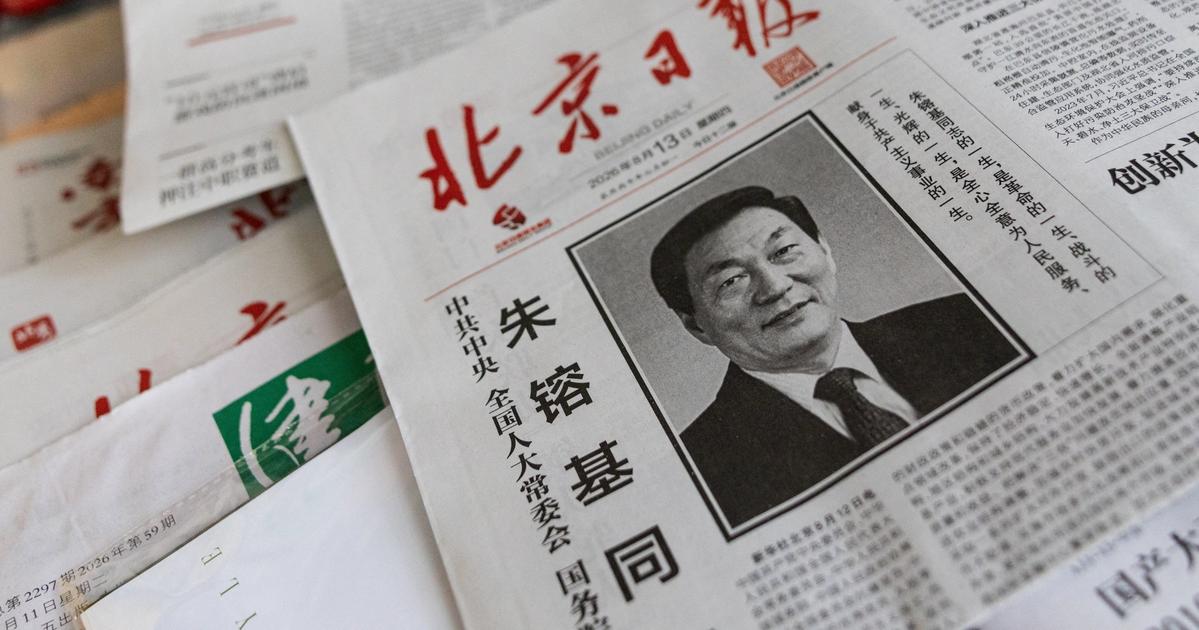
The hallmark of Zhu Rongji, the former Chinese premier who died last week, was his fearless energy. “I have prepared 100 coffins,” he declared at the outset of his tenure, “99 for corrupt officials and one for myself.”
For the nation’s workers, Zhu’s no-holds-barred assault on recalcitrant bureaucrats cut both ways. On the one hand, shuttering thousands of loss-making state enterprises smashed their “iron rice bowl” — a lifetime of guaranteed employment and welfare benefits. But he also forced socialist “work units” to hand over ownership of the apartments that housed their workers to the employees themselves. That was perhaps the greatest one-off transfer of public wealth into private hands in human history.
Today, the country’s economic woes are strikingly similar to those Zhu encountered when he took office in 1998 amid the Asian financial crisis: Slowing growth, price deflation, mounting debt.
And China needs another Zhu.
Were he now in government, he would have wondered why China wasn’t doing more to boost consumer confidence and stimulate domestic demand, Fred Hu — once part of Zhu’s informal kitchen cabinet and now the founder and CEO of Primavera Capital Group, a private equity firm — told me. He’d also have been dismayed to see China entangled in bitter trade disputes with the US and Europe. And ultimately, Hu added, “What Zhu would feel most uneasy about is the loss of reform momentum altogether.”
Zhu would’ve also likely challenged China’s leadership about the worsening quality of economic statistics, Joerg Wuttke, a partner at Albright Stonebridge Group and formerly the China head of BASF, the largest foreign investor in the country, added. In 2018, when Wuttke met Zhu in his retirement, the former premier asked: “How can you make economic policy decisions when you cannot trust data like non-performing loans?” Since then, numerous data sets, including youth unemployment, have been abandoned.
And even if Zhu were impressed by Chinese high-tech success, as he surely would be, said Arthur Kroeber, the founding partner of Gavekal Economics, he would have been “appalled by the waste, debt, and indifference to consumer welfare and sentiment that have arisen alongside that success.”
Zhu’s record was far from perfect. The paradox of his reforms — in addition to privatizing the country’s housing stock, he also rationalized the state-run financial system, brought China into the global trading system, and launched a series of colossal infrastructure projects — is that they had the overall effect of strengthening the state’s control of the economy, and in the long run entrenched opposition to the market overhauls that Zhu himself promoted.
In a sense, Zhu and his protégées undermined their own project.
As growth slumps, China’s leadership under Xi Jinping is doubling down on manufacturing and subsidized exports, further imbalancing the economy and, as Michael Froman, the former US trade representative argued recently in Foreign Affairs, threatening the next global financial crisis.
To address those flaws, a chorus of economists outside China — and some within the country — argue for a redistribution of national wealth from state enterprises to households in order to boost domestic consumption, just as Zhu once prescribed. Indeed, the modest apartments that Zhu sold to their occupants cheaply, mostly located in city centers around factories, became a rapidly appreciating asset. As downtowns boomed, a new class of home-owners saw a bright future for themselves and their families and began spending.
Zhu’s legacy is a complex one. To much of the West, including former US President Bill Clinton who ushered China into the World Trade Organization, Zhu was a reformer steering his country toward free markets and, possibly, a more open political system. That was clearly an illusion. In fact, Xi recoiled at Western attempts to brand him as “China’s Gorbachev,” the liberal reformer who ended up presiding over the collapse of the Soviet Union.
Lizzi Lee, a fellow at the Asia Society Policy Institute’s Center for China Analysis, questioned whether Zhu even deserved the moniker “reformer.” The economy he promoted was a hybrid, she argued — “dog-eat-dog Wild West” at the base, but with “iron fist state dominance” above. The system was “doomed to extreme inequality” while the real estate boom he encouraged, which has now turned bust, left local governments pathologically dependent on land sales for revenues.
Officially at least, the country Zhu served has no doubt where his true loyalties lay. His obituary, splashed across the front pages of every major Chinese newspaper, lauded an “outstanding member of the Communist Party,” a “loyal communist fighter,” and an “outstanding proletariat revolutionist.”