

China calls for all-out efforts to promote ceasefire in Sudan
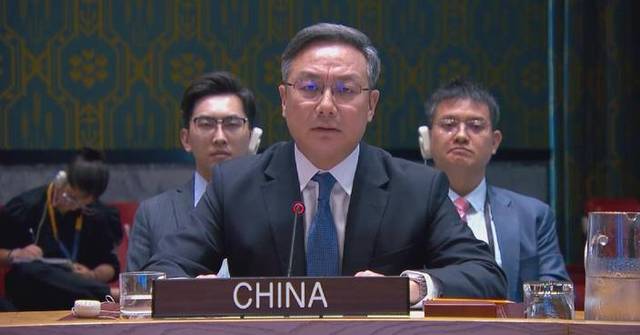
A Chinese envoy said on Monday that the international community must make every effort to promote a ceasefire in Sudan.
Speaking at a UN Security Council meeting on Sudan, Sun Lei, China’s deputy permanent representative to the United Nations, said the international community should persistently pursue peace talks, alleviate the humanitarian crisis, and stand together to maintain regional stability.
“As the conflict in Sudan drags on, it has not only caused heavy casualties and displacement of ordinary people, but also severely undermined development of the country and impacted the stability of neighboring countries. This tragedy should not continue. The Sudanese people’s desire for peace is growing, and the responsibility of the UN Security Council and the international community is becoming even greater. China has consistently stressed that sanctions are a means, not an end, and should not become a substitute for diplomatic efforts. The UN Security Council should use this special tool prudently, fully respect Sudan’s sovereignty, take into account the legitimate concerns of the country concerned, and ensure that sanctions are objective, just and effective,” said Sun.
China welcomes the Sudanese government’s initiation of an inclusive political dialogue and supports the United Nations in playing its central mediation role, Sun said.
The international community should effectively safeguard Sudan’s sovereignty, unity and territorial integrity, adhere to the principle of Sudan’s ownership, and avoid imposing external solutions, he added.
Since erupting on April 15, 2023, the war in Sudan has killed tens of thousands, displaced millions, and ruined the economy.
Politically, Sudan is deeply divided, with an internationally recognized government aligned with the Sudanese Armed Forces (SAF), and a parallel administration declared by the paramilitary Rapid Support Forces (RSF) in alliance with political and armed groups.
Analysts warn that this fragmentation of authority is prolonging the conflict and raising fears of further instability.
China calls for all-out efforts to promote ceasefire in Sudan
U.S. stocks closed mixed on Monday as a sharp sell-off in semiconductor equities dragged down the technology sector, while investors digested new U.S. economic sanctions announced against Iran and fresh trade tariff warnings targeting Canada.
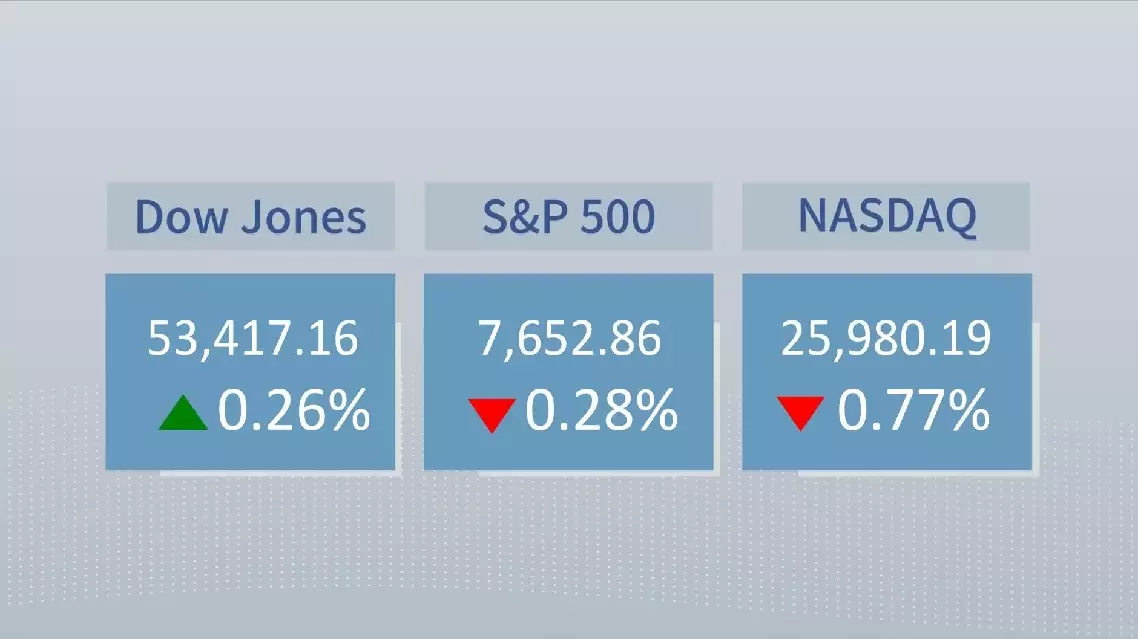
The Dow Jones Industrial Average rose 140.15 points, or 0.26 percent, to 53,417.16. The S and P 500 sank 21.51 points, or 0.28 percent, to 7,652.86. The Nasdaq Composite Index shed 200.264 points, or 0.77 percent, to 25,980.19.
Eight of the 11 primary S and P 500 sectors ended in the green, with consumer staples and financials leading the gainers by going up 1.76 percent and 1.24 percent, respectively. Meanwhile, technology and energy led the laggards by losing 1.59 percent and 0.76 percent, respectively.
The tech sector’s pullback stemmed from broad weakness across chipmakers. Memory and semiconductor shares came under heavy pressure following weekend reports that graphics processor leader Nvidia plans to implement price hikes across select AI server configurations. SanDisk, Western Digital, SK Hynix, Micron Technology and Seagate Technology all finished lower.
Geopolitical developments dominated macroeconomic headlines as U.S. Treasury Secretary Scott Bessent on Monday threatened Iran with “an economic D-Day,” announcing a wave of new sanctions aimed at further isolating the country.
On the trade front, U.S. President Donald Trump escalated trade frictions with Canada, announcing intentions to raise tariffs on Canadian cars, automotive parts and steel to 50 percent effective Jan. 1, 2027. The announcement weighed on domestic automotive equities, pulling shares of General Motors and Ford lower.
In corporate earnings disclosures, U.S.-listed shares of Chinese e-commerce firm PDD and electric vehicle maker XPeng declined 1.48 percent and 8.53 percent, respectively, following their latest quarterly financial reports.
Market attention is now converging on two critical catalysts later this week: Nvidia’s highly anticipated second-quarter earnings release on Wednesday, expected to serve as a vital referendum on the ongoing AI investment cycle, and Federal Reserve Chair Kevin Warsh’s scheduled address at the central bank’s annual Jackson Hole Economic Policy Symposium.
U.S. stocks close mixed as chip stocks sink
Credit: Source link