
Capitalism arrives in Cuba with American fuel
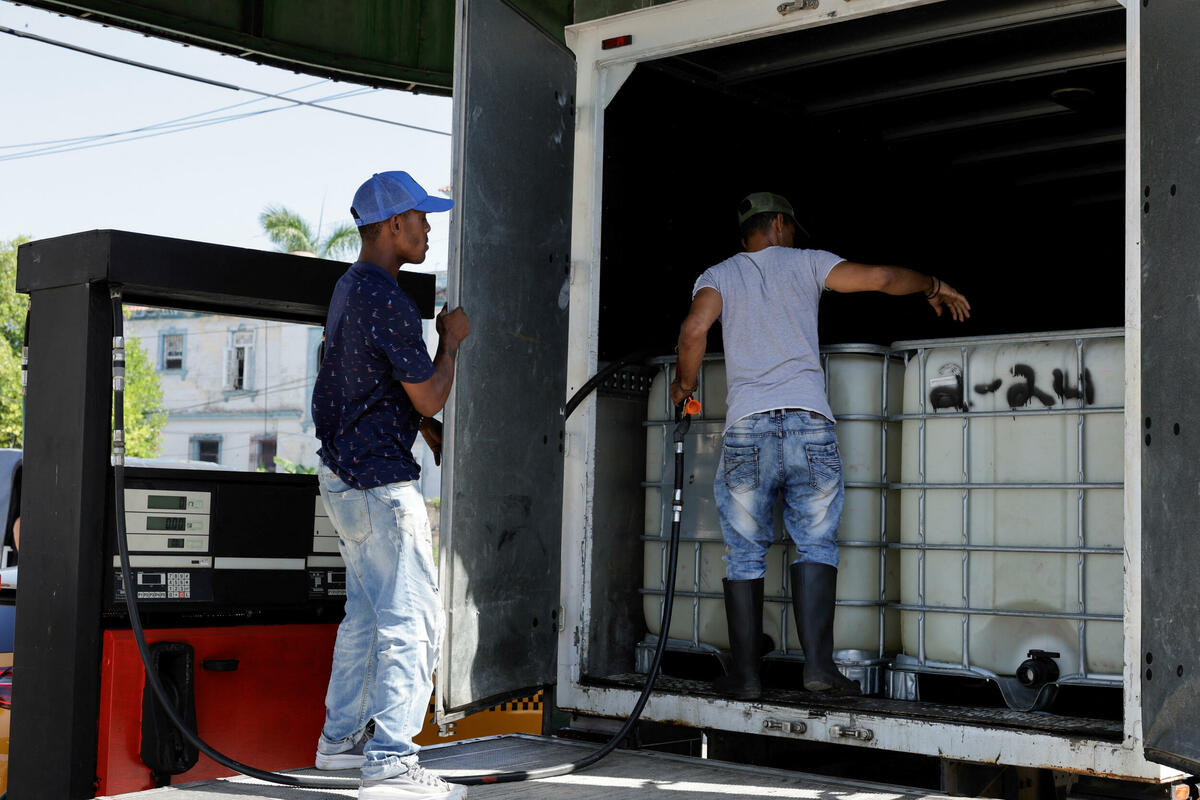
Gasoline at $38 a gallon is sold from cramped apartments. Diesel is offered on Instagram, with ads featuring famous models and reggaeton music. Six decades after Fidel Castro’s revolution, the cracks in capitalism are suddenly appearing in Cuba’s communist energy sector.
Under the tough US oil embargo against Cuba, an exception allowing US companies to export fuel to private Cuban firms has fueled a chaotic black market and opened the door to an energy sector that has been tightly controlled by the state since the days of Dwight Eisenhower in the White House.
Oil shipments from Cuba’s traditional suppliers, Venezuela and Mexico, abruptly stopped after the US ousted Venezuelan President Nicolas Maduro in January. US Coast Guard ships patrol the waters around Cuba, while sanctions and threats have deterred tankers from even setting sail.
The embargo has severely disrupted the functioning of key government services, such as healthcare, public transportation and schools. However, thanks to an exemption granted by the US Department of Commerce, small quantities of gasoline and diesel are reaching private restaurants, merchants and taxi drivers. These are the first significant deliveries of US fuel to the Caribbean island since Castro nationalised refineries after the 1959 revolution.
Reuters was unable to determine which US companies are sending fuel to Cuba, but there is no indication that major oil traders are involved.
Some of this fuel is resold on the black market, allowing those who can afford it to have fuel in their cars and home generators. This somewhat alleviates the effects of the collapse of public transport, frequent power outages and water supply problems, as the fuel is also used to power home pumps.
Although the new system brings some relief, it also deepens the differences between the rich and the poor.
One July afternoon in Havana, 53-year-old Amaryllis Sanchez waited for hours at the bus stop. She had come to celebrate her daughter’s birthday, but she no longer believed that the bus home, which normally costs two pesos, would even come.
Across the street, dozens of taxi drivers relied on old cars. One of them, Ismael Coutinho, said he could give Sanchez a ride, but the ride would cost 1.000 pesos – 500 times more than the bus – because of the black-market price of gasoline and diesel, the fuels used by many Cuban vehicles.
For Sanchez, who has no paid job, that was completely out of reach. She said she would sit at the bus stop until dark and, if the bus didn’t come, sleep over at her daughter’s house and try again the next day.
Behind-the-scenes work and social media ads
Although the 900.000 barrels of US fuel imported from February to May are enough to meet the country’s energy needs for only about nine days, the deliveries have opened the door to major changes, Reuters journalists found during visits to places where the fuel is distributed on the black market and through legal wholesalers, as well as in conversations with business owners, economists, diplomats and sanctions experts.
When the national power grid collapsed just before 23 p.m. one Sunday night this month, Havana was plunged into darkness, but some restaurants and shops remained lit by generators running on imported fuel. A lucrative resale market flourished in public view.
On another day, in a store in downtown Havana, the shelves of which were filled with sodas, beer and crackers, customers played pool at a table set up at the entrance. In a large room at the back, the store owner kept another product – a dozen 20-liter canisters of gasoline, which she sold for $5 a liter, or $19 a gallon.
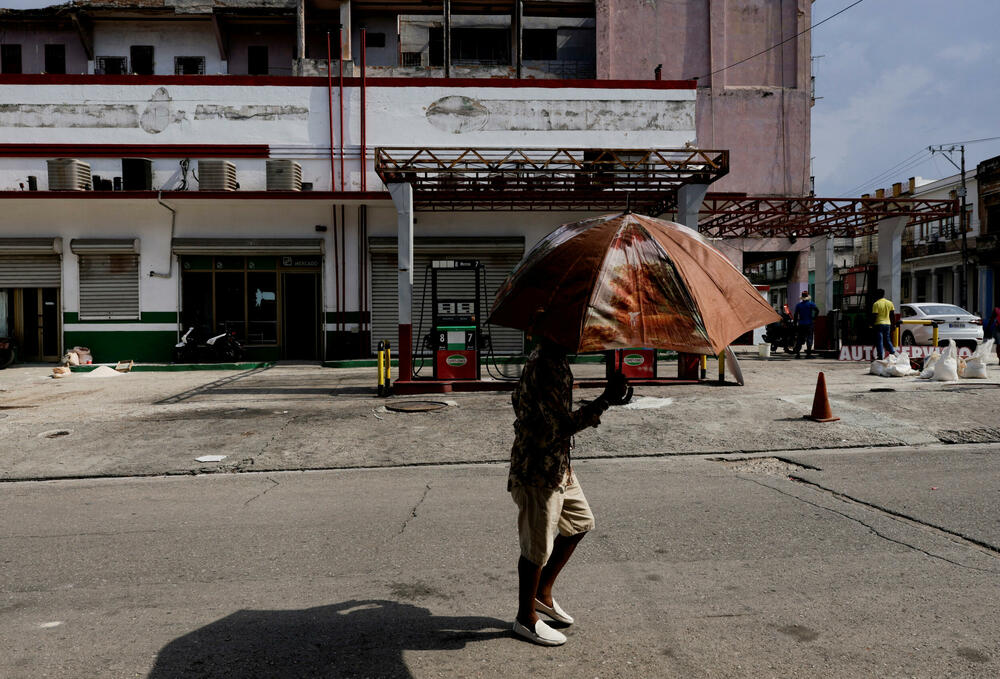
In a nearby apartment building, a man who sells gasoline advertises on Facebook stores fuel in his small apartment, despite the risk of fire, explosions and toxic fumes. There are also a growing number of WhatsApp groups dedicated to the illegal sale of fuel.
Black market prices reached a whopping $10 per liter, or $38 per gallon, this spring before starting to fall as import volumes increased.
Seeking to avoid complete paralysis due to the oil blockade, the government in February allowed private companies to import fuel for their own needs for the first time.
In June, Cuban lawmakers passed a sweeping economic reform package that is expected to open up the energy sector to private and foreign investors. Although the package has not yet been fully implemented, by the end of July nearly 200 Cuban companies had been granted licenses to wholesale fuel distribution to other private firms.
In an ad for one such company, which has gone viral on social media, a model known as the ex-girlfriend of a famous Cuban reggaeton artist walks through a warehouse filled with large industrial tanks of diesel fuel, while Daddy Yankee’s hit “Gasolina” plays in the background.
A spokesman for A Granel, the company behind the ad, said it sells fuel exclusively to other registered private businesses. It charges $2,50 per liter for a 940-liter tank.
Gas stations open for private business
More significantly, Cuba has approved the first foreign-invested project to import and sell fuel on the island, Prime Minister Manuel Marrero Cruz said in late July. He did not specify which company was involved.
Cuban law restricts companies from reselling imported fuel without express approval. Despite reforms that suggest private companies could soon operate some of the state’s distinctive red-and-green Kupet gas stations, Cuba has not yet authorized retail sales of fuel.
Some state-run gas stations now stock American fuel, but can only fill it in vehicles registered to certain private companies, said Oniel Diaz, founder of the Havana-based consulting firm Auge.
Cuban authorities did not respond to requests for comment. President Miguel Diaz-Canel on July 29 condemned what he called Washington’s “genocidal siege” of the island. The economic reforms were not launched to please the United States, he said, promising that there would be no “mass privatization of state assets.”
Responding to questions from Reuters, State Department spokesman Tommy Pigott said Washington recognized the “significant humanitarian needs” of Cubans, while accusing Cuban officials of incompetence and diversion of resources, without providing evidence for those claims.
He said private companies, NGOs and diplomatic missions can and do import fuel, mainly from the United States, but he did not answer questions about the impact of US policies on the black market and high prices in Cuba.
Given that the average government salary is only about $10 a month, or approximately 6.700 pesos, imported fuel is out of reach for the vast majority of the island’s nine million inhabitants.
Fuel that is openly sold on the black market is a violation of Cuban law, but also risks violating US export rules, according to which the fuel must be intended for the private sector and must not end up in the hands of the Cuban government.
“On paper, everything looks very good, but there is no oversight to see if people are actually complying with the restrictions,” said Jorge Piñón, a former oil industry executive and expert on the Cuban energy sector at the University of Texas at Austin.
For Mayra Espina, a Cuban sociologist specializing in poverty, small amounts of expensive American fuel can’t even come close to making up for the quantities that Trump’s embargo keeps out of Cuba.
“It has at least allowed the country to avoid complete paralysis,” she said. But for the vast majority of Cubans who depend on public services, “it increases and further deepens inequalities.”
Download the app and follow the news


FOLLOW US ON

News