

Can Iraq recover billions in stolen assets abroad? – Shafaq News
2026-07-11T13:33:15+00:00
Shafaq News- Baghdad
As Iraq expands its anti-corruption campaign, the
government’s focus has shifted beyond prosecuting suspects at home to
recovering public funds transferred abroad, a process officials, who spoke to
Shafaq News, describe as a national priority alongside holding those
responsible accountable.
The renewed focus follows recent announcements by Iraq’s
Supreme Judicial Council, which said investigations into several major
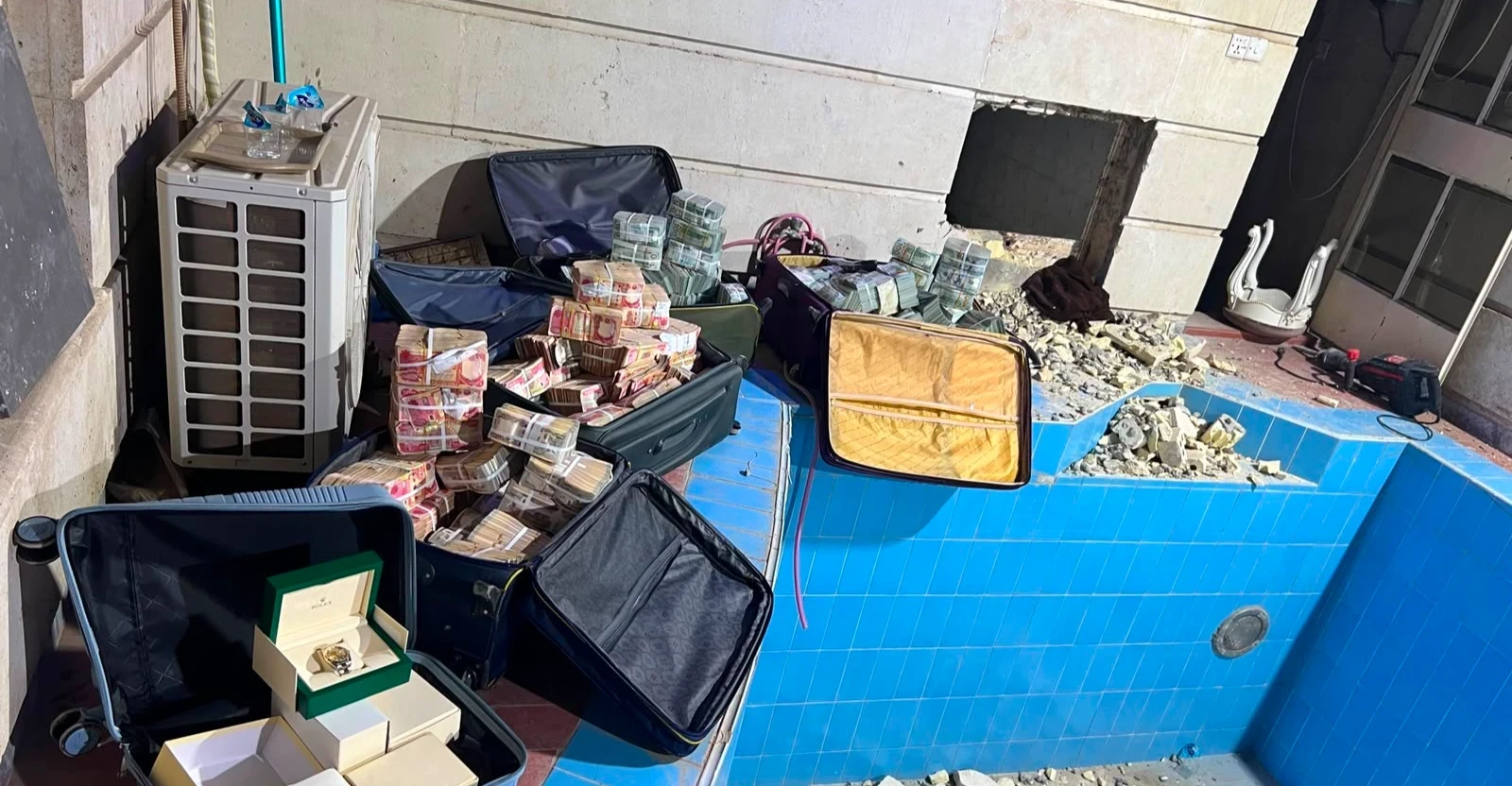
corruption cases remain ongoing, including the seizure of large sums of cash
linked to former Deputy Oil Minister for Refining Affairs Adnan al-Jumaili, who
was arrested last May, and opened the door to the Dawn Crackdown operation.
The council also had outlined a legal mechanism that would
allow authorities, within the limits of Iraqi law, to reduce certain legal
measures or penalties for suspects who voluntarily return embezzled public
funds.
These developments coincide with an announcement by the
Ministry of Justice last week that it had recovered more than $25 million in
Iraqi assets over the past two years. “Efforts are continuing to trace overseas
funds, real estate, and bank accounts in coordination with the Federal Integrity
Commission and international partners,” it stated.
With part of Iraq’s illicit assets believed to be held
abroad, questions remain over the legal and diplomatic tools available to
al-Zaidi’s government to recover the funds, particularly when suspects reside
outside Iraq or have investments in foreign jurisdictions.
Read more: Iraq anti-corruption sweep: What we know so far
Saqr al-Mohammadawi, a member of the Iraqi parliament’s
Security and Defense Committee, described asset recovery as a national priority
“because of its direct impact on protecting public funds and strengthening
public confidence in state institutions.”
Speaking to Shafaq News, al-Mohammadawi urged government
institutions to intensify their legal and diplomatic efforts, in cooperation
with foreign governments and international organizations, to trace and recover
illicit assets in accordance with applicable laws.
He also called for greater transparency in handling the
issue by informing the public about the measures being taken and the results
achieved while ensuring that all corruption suspects are held accountable
without exception.
Al-Mohammadawi said the parliamentary committee is
monitoring ongoing corruption investigations, stressing that recovering stolen
assets “is not merely a financial objective but a national entitlement
that supports development, strengthens the economy, and helps provide essential
public services.”
Political and legal researcher Amir al-Daami affirmed that
Iraq has international legal mechanisms that can be used to recover funds and
assets held abroad.
In an interview with Shafaq News, he said the agreements
signed between Iraq and other countries facilitate asset recovery, particularly
after the Iraqi judiciary signed a cooperation agreement with the European
Union Agency for Criminal Justice Cooperation (Eurojust) to exchange
information on suspects and illicit assets.
Those mechanisms, according to al-Daami, enable Iraq to
trace and recover transferred funds, and the international community,
particularly the United States, supports Iraq’s anti-corruption campaign,
“which could strengthen cooperation on recovering assets and extraditing wanted
individuals.”
“Recovering illicit assets requires more than domestic court
rulings and depends on an integrated system of judicial and diplomatic
cooperation,” Legal adviser Saad al-Bukhati told Shafaq News, explaining that
the 2003 United Nations Convention against Corruption, to which Iraq is a
party, provides the principal international legal framework for asset recovery
by requiring member states to provide mutual legal assistance, freeze bank
accounts, confiscate assets, and return proceeds proven to have originated from
corruption offenses.
He highlighted that the process begins with financial
investigations inside Iraq to identify the proceeds of crime, followed by
judicial orders to freeze or confiscate assets. Authorities then submit formal
requests to the countries where the assets are located, supported by evidence
and court decisions under bilateral or multilateral agreements or the principle
of reciprocity.
Al-Bukhati also called on the government to strengthen
cooperation with the International Criminal Police Organization (INTERPOL) and
make greater use of the Stolen Asset Recovery Initiative (StAR), a joint
program of the United Nations and the World Bank.
Iraq should establish specialized national teams comprising
judges, prosecutors, financial experts, and anti-money laundering investigators
“to trace cross-border financial flows and uncover shell companies and accounts
used to conceal illicit assets,” he urged, clarifying that the government’s
success in this file should not be measured by the number of court rulings
issued, but by its ability to build an integrated system that combines strong
legislation, an independent judiciary, effective oversight institutions, and
meaningful international cooperation.