

CACVC 2026: Etoile du Congo and Petro d’Angola crowned champions
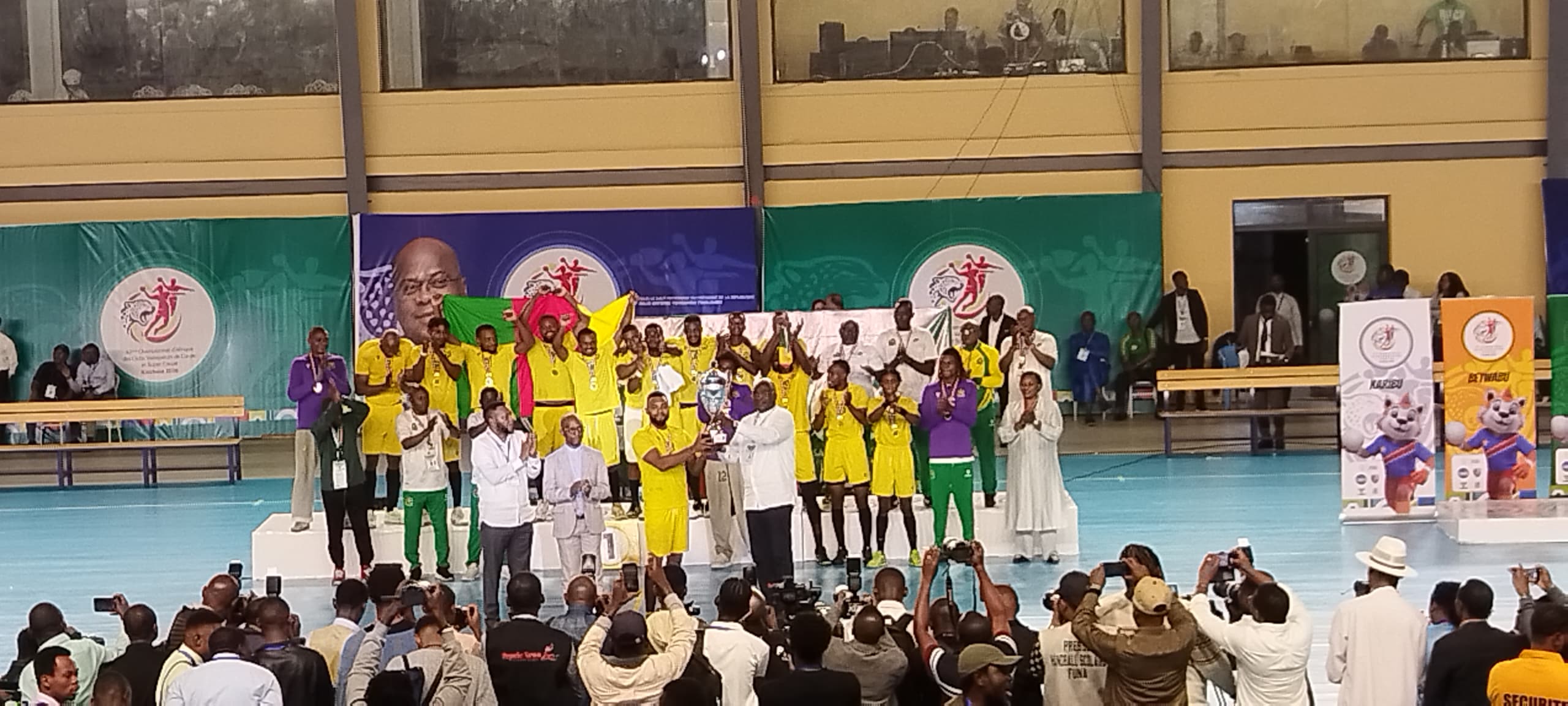
Angola confirms, Congo-Brazzaville surprises
Among the women, logic prevailed. The Angolan women of Petro Atlético retained their crown by dominating AS Otoho from Congo-Brazzaville (32-27). A victory that once again confirms Angola’s hegemony over African women’s handball.
On the men’s side, the scenario proved much more unprecedented. Taking advantage of the absence of the defending champions, the Egyptian giant Al Ahly, Étoile du Congo created a sensation. The Brazzaville club took home its very first continental title by defeating the Cameroonian FAP (Forces Armées et Police) in the final with a tight score of 19 to 16.
DRC clubs save their honor just off the podium
Playing in front of their home crowd, the representatives from the Democratic Republic of Congo were hoping for a better fate. Unfortunately, despite the absence of several Egyptian and Tunisian top teams, none managed to reach the final.
The two local spearheads – JSK among the men and HC Héritage among the women – saw their journeys cut short in the semifinals by the future finalists from the other side of the Congo River, namely Étoile and AS Otoho, respectively. As for HC Scorpion and HC Mazembe, their adventure ended as early as the group stage.
To save face, JSK and HC Héritage still managed to snatch third place by winning their respective third-place finals. JSK defeated Mountada from Morocco (32-26). HC Héritage narrowly beat the FAP from Cameroon (25-24).
A feeling of incompleteness and regrets
For many Congolese observers, the overall impression remains mixed and leaves a sense of unfinished business. The DRC clubs clearly had what it took to do better, as highlighted by sports analyst Richard Kadima:
“I am not satisfied, because I think JSK and Héritage could have done better. Just look at how they were eliminated. JSK self-sabotaged while leading by two goals at halftime. Héritage also poorly managed their semifinal. It’s the same mistakes that keep coming back each time.”
A competition scaled down by Ebola fears
Originally set to host 16 clubs (8 per category), this 42nd edition ultimately brought together only 12 teams. This limited participation is explained by the withdrawal of several delegations, cautious in the face of the Ebola epidemic. An excessive and regrettable caution for the spectacle, especially since no case of the disease had been recorded in Kinshasa.
Credit: Source link