

Burkina Faso’s push to rewrite the cotton value chain
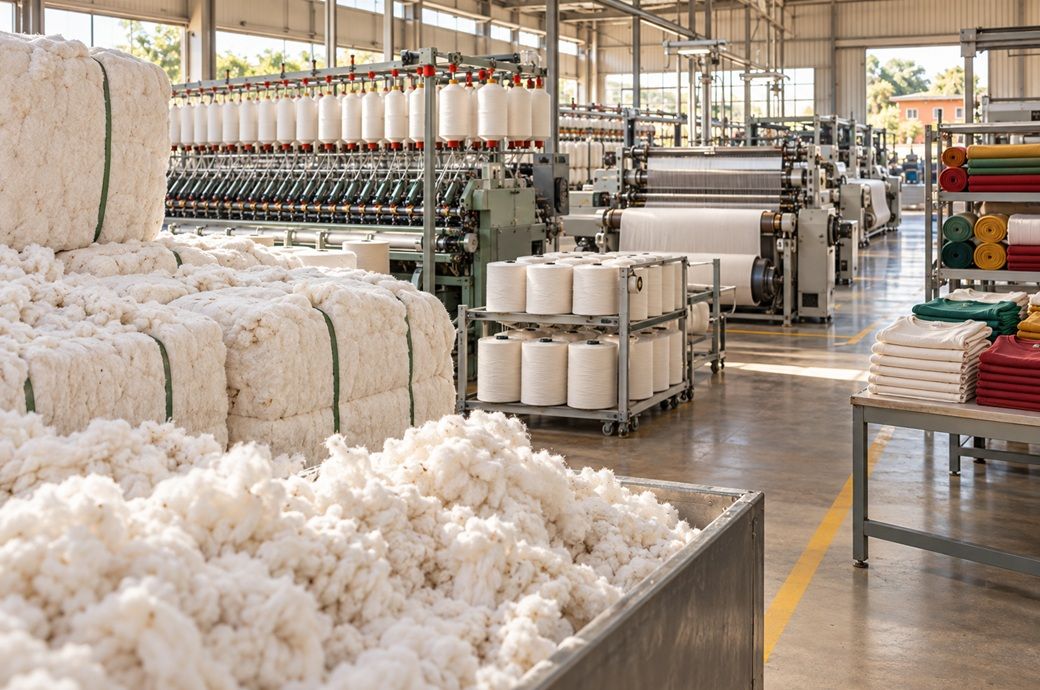
The clearest sign of that shift is the $30 million Textile des Forces du Burkina Faso (TEXFORCES-BF) complex. According to media reports, President Ibrahim Traoré inaugurated the complex on September 9 in Bobo-Dioulasso.
Burkina Faso is expanding cotton-processing capacity with the $30 million TEXFORCES-BF complex in Bobo-Dioulasso.
The facility is designed for weaving, knitting, dyeing, finishing and garment manufacturing, including uniforms and civilian clothing.
Once fully operational, it is expected to produce 20 million metres of fabric annually and 6 million knitted garments.
The CFA17 billion facility is reportedly designed to take cotton through multiple stages of production, including weaving, knitting, dyeing, finishing, and garment manufacturing. Its output will include uniforms for the security forces and civilian clothing.
The new manufacturing complex is part of a wider strategy to build up domestic cotton-processing infrastructure and cut the nation’s dependence on imported garments by capturing more value within its own supply chain.
Reports citing officials familiar with the project said the facility can currently process more than 12 tonnes of raw cotton fibre a day. Once fully operational, the plant is reportedly expected to produce 20 million metres of fabric annually, along with 6 million knitted garments, 6 million uniforms, 6 million T-shirts and 1 million pairs of socks.
Earlier, a CFA1.5 billion centre for artisanal cotton processing was reportedly inaugurated in 2025, while a proposed $25 million integrated textile plant with Kenya’s Basra Textile Mills could add further private-sector capacity.
At the same time, the government is reportedly targeting 532,000 tonnes of seed cotton in the 2026/27 season, underscoring the need to match processing ambitions with adequate raw-material supply.
According to reports, Burkina Faso imported an average of nearly 38,946 tonnes of clothing and accessories annually between 2019 and 2023.
These efforts reflect Burkina Faso’s broader push to capture more value from its cotton industry. As one of West and Central Africa’s major cotton producers, the country is seeking to build on its established cotton base and competitive labour costs to reduce reliance on imports and expand into regional and international markets.
The real test, however, will be whether Burkina Faso can turn its growing processing capacity into a competitive and integrated textile industry — one that meets domestic demand, replaces imports, and eventually wins markets beyond its borders. If it can, the country’s cotton story could shift decisively from exporting fibre to building industrial value at home.
Fibre2Fashion News Desk (DR)
Credit: Source link