

Brazil’s Move to Split Its Battery Auction in Two Parts Is A Template India Hasn’t Considered yet
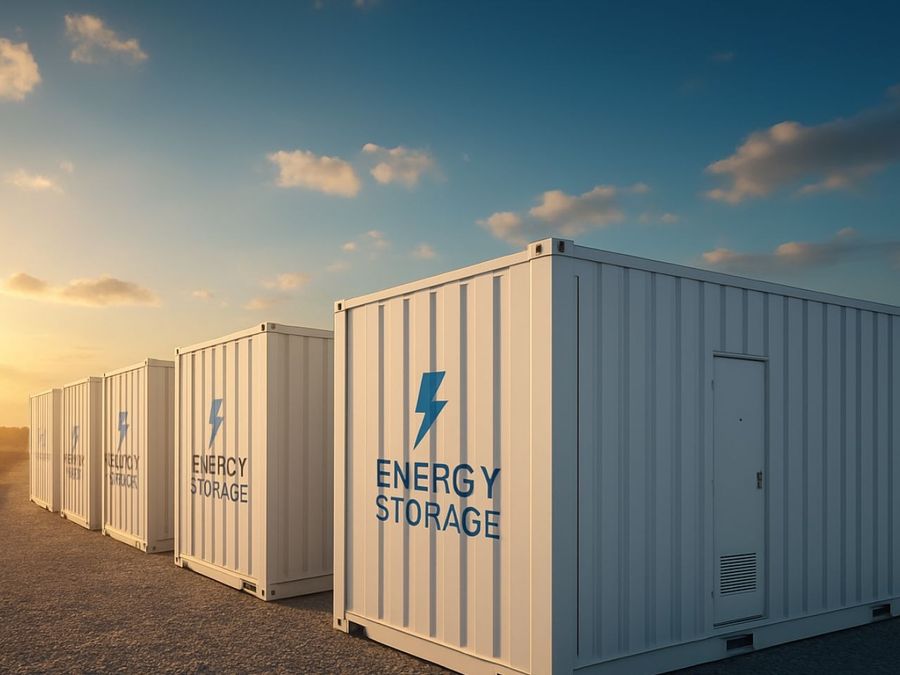
Brazil’s example could be one worth emulating for India, considering how it has drawn Chinese majors to consider local tie-ups for manufacturing. India’s complicated relationship with China, and that country’s reluctance to allow any offshoring of its battery manufacturing chops, has placed Indian ambitions to make domestic cells in the slow lane for now. The contests are scheduled for December 2 and 4, respectively. In both cases, the contracts will be valid for 15 years, with supply starting on August 1, 2028.
India’s own BESS tenders don’t yet make the distinction that Brazil has done, but the rush shows what could happen once one does.
Brazil’s first dedicated grid-storage auction, the Capacity Reserve Auction for Energy Storage (LRCAP), is still three months away, with bids closing in December, but it has already triggered a scramble among the world’s largest battery makers to localise production inside the country. In the past two weeks alone, Jinko ESS signed a cooperation agreement with Brazilian manufacturer UCB Power to assemble BESS locally, potentially scaling UCB’s Manaus plant to between 1.5 and 4.5 GWh of annual capacity; CATL struck a parallel tie-up with Brazilian battery maker Moura; and BYD is reportedly preparing to invest up to $98 million in a dedicated BESS production line at its existing Manaus site, creating 300–400 direct jobs.
The reason all three moved within days of each other is Brazil’s auction design, finalised by the Ministry of Mines and Energy and regulator Aneel. It splits LRCAP into two separate lots: one open to any equipment regardless of origin, and one reserved specifically for storage systems meeting minimum local-content thresholds. That bifurcation is what has manufacturers moving now, months before a single megawatt is contracted — access to the protected lot, and to Brazilian development-bank financing that comes with domestic manufacturing status, is worth securing early.
The lot India’s own BESS tenders don’t have
India’s BESS tendering pipeline, be it Coal India’s 750 MWh Telangana project, NTPC’s and SECI’s various storage awards, the steady cadence of C&I deployments that IESA tracks has scaled fast, but it has largely done so without Brazil’s explicit local-content bifurcation. Solar had ALMM to force exactly this kind of choice on module manufacturers and now cells as well; battery storage in India, so far, has not had an equivalent mechanism written into tender design at the same evolutionary stage the solar market once needed it.
That is a policy gap based on perceived technical limitations, and Brazil’s experience over the next three months is a useful live experiment for what India’s own storage-tendering agencies could consider: a protected-content lot doesn’t just reward existing domestic manufacturers, it pulls global cell and pack makers into signing local manufacturing agreements they would not otherwise prioritise, months ahead of the auction itself. CATL and Jinko did not localise in Brazil because Brazilian demand alone justified it — they did it because the auction rules made non-local bids structurally worse off for a defined slice of contracted volume.
The combination of technology, local production, and access to financing mechanisms can represent an important step in reducing barriers to BESS adoption.
A parallel worth watching, not copying outright
The caveat is that Brazil’s local-content lot is deliberately narrow. It is an auction design choice tied to a single, one-off procurement event, not a blanket import restriction, and its success in actually delivering GWh-scale domestic assembly by December’s bid deadline is still unproven. India’s BESS manufacturing base, like Brazil’s, currently leans on pack assembly around imported cells rather than deep cell production, so a similarly structured tender wouldn’t manufacture a cell industry out of nothing either. What it would do, on the Brazilian evidence of the past fortnight, is accelerate exactly the kind of anchor investment and technology-transfer commitments for other key components that a demand signal alone has so far struggled to produce.