

Bong Fire Service Station Opens | News
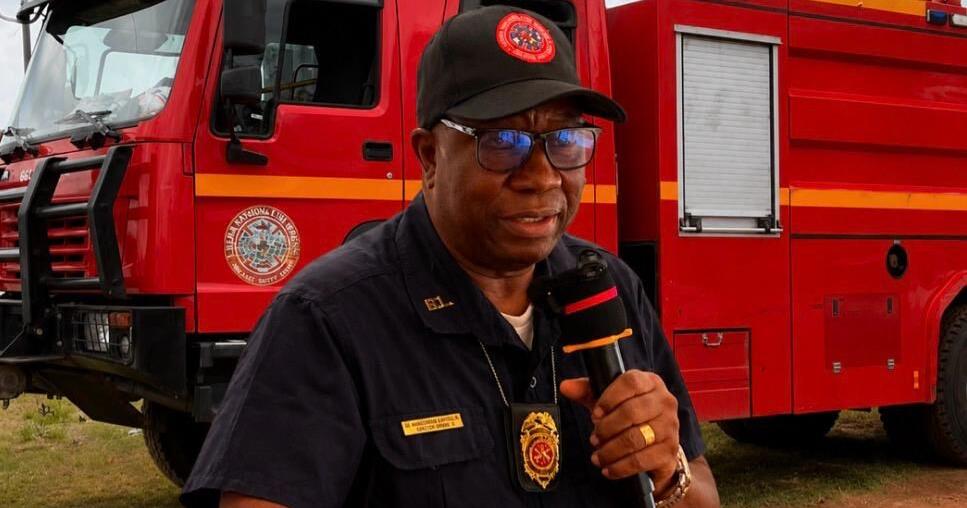
The commissioning of a new fire station and fire engine in Gbarnga has strengthened Liberia’s emergency-response capacity, but the Liberia National Fire Service (LNFS) says equipment alone will not solve the country’s firefighting challenges.
At the dedication ceremony, LNFS Director General Colonel G. Warsuwah Barvoul Sr. used the occasion to call for greater investment in firefighter protection, insurance, regular medical examinations, recruitment and equipment maintenance, warning that the people operating emergency equipment must receive as much attention as the equipment itself.
The new station is particularly significant for Gbarnga, where repeated fires have threatened homes, businesses and livelihoods. The facility was constructed with support from Bong County Senator Prince Kermue Moye after local authorities identified the lack of a permanent fire station as a major obstacle to effective emergency response.
Colonel Barvoul said that the country’s firefighting strategy must move beyond acquiring vehicles and constructing stations to protecting the personnel who routinely expose themselves to smoke, extreme heat and other hazards.
“We need checkups,” he said, appealing for regular medical examinations for firefighters because some health effects associated with smoke and hazardous environments may not become immediately apparent.
He also called for comprehensive insurance coverage so that firefighters injured or exposed to danger while performing their duties are not left struggling with medical expenses.
The appeal comes as the government prepares its 2027 national budget, with Barvoul urging lawmakers and government institutions to consider sustained financing for the fire service.
“We are appealing to the government that come to the sector in 2027,” he said.
The Gbarnga project also highlights the broader infrastructure challenges confronting Liberia’s fire service. Before the new station, firefighters in Bong County had operated from temporary locations after losing access to previous premises.
The new facility places firefighting capacity closer to Gbarnga’s growing commercial and residential communities. But Barvoul cautioned that one station cannot adequately serve a rapidly expanding city or the wider county.
“Fire has no boundary,” he said, calling for additional stations and greater community support for emergency services.
Bong County Senator Prince Kermue Moye backed the call for additional investment, arguing that the national fire service should eventually have a meaningful presence in all 15 county capitals. He linked recent improvements to a US$2 million allocation in the 2024 national budget, which helped facilitate the procurement of additional fire engines.
For Gbarnga’s business community, the new station represents more than an emergency facility. It is a safeguard against losses that can cripple businesses operating on limited capital or credit.
“Majority of us, we business, we do our business on credit,” said Success Cammue of Success Construction Company. “When you put your goods in your shop, fire destroys all. It is a setback to businesspeople.”
Local authorities are also emphasizing prevention. Gbarnga Mayor Gallah K. Varplah urged households and businesses to keep fire extinguishers available, while the fire service warned against uncontrolled burning of garbage, vegetation and other materials that could trigger larger fires.
The central question following the commissioning is whether Liberia can sustain and expand the investment.
A fire engine requires fuel, maintenance, spare parts, trained personnel and reliable funding. Without these, the value of new equipment can rapidly diminish. The same applies to newly constructed stations.
Barvoul is therefore pushing for a broader reform agenda that includes recruiting younger firefighters as the current workforce ages, protecting serving personnel through insurance and healthcare, maintaining equipment and expanding stations beyond major urban centres.
For Bong County, the new station is an important improvement. But for Liberia’s emergency-response system, it is a reminder that fire protection is not simply about having fire trucks—it is about building and sustaining an institution capable of responding when lives and livelihoods are at risk.
As Barvoul put it, “Please support the fire department to save you.”
Credit: Source link