

Billionaire Fuat Tosyalı’s Algerian steel plant sets world iron record
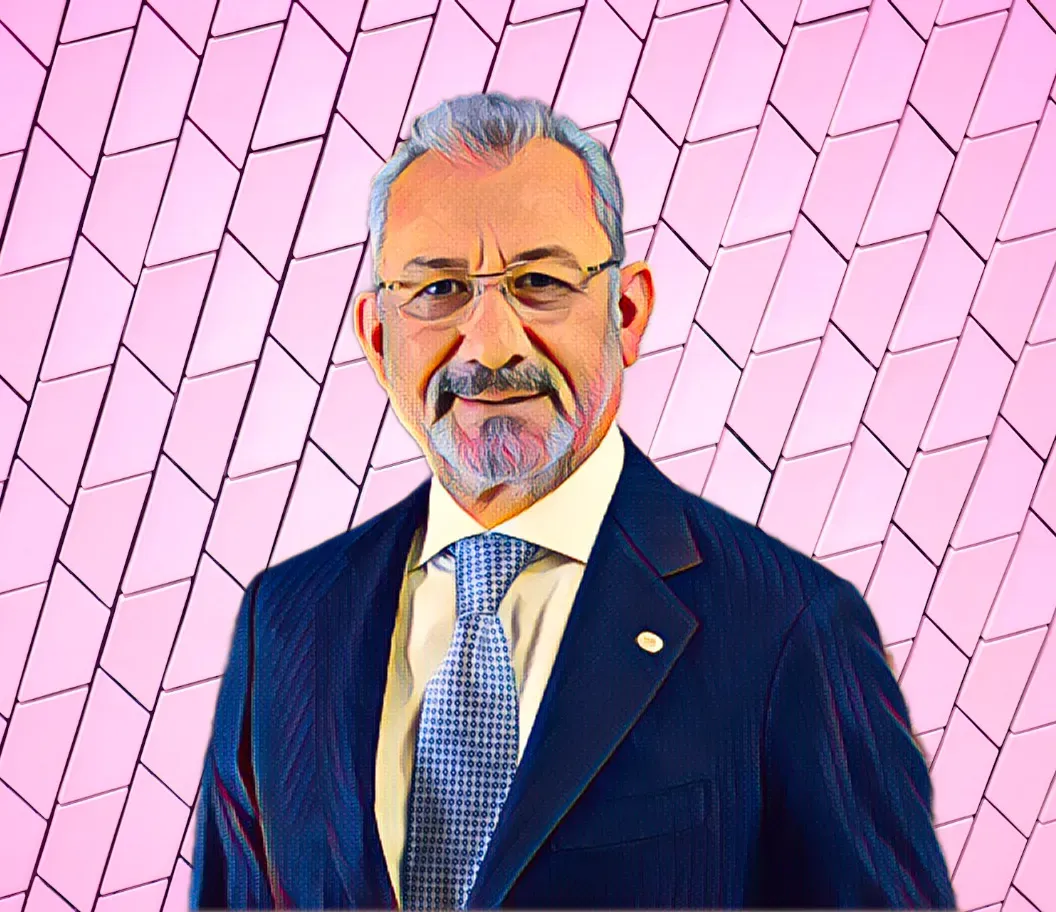
A steel plant in western Algeria owned by Turkey’s Tosyali Holding produced more direct reduced iron in a single month than any comparable plant anywhere, its technology supplier said.
Tosyali Algerie’s second direct reduction module produced 248,601 tonnes in May, the highest monthly output ever recorded by a single Midrex plant, according to a statement Midrex Technologies issued on July 31.
The module averaged 334.1 tonnes an hour during the month, above the 328.6 tonnes an hour it recorded in January, and ran without downtime. Its average for January through May reached 316.9 tonnes an hour, a worldwide benchmark among Midrex plants, exceeding both its 2025 average of 312.7 tonnes an hour and its design capacity of 312.5 tonnes an hour.
The plant sits at Bethioua in Oran province and has become the largest exporter in Algeria outside the hydrocarbon sector, as well as Turkey’s biggest industrial investment abroad.
Exports to Europe in three days
Tosyali Algerie recorded $95 million in net export revenue during April 2025, its highest monthly figure, which the company attributed to the ramp-up of a flat steel complex commissioned at the end of October 2024.
It opened 2026 by loading four ships simultaneously in January, three at Arzew port and one at Oran, carrying 22,000 tonnes of steel plate and wire rod to Poland, Latvia, Italy and Tunisia. Alp Topcuoglu, a board member, put the revenue from that operation at about $13.5 million and said the year could become an export year par excellence.
The company shipped roughly 250,000 tonnes of steel plate into the European Union in the months after the flat steel complex opened, and sent 3,000 tonnes to Spain from Mostaganem port in December 2024. Exported products include reinforcing bar, wire rod, spiral pipe, slabs and flat steel.
Geography does much of the work. Topcuoglu has said the plant can deliver to European customers in three days against roughly 40 days for shipments from Asia.
The volumes have grown from a smaller base. Tosyali Algerie produced 3 million tonnes of steel products in 2022 and exported about 1.3 million tonnes worth $800 million. Topcuoglu said in November 2024 that export revenue would rise from $2 billion to $4 billion within two years as capacity expanded, with more than 1.5 million tonnes of a projected 4 million tonnes of output going abroad.
President Abdelmadjid Tebboune told company representatives he would press the European Union to admit Algerian rebar and steel sheet, and promised to fight to increase their exports.
Six thousand jobs and counting
The complex employs close to 6,000 people directly, which makes it the largest private sector employer in Algeria.
Tosyali Algerie is targeting 8,000 direct employees and more than 15,000 indirect jobs by 2027. The flat steel plant alone accounts for 2,200 workers, a figure the company expects to reach 2,700 once a cold rolling unit enters service.
The site covers 5 million square metres and runs 17 integrated facilities, with 21 industrial units planned in total. Production capacity stands at 6 million tonnes a year and the company is targeting 8 million tonnes, combining long and flat steel products.
Founded in 2007, the operation began producing steel in the second half of 2013. It makes direct reduced iron, pellets, billets and blooms, coil, reinforcing bar, wire rod and spiral pipe for construction, hydrocarbon transport, the automotive industry and shipbuilding. The cold rolling unit will supply sheet for vehicle structures, automotive components and domestic appliances, with production scheduled from July 2026.
Gas now, hydrogen later
The second direct reduction module has an annual capacity of 2.5 million tonnes and produces both hot and cold iron. It connects to an electric arc furnace through a hot transport conveyor, feeding hot iron continuously into the melt shop, and switches to cold production at full capacity during furnace maintenance.
Midrex Technologies supplied it alongside Paul Wurth, part of Germany’s SMS group.
Fuat Tosyalı, chairman of Tosyali Holding, said the Algerian operation has broken the world direct reduced iron production record every year since 2020, when it produced 2.23 million tonnes, followed by 2.28 million tonnes in 2021.
“With the commissioning of our second module in 2025, Tosyali Algerie is now one of the largest facilities in the world with two DRI modules,” he said. He described it as the first plant anywhere to begin commercial production able to run on natural gas and, after a minor modification, on 100 percent hydrogen.
The distinction matters commercially. Direct reduction uses gas rather than coal to strip oxygen from iron ore, cutting emissions against a blast furnace, and a switch to hydrogen would remove most of what remains. European buyers face tightening carbon rules on imported steel. Tosyali has held discussions with Sonatrach, the Algerian state energy company, about green hydrogen supply.
Thomas Handmann, chief technical officer of SMS group, said the engineering work supported a project that strengthens Algerian steelmaking and the industry’s decarbonisation.
The company is also moving upstream into ore. It is developing a project at Béchar to process up to 4 million tonnes of iron ore a year, and plans a primary processing plant for ore from the Gara Djebilet mine in Tindouf province, in partnership with the state mining company Sonarem, using American and German technology and targeted for 2028.
Module two produced 2.43 million tonnes during 2025, its first full year, which Midrex identified as the highest annual output from a single direct reduction module anywhere. The first module ranked third globally over the same period.
Crédito: Link de origem