

Billionaire Christo Wiese blames Pick n Pay’s decline on dividends
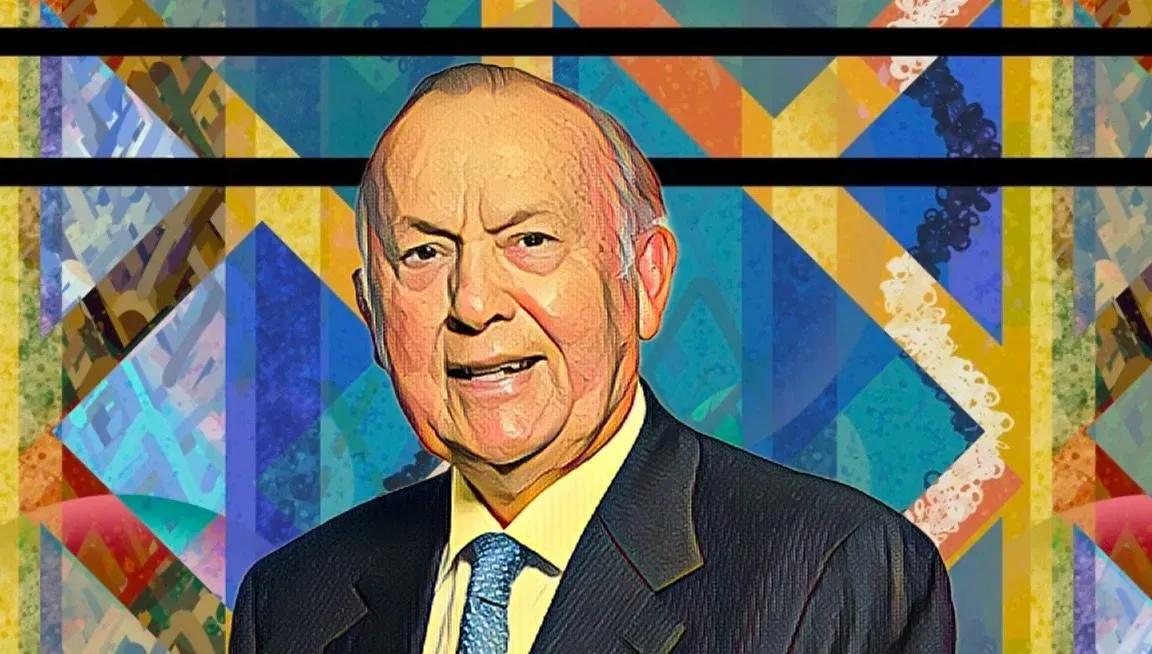
Christo Wiese has blamed Pick n Pay’s decline on decades of generous dividend payments, saying the retailer handed cash back to shareholders instead of putting it into a business that needed constant reinvestment to stay competitive.
The South African billionaire, who chaired Shoprite for 29 years while it grew into Africa’s largest retailer, told the ninth BizNews Conference that the policy gradually eroded the advantage Pick n Pay held in the middle market under founder Raymond Ackerman. He described it as a common error among businesses of every size, and one the retail sector punishes harder than most, because thin margins and high volumes leave little room for mistakes.
He said he had resisted the same pressure at Shoprite and had been overruled.
“For years, I paid very little dividends to shareholders as Shoprite chairman,” Wiese said. “That was until the institutions forced me to try and match Pick n Pay.”
The two companies never converged. Shoprite raised its payout without reaching Pick n Pay’s level, Wiese said, because the board wanted cash on hand and maintained a large dividend cover ratio. He put Pick n Pay’s cover at roughly 1.5 times and contrasted it with the late Anton Rupert, who he said ran cover of seven or nine times.
Wiese went further than a criticism of one company. He said he subscribes to the school of thought associated with the American finance academic Joel Stern and believes a company should never pay a dividend at all.
“If you pay a dividend, you are telling your shareholders that they can do better things with the money than you can as a management team,” he said. Management should in principle deploy capital better than shareholders can, he added, and investors who need cash can sell part of their holding instead.
The reinvestment argument runs through his account of what separates retailers. Money spent on technology, logistics and store layout lifts margins in a sector where small operating gains compound across enormous volumes, and a company without cash on hand cannot make those investments when they matter.
“So, if you ask me what the mistake was. The first mistake was the dividend, and you can see that in smaller businesses as well,” Wiese said. “You have to have cash to reinvest in the business. Most people do not do that. The cash comes and goes.”
Wiese said he was surprised Pick n Pay had ended up where it is, given how long it dominated South African grocery retail. The company spent the 1990s, 2000s and much of the 2010s as the retailer to beat, positioned to take on Woolworths at the upper end of the market and Shoprite at the lower end.
The strategy that followed made the position considerably worse. Under former chief executive Pieter Boone, Pick n Pay adopted the Ekuseni plan and split its estate into Pick n Pay and Pick n Pay QualiSave, intending to serve middle-income and wealthier shoppers under one banner and the lower end of the market under another. Shoppers found the change confusing and the rebranding cost money without producing the intended result.
The gap in growth rates widened over the same period. Shoprite averaged annual turnover growth of 11.5 percent between the 2021 and 2024 financial years against 6.1 percent at Pick n Pay, according to a Daily Investor analysis. Pick n Pay reported a loss in the 2024 financial year and became technically insolvent for the first time in its history.
Chief executive Sean Summers has been working through a turnaround since. The company listed Boxer separately to repair the balance sheet and closed hundreds of underperforming stores, and its core South African supermarket business has posted strong like-for-like growth in a recent trading update. Pick n Pay has nonetheless pushed its breakeven target back a year, to 2029.
Wiese’s own record gives the argument weight. He built Pepkor into the largest clothing retailer on the continent before selling it to Steinhoff International in 2015 in a cash and stock transaction worth $5.7 billion, a deal that later cost him most of his fortune when Steinhoff disclosed accounting irregularities in December 2017 and its shares fell more than 90 percent. His net worth dropped from an estimated $5.6 billion in March 2017 to $1.1 billion on the 2018 Forbes list of Africa’s billionaires, and off the ranking entirely later that year.
He rebuilt through litigation and through the company he had spent nearly three decades chairing. A settlement with Steinhoff in 2022 returned roughly $500 million in cash and stock, including a 5 percent stake in Pepkor, and restored his billionaire status. Forbes now ranks him 16th among Africa’s wealthiest people with a net worth of $1.9 billion.
Shoprite remains his largest single asset. Wiese, 84, holds about 11.5 percent of the company, roughly 68 million shares, and stepped down as chairman in November 2020 while remaining a non-executive director. He also holds positions in Brait, Invicta Holdings and Collins Property Group.
Shoprite has continued to take ground while Pick n Pay retrenches. The group opened 268 stores in its core South African supermarkets segment during the first 11 months of its 2026 financial year, passing a full-year target of 223 with a month still to run, and its Boxer chain has gained share partly by converting former Pick n Pay sites.
Crédito: Link de origem