

Benin man living in Korea turns personal struggles into AI platform that helps foreigners find jobs
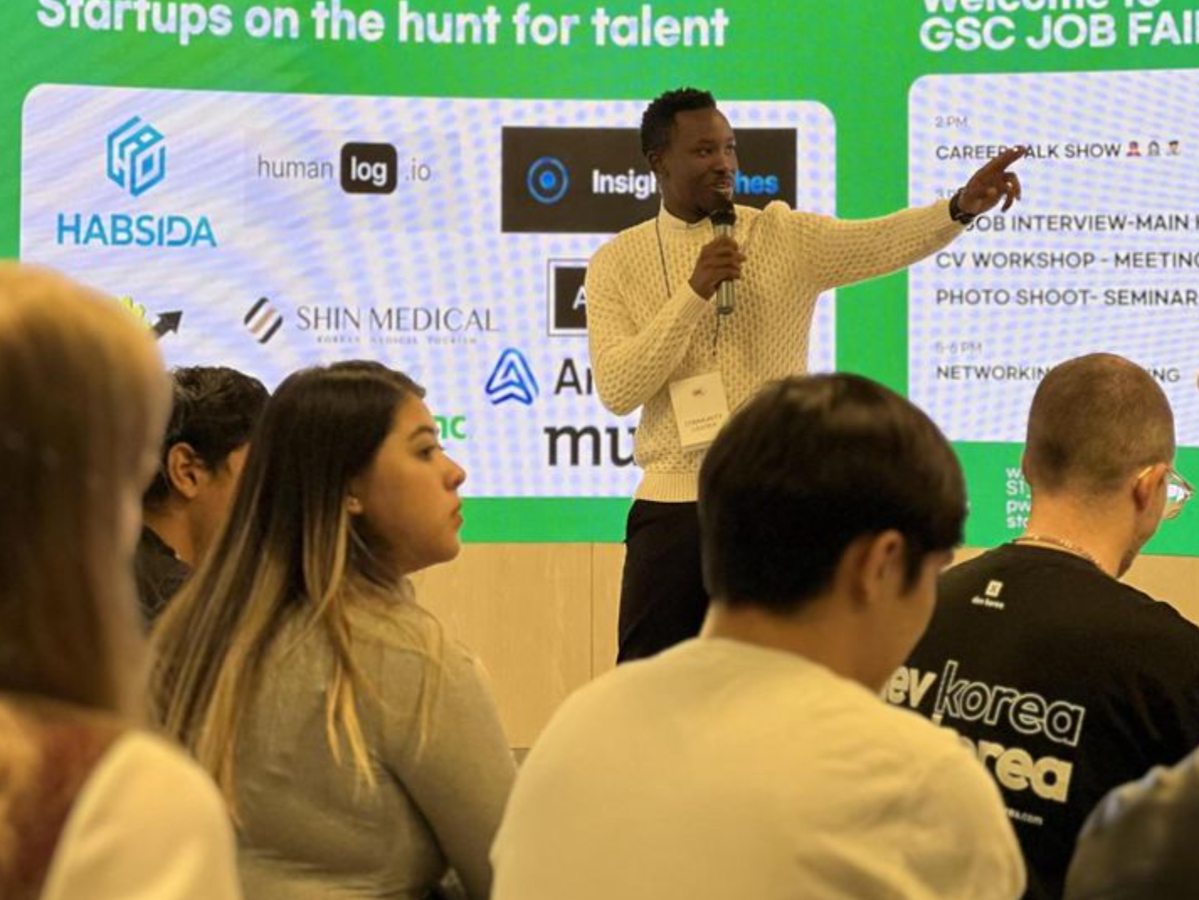
It’s tough living in a foreign country, particularly if one doesn’t know much about the country’s language and culture. In Korea, however, international residents like Casimir Agossou are turning such setbacks into opportunities.
Agossou, from the West African nation of Benin, did not gain interest in Korea through its K-pop or Korean dramas as many do. He got drawn to the country after being marveled at its rapid economic development.
“I came to realize that Korea was a very poor country in the 1950s, and in around 50 years, it became a very strong, developed country,” he said to The Korea Times. “I wanted to understand the mindset behind that transformation.”
In 2014, Agossou first arrived in Korea through the Global Korea Scholarship (GKS) program, which brought him to Kangwon National University in Chuncheon, Gangwon Province. There, he pursued graduate studies in environmental science.
Stepping into Korea’s job market after his studies was another headache, as there were only a few job openings matching his environmental science background.
“There was not much demand when it came to a foreigner in the environmental sector,” he recounted. “I could work as a researcher but I didn’t like it. So I had almost no opportunities.”
Things changed when Agossou realized he could leverage his trilingual fluency to make something better of himself.
He got a job as an intern, handling overseas buyers for a company that sells used cars. He didn’t make much from it, but that offer opened his eyes to how the job market works in Korea, especially for foreigners.
“It’s not like I didn’t have skills,” he said. “I just realized over time that I needed to focus on opportunities where my background and strengths were a better match.”
Those experiences became the foundation of Acafo, an AI-powered employment platform that connects global talent with Korean companies.
Acafo does not work like a traditional job board. Instead, it evaluates users through a comprehensive skills assessment, aligning their background and capabilities directly with high-demand job sectors in the country, according to The Korea Times.
The platform then lets users know the kinds of companies to target, how to position themselves, and what steps to take next. “Think of it as a GPS for foreign career seekers — not a destination, but a route,” the outlet wrote.
Acafo further mirrors wider discussions occurring across Korea as the country seeks ways to draw and retain international talent to address labor shortages and demographic shifts.
Agossou believes that when institutions, companies and international communities work together, more will be achieved. “Success in Korea is rarely an individual effort,” he said. “Especially in the startup ecosystem, growth often comes from collaboration, mentorship and the support of the people around you.”
Agossou has been in Korea for about 12 years. He finished both his master’s and doctoral degrees while moving through multiple visa categories. He first entered Korea on a D-4 language training visa, then moved to a D-2 student visa, a D-10 job-seeker visa, an E-6 entertainment visa, and ultimately a D-8-4 entrepreneurship visa, as reported by Korea Joongang Daily.
Inspired by his own experiences studying and working in Korea over the past 12 years, he remains optimistic that his platform can ease the process for other international graduates striving to establish themselves in Korea.
Credit: Source link