

Benin: 91% of cotton export value goes to Bangladesh
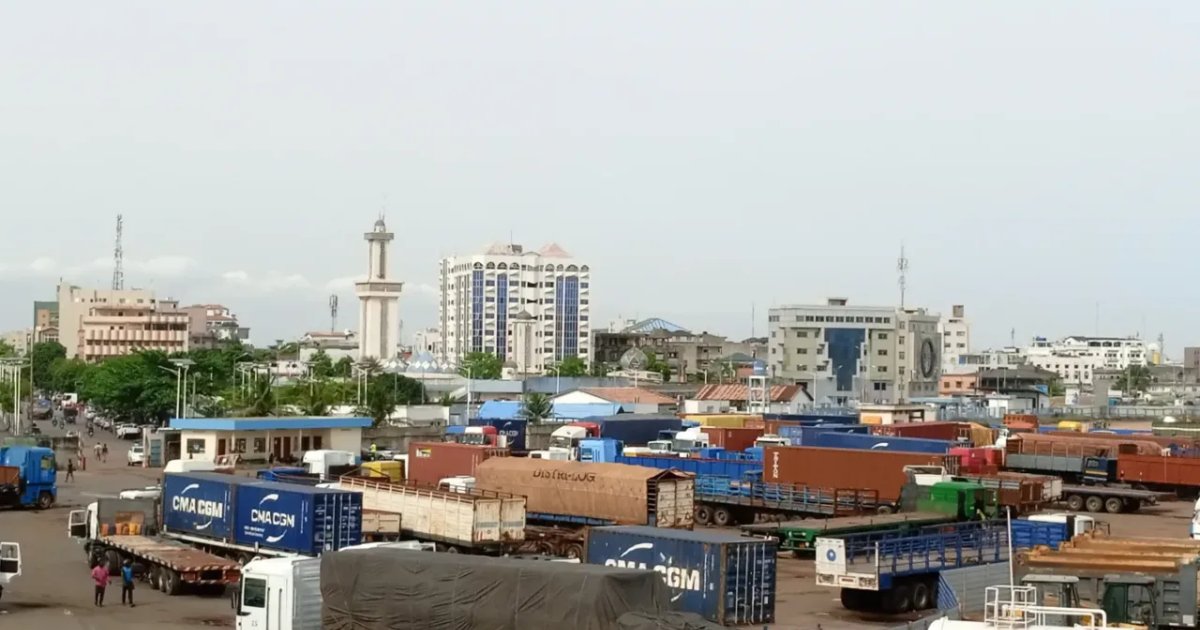
Benin aims to transform an agricultural advantage into an industrial one. On September 13, the Associated Press highlighted the rise of “Made in Benin,” as the Glo-Djigbé Industrial Zone (GDIZ) already processes approximately 40,000 tons of cotton fiber annually.
Behind the spinning, weaving, dyeing, and garment-making processes lies a broader question: how much value can the country retain before its cotton leaves its borders?
The starting point remains a strong commercial concentration. World Bank data based on Comtrade indicates that in 2024, Benin exported $525.7 million worth of cotton, with $480.6 million directed to Bangladesh. In other words, about 91.4% of Benin’s cotton export value went to this single market, one of the world’s major centers for the clothing industry.
This dependence is not merely a commercial vulnerability. It also encapsulates the historical division of the value chain: Benin produces the raw material, while much of the processing, fabric, and garment production occurs elsewhere. The GDIZ specifically seeks to shift some of these stages to the national territory, with integrated units capable of producing yarn, fabrics, home textiles, and finished garments.
This upgrading is beginning to reflect in macroeconomic indicators. The African Development Bank estimates that the textile sector grew by 9.3% in 2025, and that the modernization of the GDIZ, combined with a shift in exports towards higher value-added products, contributed to reducing the current account deficit from 6.2% of GDP in 2024 to 5.7% in 2025. The IMF also expects a gradual improvement in the external balance as exports from special economic zones ramp up.
Bangladesh still absorbs the majority of the export value.
The focus on Bangladesh has economic logic. The country imports large quantities of cotton to supply a textile and garment industry geared towards major international brands. For Benin, this outlet provides a deep and steady market for a sector that directly or indirectly supports more than two million people, according to producer representatives cited by the Associated Press.
However, this relationship also means that much of the value created after ginning largely escapes the Beninese economy. An exported bale of fiber generates agricultural and commercial income; when transformed into yarn, then fabric, and finally garments, it incorporates more labor, services, logistics, and industrial margin. The GDIZ’s bet is therefore less about abruptly replacing fiber exports than about gradually increasing the share of cotton that changes form before leaving the country.
The GDIZ targets the most lucrative links in the chain.
The first phase of the Glo-Djigbé textile park is designed to process around 40,000 tons of fiber per year. The facilities encompass spinning, knitting or weaving, dyeing, finishing, and garment making. This integration reduces the number of steps that must be completed abroad and allows Benin to sell a product with a higher value than raw cotton.
This strategy is also beginning to confront the real market. Benin Textile Corporation shipped over 50,000 garments in 2025 for the French brand Gémo, with a stated goal of three million pieces in 2026. Other international brands are already mentioned among the clients or partners of the park. Success will therefore not only be measured in installed machinery but also in repeat orders, adherence to deadlines, consistent quality, and the ability to remain competitive against major Asian textile hubs.
The previous article from Benin Web TV on the 40,000 tons processed at the GDIZ shows that the country now has visible industrial capacity. The next step is to convert this capacity into regular export flows that are substantial enough to sustainably alter the structure of foreign trade.
The government is now linking the field to the factory.
In June, the government introduced a mechanism that directly connects agricultural objectives to the needs of local units. For the 2026-2027 campaign, an exceptional premium of 10 FCFA per kilogram will be paid to producers if national production exceeds 700,000 tons. The Council of Ministers explicitly justifies this measure by the desire to better compensate farmers while securing the supply for local processing units.
This measure directly links textile industrialization to the cotton basin. It depends on the consistency of volumes, fiber quality, and producer income. The Associated Press reports that at least 183,746 producers are organized into 2,206 village cooperatives. Therefore, an increase in local processing will only have a broad effect if industrial remuneration reaches the farms and if factories can absorb a growing share of production without undermining existing outlets.
Competitiveness will determine the future.
Building the factories is the most visible part of the project, but competitiveness will hinge on less spectacular factors: production costs, energy, quality, logistics, port speed, traceability, social and environmental compliance, workforce training, and order stability. The IMF also reminds that the construction of the GDIZ initially weighed on the current account due to imports of professional services and equipment. The macroeconomic return now depends on the ability of exports to offset this investment phase.
This upgrading is beginning to be observed beyond Benin. In July, Nigerian Vice President Kashim Shettima led a delegation to Glo-Djigbé to study the Beninese model of agro-industrial transformation and production zone development. Abuja presented this visit as a search for practical lessons for its own agro-industrial zones, particularly in textiles.
Two indicators will measure progress in 2026-2027: achieving or exceeding the target of 700,000 tons of seed cotton and increasing the volumes of garments and textile products exported from Glo-Djigbé.
Credit: Source link