

Beijing’s fighter jets soar over the skies of Egypt: a show of Chinese strength against Paris (and the EU)
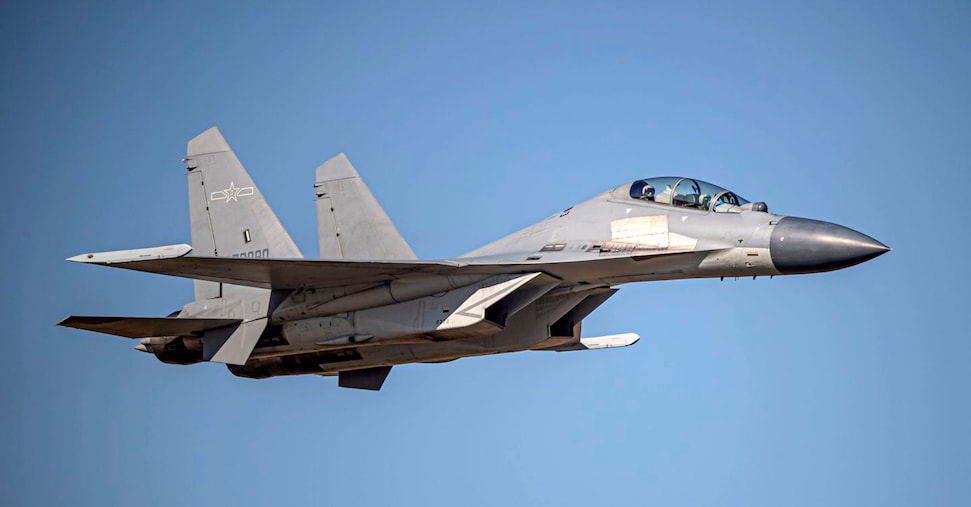
The appearance of a formation of the People’s Liberation Army Air Force (PLAAF) in the skies over Egypt, for the second edition of the joint ‘Eagles of Civilisation’ exercise, constitutes an event of strategic significance that could redefine the air and naval balance of power in the Mediterranean basin. The deployment of Shenyang J-16 heavy fighter jets, Shaanxi KJ-500A early warning aircraft, Shaanxi Y-9LG electronic warfare platforms and Xi’an YY-20A tanker aircraft more than 6,000 kilometres from mainland Chinese bases is not merely a training exercise. The simulated tactical confrontation against the Dassault Rafale of the Egyptian Air Force serves as a field test for Beijing’s entire command, control, electromagnetic warfare and logistics architecture. For the governments and leading defence industry players in Italia, France, Germany and the United Kingdom, this paradigm shift necessitates an urgent review of security strategies for the wider Mediterranean and accelerates the competition for technological supremacy in sixth-generation aerospace programmes.
Logistics scale and global reach
The ability to deploy a composite strike package through the congested air corridors of Central Asia and the Middle East highlights the maturing capabilities of the PLAAF in terms of in-flight refuelling and strategic projection. The deployment of the Xi’an YY-20A heavy tanker aircraft enables the Shenyang J-16 b> fighter jets to exceed the physiological limit of their unrefuelled range, ensuring coverage of intercontinental routes with adequate fuel reserves to cope with unforeseen weather conditions or diplomatic overflight denials. Operations in desert theatres characterised by high temperatures and a high concentration of abrasive particulates place a severe strain on the durability of the Shenyang WS-10B engines, the thermal dissipation of the radars and the management of in-flight replaceable avionics modules. The logistical support provided by the Xi’an Y-20B strategic transport aircraft, loaded with diagnostic equipment and spare parts, demonstrates that Beijing is now capable of sustaining prolonged sorties far from the mainland’s fixed infrastructure, moving beyond its traditional coastal defence role.
Electromagnetic interference and advanced sensor technology
In beyond-visual-range air combat, the structural disparity between the heavy J-16 fighter and the medium-class Dassault Rafale aircraft reflects two divergent engineering philosophies. The Chinese fighter utilises a radar antenna with a larger aperture, featuring transmission/reception modules made of gallium nitride or gallium arsenide, capable of generating high power peaks at the cost of a more pronounced frontal radar signature. By contrast, the Rafale compensates for a more compact antenna surface with a reduced radar cross-section (RCS), the integration of radar-absorbing materials and the sophisticated self-protection and electronic warfare suite SPECTRA (Système de Protection et d’Évitement des Conduites de Tir du Rafale). The presence in the area of operations of the Shaanxi Y-9LG long-range reconnaissance and jamming aircraft and the KJ-500A radar node enabled technicians from the PLAAF to observe the behaviour of Western electromagnetic emissions under realistic conditions. Although Egyptian rules of engagement protect the proprietary algorithms and cryptographic keys of mission computers, high-load flight operations produce inevitable physical signatures: pulse repetition frequencies, modulation patterns, frequency hopping and the thermal behaviour of the Snecma M88-2 engines, as tracked by the Type 17 passive electro-optical infrared sensor. This data feeds directly into threat libraries to optimise the countermeasure systems of China’s fifth-generation fighter aircraft.
The Impact on France
For France, the deployment of the Rafale in joint exercises with the PLAAF raises questions of a strategic and industrial nature. Dassault Aviation, supported by system partners such as Thales and Safran, has turned the Rafale into one of Europe’s greatest commercial successes in the defence sector, with major contracts secured in Egypt, the United Arab Emirates, Greece, Indonesia and India. Safeguarding the secrecy of the operational characteristics of the SPECTRA suite and the RBE2 AESA radar antenna is a national security priority for Paris. The French Ministry of Defence and the Joint Chiefs of Staff are closely monitoring the development of Western weapon systems that are not subject to full NATO integration requirements. The fact that Egypt is deploying the F3-R version, which does not include the MBDA Meteor long-range missile, highlights how export restrictions imposed by Western governments are driving purchasing countries to explore the integration of advanced Chinese missiles, such as the PL-15E dual-pulse missile, thereby undermining the commercial competitiveness of the French aerospace consortium in non-aligned markets.
Italia’s position and security in the wider Mediterranean
For Italia, developments in Sino-Egyptian manoeuvres directly affect the strategic framework of the wider Mediterranean – a vital area for national energy supplies, trade flows through the Suez Canal, and the security of undersea telecommunications and energy infrastructure. Rome, which maintains strong industrial and naval cooperation ties with Cairo through the supply of naval vessels by Fincantieri and avionics systems by Leonardo, is seeing its southern maritime sector transformed into a transit and training area for the air forces of external global powers. From a technological perspective, the capability demonstrated by Chinese aircraft to monitor the electromagnetic spectrum and operate in a network with AEW&C platforms is accelerating the need for the Italian Air Force to consolidate its intelligence superiority. This reinforces the integration of the Eurofighter Typhoon and F-35 Lightning II fleets with the Gulfstream G550 CAEW surveillance and electronic warfare aircraft, highlighting the need to protect data transmission channels and to develop cognitive jamming capabilities based on open and modular architectures.
Credit: Source link