

Attitudes Towards the War in Russian Society
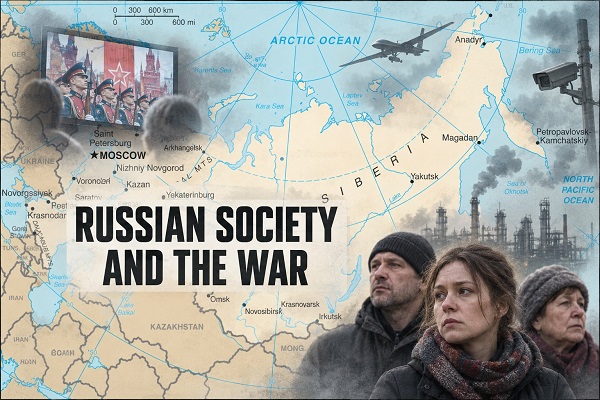
By Oleksandr Sukhobrus, Opinion Contributor.
The First Year of the War Versus the Fifth
At the beginning of Russia’s full-scale invasion of Ukraine, Russian propaganda painted a beautiful and idyllic picture of a future Russia for its citizens, one that would magically emerge after Russia’s victory over Ukraine and a parade of Russian troops on Ukraine’s main street in Kyiv, Khreshchatyk. In this vision of the future, Russians would become richer, happier, and able to look down on the West, which according to Russian propagandists, is mired in gay pride parades, transgender rights, and is in the final stages of moral decay. The West, in turn, would recognize Russia’s technical and moral superiority, Putin’s geopolitical genius, and would meekly bow to Russia. This was roughly the picture that formed in the minds of Russians, a kind of collective unconscious vision of the Russian society, after being indoctrinated by ubiquitous state propaganda.
The only obstacle to this idyllic vision of the future, according to Russian propaganda, was the Ukrainians, who, due to their spitefulness and hatred of Russians, refused to capitulate and desperately fought for every inch of their land. However, at the beginning of the Russian invasion, Ukrainian resistance to the Russian army was perceived as temporary. After failing to defeat Ukraine in just a few weeks, the Russian government appealed to its citizens with a message familiar to many generations of Russians: endure now for the sake of a happy future, which will surely come after the Russian army conquers Ukraine and overthrows the “fascist regime of Zelensky.”
As the war dragged on, and the parade of Russian troops on Khreshchatyk was delayed, the Russian army suffered defeats that were extremely painful for Russian public opinion, infected with the virus of its own superiority — the sinking of the Black Sea Fleet flagship Moskva, the Ukrainian army’s counteroffensive in the Kharkiv and Kherson regions, and other setbacks. A war that, in the minds of Russian society, was supposed to last a few weeks has now stretched on for a year, then another, then another, and another.
The desire of the majority of Russian society to see its army parade in Kyiv and humiliate the West has been replaced by a desire for peace and tranquility. The desire to win over Ukraine was replaced by more down-to-earth aspirations – to return to the way things were before 2022—without the daily drone strikes, burning oil refineries, endless coffins from the front, and without the ferocity of the Russian security services, which are searching for signs of disloyalty to the Putin regime in Russian society and harshly punishing any manifestation of such disloyalty. The citizens of Russia, the largest country in the world, have this desire.
The only problem is that the man who single-handedly makes all the major decisions in Russia, Vladimir Putin, doesn’t want to stop the war. He himself is under reliable protection; Ukrainian drones pose no threat to him or his family. He has never appeared at the front and, therefore, has never risked his life. His family and friends are also safe from the accidents of war. Putin regards the death of his soldiers in much the same way a chess player regrets the loss of his chess piece – the loss of a tool of war and nothing more. It seems that no one knows now how to resolve the existing contradiction and end the war.
*********
Author: Oleksandr Sukhobrus, a Ukrainian citizen, a native of Kyiv, a licensed lawyer, psychologist, and former diplomat, currently living in Vilnius, Lithuania. He is a frequent writer on international politics and the war in Ukraine. He contributed analytical and opinion articles to publications like in Small Wars Journal, The Hill, and others focusing on Russian propaganda tactics, military strategy, and international relations regarding the conflict in Ukraine.
Image: Created by ChatGPT.