

Attack Squadron 155 – A Legacy of Courage from WWII to Iraq
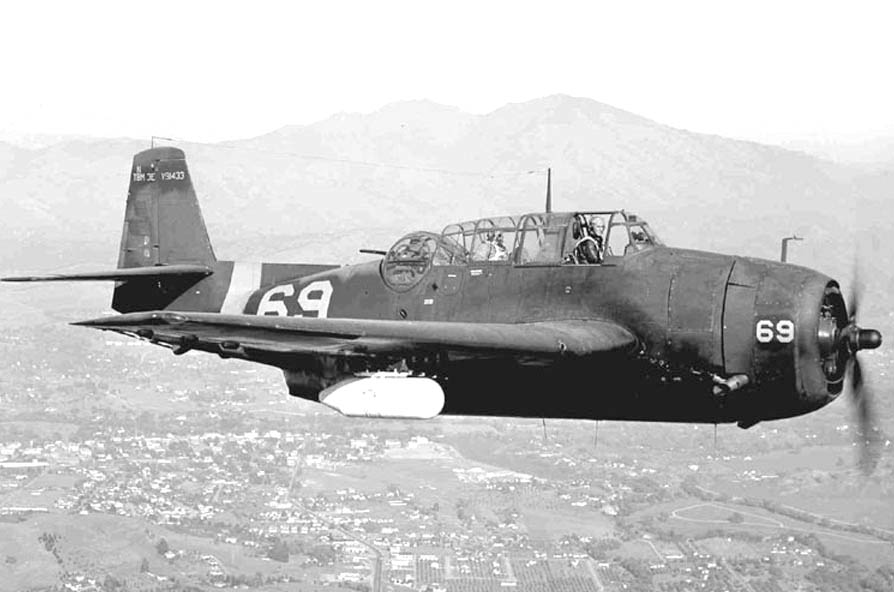
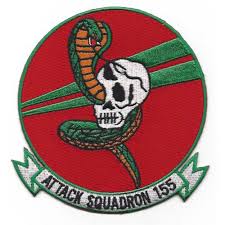
Few US Navy attack squadrons have a history as unique as Attack Squadron 155 (VA-155). The squadron was formed three times, each serving during a different period of naval aviation. It operated from the end of WWII through conflicts in Korea, Vietnam, and Iraq. The first version of Attack Squadron 155 was formed as Torpedo Squadron VT-153 on March 26, 1945. On November 15, 1946, it changed its name to Attack Squadron 16A (VA-16A), and then it officially became VA-155 on July 15, 1948. Its postwar service was short, and it was disbanded on November 30, 1949. During a deployment in the Western Pacific from March to October 1947, three of the squadron’s aircraft were modified for anti-submarine warfare, giving the squadron both attack and anti-submarine responsibilities. The second VA-155 was initially created as Reserve Attack Squadron VA-71E in 1946. After several name changes, including VA-58A, VC-722, and VA-728, it was activated in February 1951 and officially became Attack Squadron 155 on February 4, 1953. The squadron became known as the “Silver Foxes,” a name that became a part of its identity. The second Attack Squadron 155 began combat operations during the Korean War, with its first missions over Korea in October 1951. Its aircraft supported US and United Nations forces throughout the war, giving the squadron valuable combat experience. After the Korean War, the squadron remained active because of ongoing tensions in East Asia. In February 1955, its aircraft helped evacuate Chinese Nationalists from the Tachen Islands.
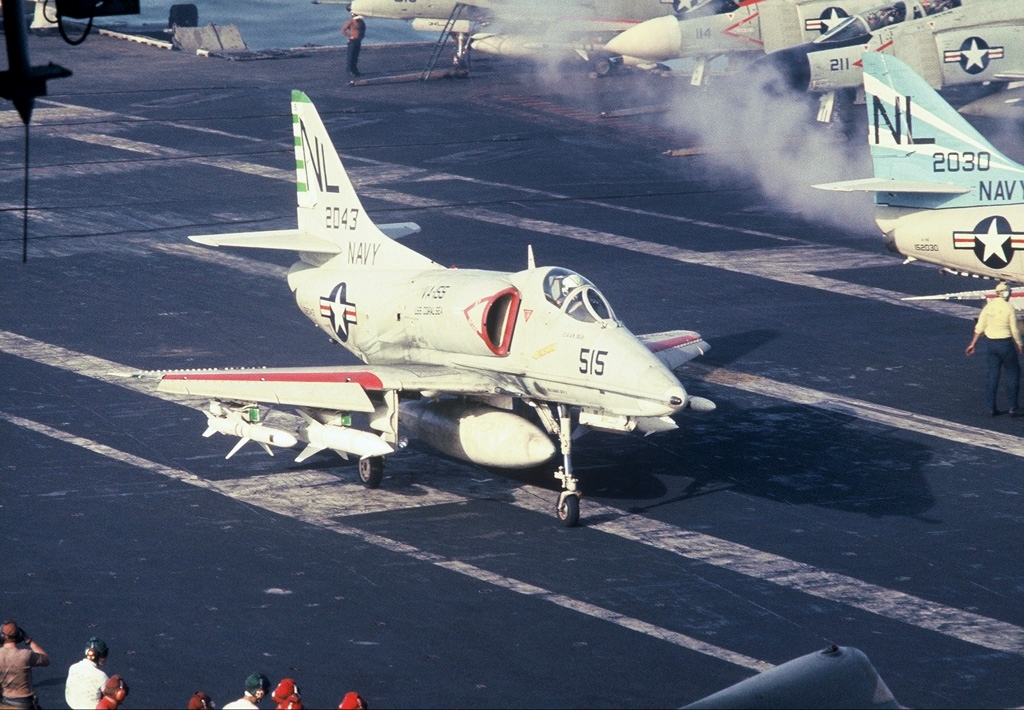
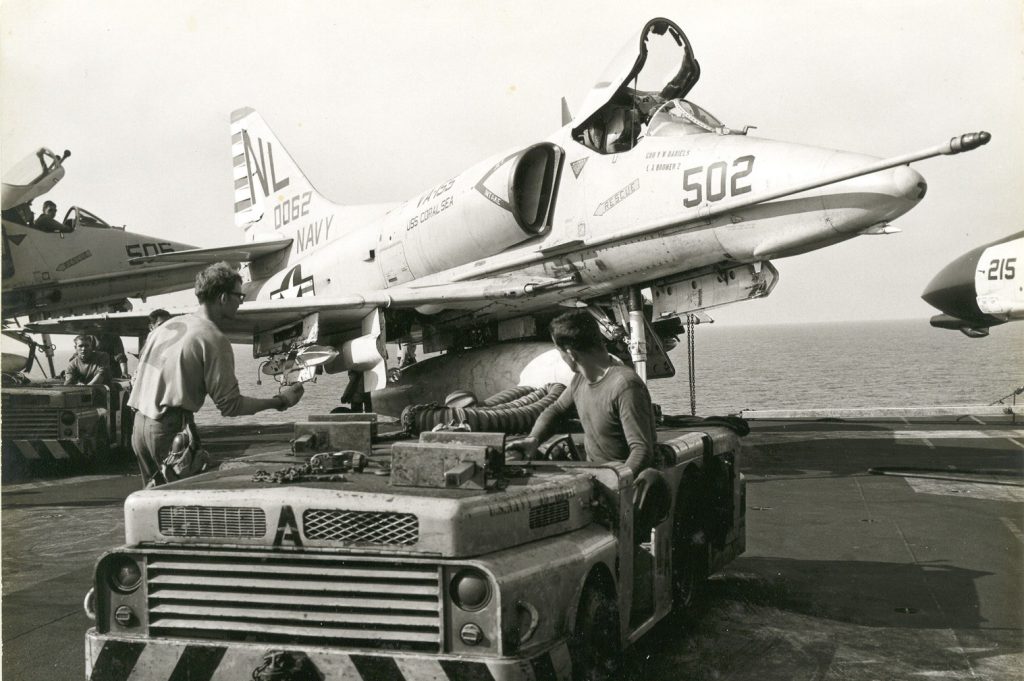
Three years later, from August 21 to September 11, 1958, Attack Squadron 155 conducted missions in the Taiwan Strait during the Second Taiwan Strait Crisis. In January 1961, the squadron was deployed to the South China Sea aboard the USS Coral Sea after Pathet Lao forces seized key areas in Laos. In February 1965, the squadron participated in Operation Flaming Dart. The operation involved retaliatory airstrikes against North Vietnam due to attacks on American personnel in South Vietnam. In March, Attack Squadron 155 started flying missions for Operation Rolling Thunder, which was a long-term US bombing campaign against North Vietnam. In May 1966, VA-155 became the first A-4 Skyhawk squadron to go to Vietnam with a new camouflage design. The pattern earned the aircraft the nickname “Flying Mulberry Bushes.” The design was intended to make the aircraft less visible and reduce the risk of damage in combat. On July 1, 1966, Commander C. H. Peters, the commanding officer of the squadron, was killed while leading an attack on oil facilities in Duong Nham, North Vietnam. After this, Attack Squadron 155 continued to carry out strike missions over North Vietnam. On October 20, 1967, its aircraft spotted six North Vietnamese PT boats near Thanh Hoa and attacked them. Four boats sank, one was damaged, and the sixth boat escaped toward a nearby river. The squadron faced another loss a month later. On November 25, 1967, Commander W. H. Searfus, the commanding officer, was lost at sea when his aircraft fell off the carrier during a flight deck accident. Even as major combat operations in Vietnam began to decrease, VA-155 continued to participate in regional crises. In March 1968, the USS Coral Sea, with the squadron aboard, operated off the coast of Korea after North Korea captured the USS Pueblo.
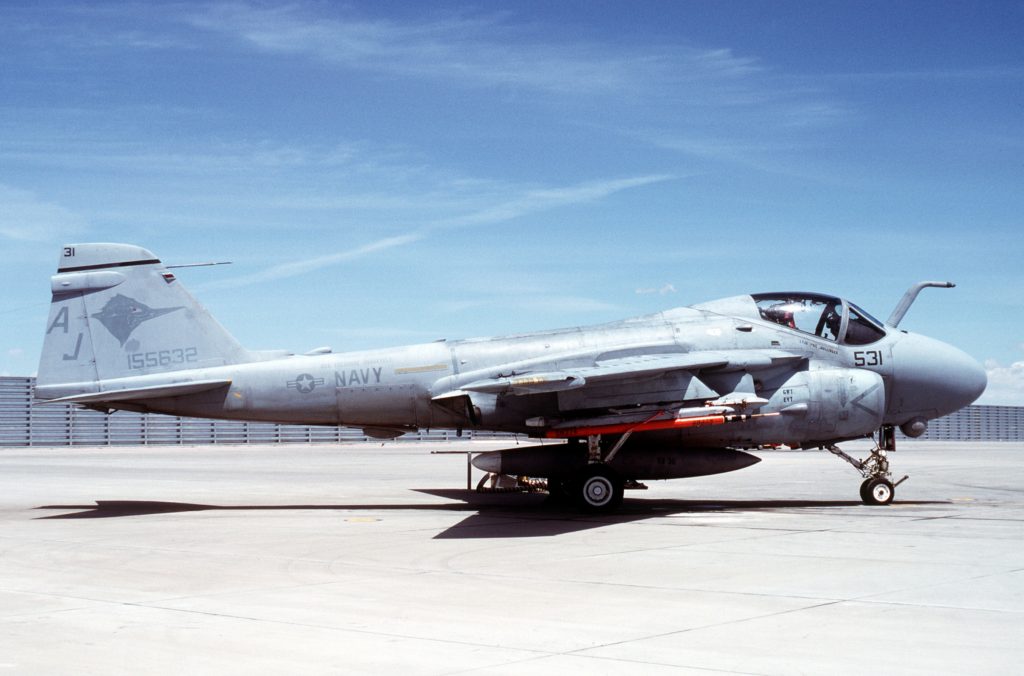
The following year, Attack Squadron 155 deployed on the USS Ranger to the Sea of Japan after North Korean forces shot down a US Navy EC-121 reconnaissance aircraft on April 15, 1969. VA-155 flew combat missions in Southeast Asia into the 1970s. On November 21, 1970, the squadron helped with Operation Ivory Coast, which aimed to rescue American prisoners of war from the Son Tay prison near Hanoi. After the ceasefire with North Vietnam in 1973, Attack Squadron 155 continued to conduct operations over Laos until a ceasefire was also reached there in February 1973. Later that year, the squadron demonstrated the Navy’s ability to move rapidly between areas of conflict. In November 1973, USS Oriskany, which carried VA-155, left the South China Sea to assist USS Hancock in the Arabian Sea due to instability after the Yom Kippur War in the Middle East. After more than 20 years of service, the second Attack Squadron 155 was disbanded on September 30, 1977. The VA-155 squadron returned for the third time on September 1, 1987. It was called the Silver Foxes and operated the Grumman A-6E Intruder. The aircraft could fly in all weather and was built to drop precise and general bombs on ground targets. The squadron joined the Navy’s operational force after the Vietnam War. In 1988, VA-155 deployed on the USS Independence. The deployment took the carrier from Norfolk to San Diego, passing Cape Horn. During the trip, the squadron showcased its airpower to officials from several South American countries. On January 17, 1991, VA-155 went into combat during Operation Desert Storm. Commander Sweigart, the squadron leader, guided Carrier Air Wing 2 aircraft in its first attack against Iraq. On January 18, one of VA-155’s A-6E Intruders was shot down while trying to mine near the Iraqi naval base at Umm Qasr. It was the squadron’s only loss during the Gulf War.
Even though they incurred losses, the Silver Foxes maintained a busy schedule throughout the conflict. In 43 days of war, Attack Squadron 155 flew 635 missions and logged 1,388.4 flight hours. It dropped over 2.2 million pounds of bombs on Iraqi military targets. On February 28, USS Ranger launched its final combat strike of the Gulf War, led by a VA-155 aircraft. After Desert Storm, the Silver Foxes continued to operate, and from September to December 1992, Attack Squadron 155 flew missions for Operation Southern Watch, which enforced limits on Iraqi military actions south of the 32nd parallel. In December 1992, the squadron took part in Operation Restore Hope in Somalia, helping with international humanitarian relief efforts. However, the decline after the Cold War was affecting the US Navy, and on April 30, 1993, the third and final VA-155 was disbanded.
Comments are closed.