

Asaib Ahl Al-Haq backs limiting weapons to Iraqi state after Al-Sadr move – Shafaq News
2026-05-27T17:33:11+00:00
Shafaq News- Baghdad
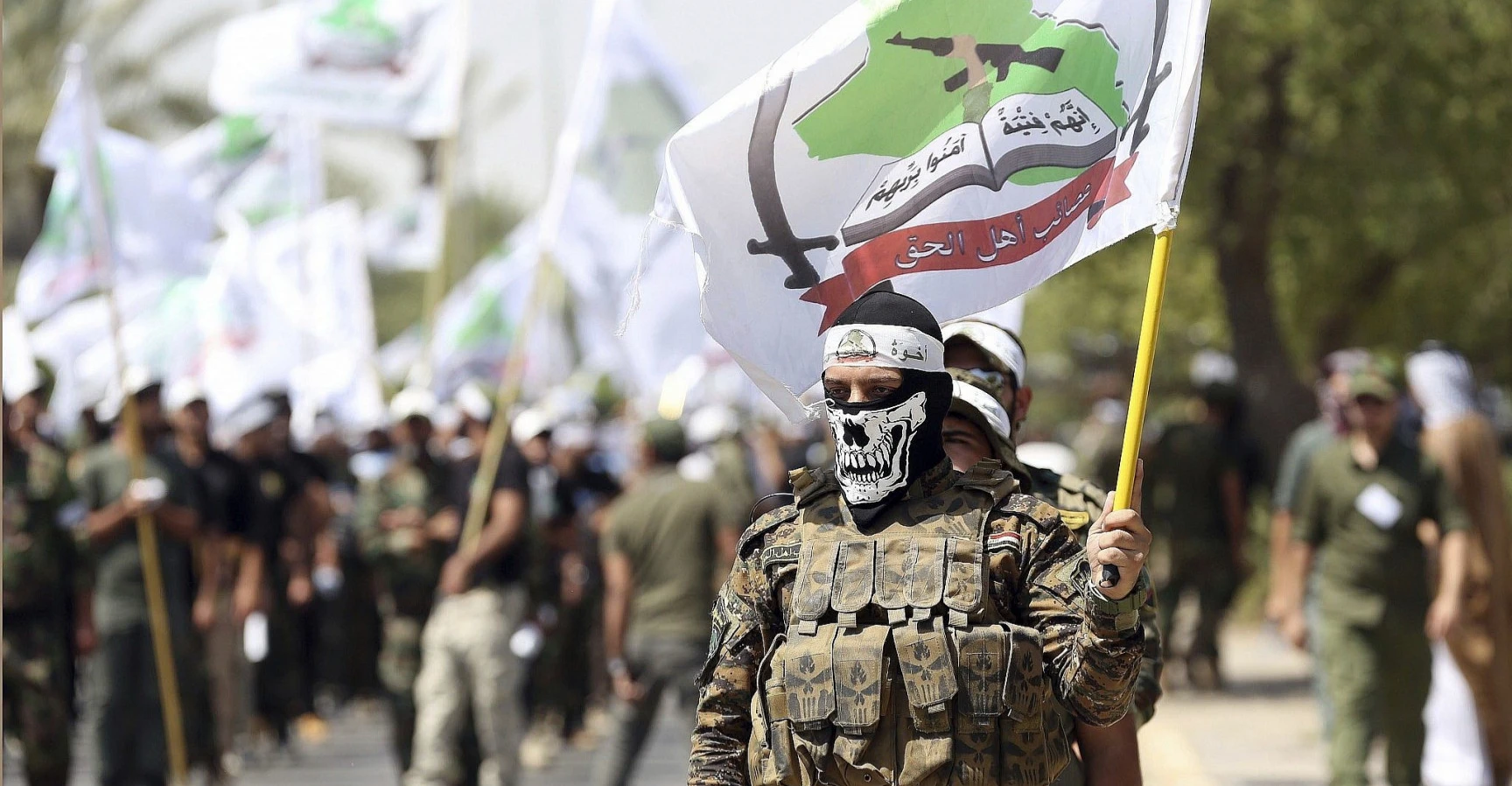
Asaib Ahl al-Haq, an Iran-backed
Iraqi armed faction, on Wednesday voiced support for restricting weapons to
state control following a decision by Muqtada Al-Sadr, leader of the Patriotic
Shiite Movement (PSM), to place Saraya Al-Salam, the armed wing of his
movement, under state authority.
Speaking with Shafaq News, Khaled
Al-Saadi, a political bureau member of the Sadiqoon parliamentary bloc, the
political wing of Asaib Ahl al-Haq, said “there should be no uncontrolled
weapons outside state institutions,” while describing earlier calls by the
faction’s leader Qais Al-Khazali to limit weapons to the state as a “national
call” aimed at denying foreign powers, including the United States, any
justification to target Iraq over the issue of arms outside official
institutions.
“Our support for restricting weapons
to the state remains tied to the government’s ability to protect Iraq by land,
air, and sea,” Al-Saadi noted.
Earlier today, Al-Khazali argued
that “resistance” is no longer limited to military action but also includes
building “a strong state with sovereignty, institutions, and independent
decision-making,” warning that movements lacking a broader state-building
project could eventually become “a burden on society.” However, Kazem
Al-Fartousi, spokesperson for Kataib Sayyed al-Shuhadaa, described his
group’s position on handing over weapons to the Iraqi government as “firm and
unchanged,” saying the factions’ arms would remain as long as the reasons for
their existence continued.
The comments came hours after
Al-Sadr announced the formal separation of Saraya Al-Salam from his movement,
stating that its members would integrate into state institutions “in the
national interest” and in response to risks facing the country. Iraqi Prime
Minister Ali Al-Zaidi welcomed the move and urged other armed factions to
follow the same path through official institutions, stressing that “the state
alone should hold the authority to monopolize arms and enforce the law,” a
principle that forms one of the central pledges in his government program.
These remarks were widely
interpreted as directed at Iran-backed factions operating under the “Islamic
Resistance in Iraq” umbrella, including Kataib Hezbollah, Asaib Ahl al-Haq, Kataib
Sayyed al-Shuhadaa, and Harakat al-Nujaba. Many of those groups are formally
part of the Popular Mobilization Forces, a predominantly Shiite umbrella force
incorporated into the Iraqi state in 2016, but they continue to maintain
separate command structures and weapons networks outside direct government
control.
Read more: Iraq’s armed factions and disarmament debate: Unity
masks divisions
Comments are closed.