

As Haiti Death Toll Tops 3,000, U.S. Prepares to Accelerate Deportation Flights
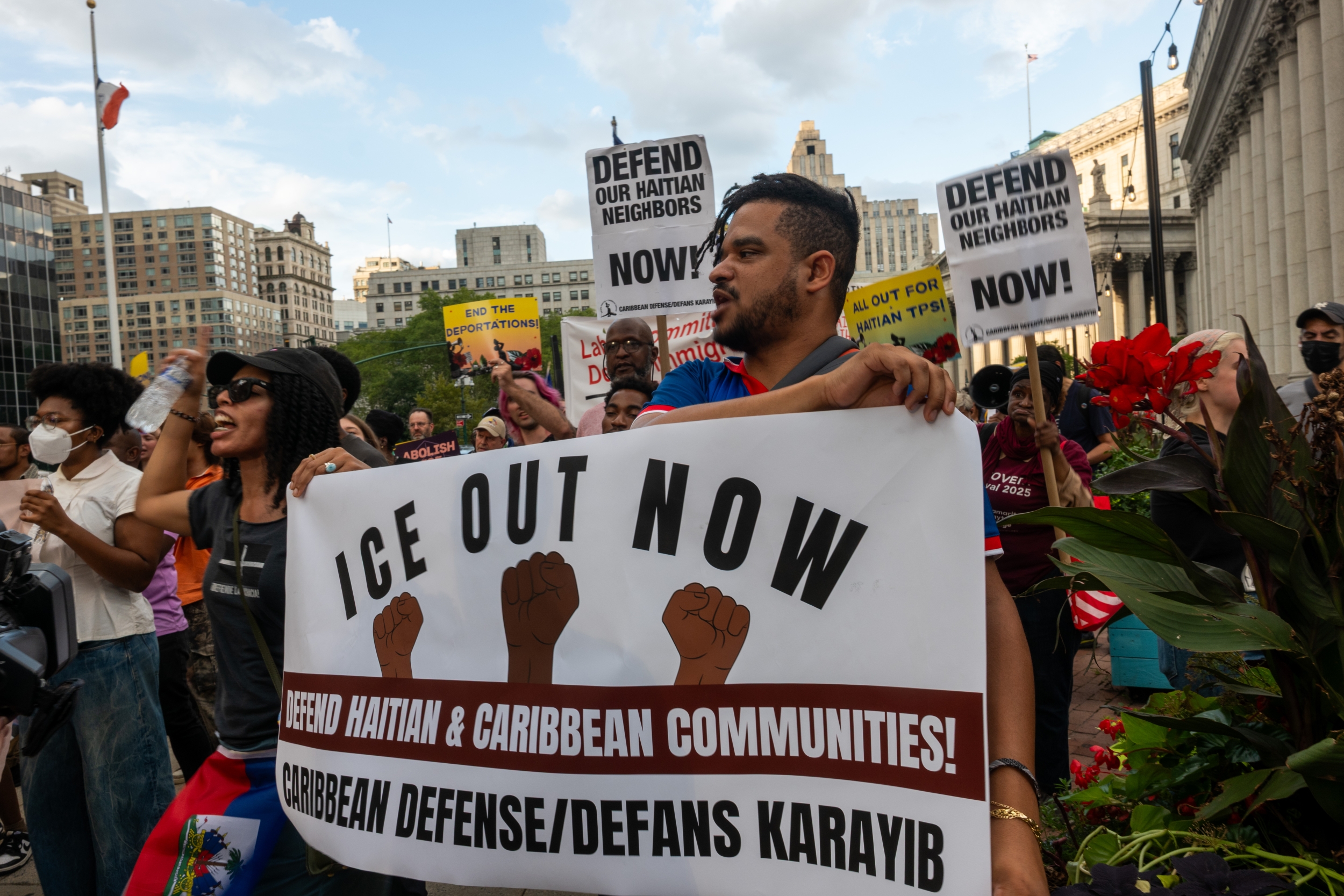
Photo by Spencer Platt/Getty Images
Federal officials are moving to send removal flights to Haiti far more often than they have in years past, according to internal government records reviewed by The New York Times and described in secondary reporting since nytimes.com blocks direct automated access. The documents show the administration wants to move from roughly one Haiti-bound flight a month to as many as one a week, a jump that could push several hundred additional people out of the country every month. The escalation lands just as gang violence in Haiti has reached some of the deadliest levels of the year and hundreds of thousands of Haitians have lost the legal status that had shielded them from removal.
Not every account of the ramp-up agrees on the exact math. The Times’ documents describe a monthly-to-weekly shift. But Haitian officials told the Haitian Times as early as July that the U.S. Embassy had briefed them to expect two flights a week carrying roughly 250 people combined, a figure repeated by wire coverage of the first flight in August. The LatinTimes is flagging that discrepancy here and readers should treat “weekly” as the confirmed floor and “twice weekly” as a plausible ceiling still being finalized.
Two flights, two very different planeloads
The buildup is already visible on the tarmac. A charter that touched down August 20 carried 161 people, Haiti’s National Office of Migration director general Jean Négot Bonheur Delva confirmed, including several passengers who had never set foot in Haiti but were sent there because a parent was Haitian — among them people born in Chile and the Dominican Republic. Delva’s office also disclosed that more than a dozen of those aboard had criminal records, including for sex offenses against children, a detail largely absent from coverage that focused on the flight’s families and long-settled TPS holders.
A second charter landed a week later carrying a very different group: families, including a 1-year-old U.S. citizen and other kids who’d been born stateside or in Brazil. The ICE Air charter left Alexandria, Louisiana, made its final U.S. stop at Opa-locka Executive Airport in South Florida, and landed in Cap-Haïtien roughly ninety minutes later.
How a legal shield came apart
The flights follow a yearlong fight over Temporary Protected Status, the humanitarian program that has shielded Haitians from removal since the 2010 earthquake. Kristi Noem, then Homeland Security secretary, moved to terminate the designation in late 2025; courts blocked the move repeatedly, and the Supreme Court ultimately sided with the administration on June 25 in Mullin v. Doe, ruling 6-3 that courts generally cannot second-guess a TPS termination. The case’s name reflects a leadership change the original coverage of this story tends to skip over: Trump removed Noem from DHS in early March 2026, and the Senate confirmed former Oklahoma Sen. Markwayne Mullin as her replacement on March 24. Mullin, not Noem, is the sitting secretary the Supreme Court case — and the current deportation push — is actually named after.
The TPS designation formally lapsed July 27. Most current reporting, including an Associated Press count carried by The Hill, puts the number of Haitians who held the status at roughly 350,000 nationally — the figure LatinTimes uses here.
A country Washington still tells its own citizens to avoid
The State Department continues to rate Haiti a Level 4 “Do Not Travel” country, its most severe warning, citing kidnapping, gang violence and an emergency declaration the government has kept in place nationwide since March 2024. The United Nations’ Haiti mission recorded 1,642 people killed in the first quarter of 2026 and another 1,408 in the second, for a combined death toll of roughly 3,050 between January and June — figures LatinTimes is citing directly from the mission rather than secondhand, since Haiti casualty counts shift with each new UN release. Outside monitors separately estimate close to 1.5 million people remain displaced nationwide as armed groups have pushed beyond Port-au-Prince into surrounding regions.
South Florida braces first
No part of the country has more riding on this than South Florida, home to the nation’s largest Haitian community; regional estimates of residents who lost status cluster around 158,000 to 160,000. “I fear for my life if I go to Haiti,” TPS holder Farah Larieux told CBS Miami, pointing to armed groups that have effectively taken over parts of the country. Attorney Sandra Cherfrere, also speaking to CBS Miami, raised the same cross-border problem visible on the August flights: mixed-status households whose U.S.-born or foreign-born kids hold no Haitian passport to travel on in the first place.
Little Haiti’s storefronts have gone quieter as regulars stay home, and Paul Christian Namphy of the Family Action Network Movement told NPR that Haitian labor is essential to South Florida’s health care and elder-care sectors — losing it, he said, would be economically catastrophic. Miami-Dade Mayor Daniella Levine Cava went further in her own comments to NPR, calling the termination “heartbreaking and unnecessary” and warning it would separate families and weaken the regional economy. At Notre Dame D’Haiti Catholic Mission, Father Reginald Jean-Mary has watched Sunday attendance thin out as parishioners grow afraid to leave home — a fear he’s tied directly to Washington’s own travel guidance: the government tells Americans not to go to Haiti while sending Haitians back to it.
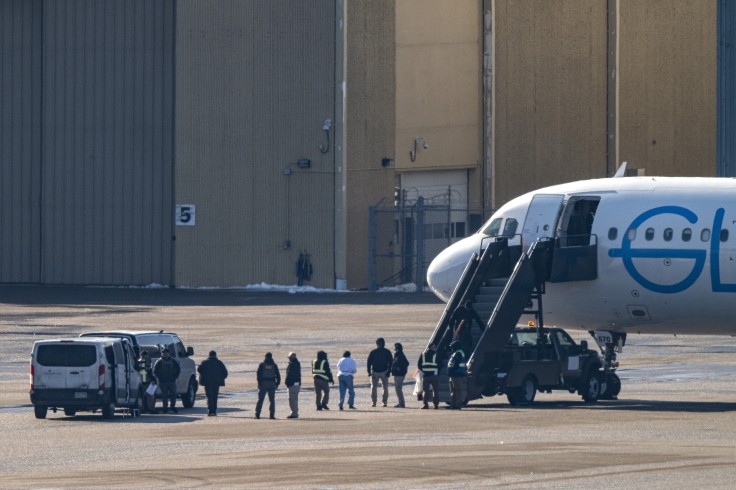
Photo by Stephen Maturen/Getty Images
A video that drew its own backlash
A Homeland Security video posted this week showing men shackled at the hands and feet boarding a Haiti-bound flight drew sharp condemnation from immigration advocates, who said the administration was publicizing the removals rather than simply carrying them out. The footage surfaced the same week a senior U.N. humanitarian official, Indrika Ratwatte, told the Security Council that Haiti has taken in close to 200,000 forced returnees since January — up roughly a tenth from where that tally stood at this point in 2025 — even as violence in the country remains severe.
A fight still playing out in Congress
Massachusetts Rep. Ayanna Pressley, who has spent much of 2026 pushing to extend TPS protections for Haitians, has called sending anyone back right now “unlawful” and warned it “would be a death sentence.” Her chamber has already acted: the House passed her extension measure in April, and companion legislation has been pending in the Senate since June. Haitian officials, meanwhile, say they’re bracing for the new normal regardless of how that fight ends, with the migration office anticipating roughly 250 arrivals a week once the accelerated schedule is fully in place.
For now, exactly how fast that schedule will move remains, by the administration’s own account, unsettled — but for families in Little Haiti and across South Florida, the uncertainty is already reshaping daily life.
© {{Year}} Latin Times. All rights reserved. Do not reproduce without permission.