

Apple Trained Its Own AI for China With Alibaba, Winning Unprecedented Beijing Clearance
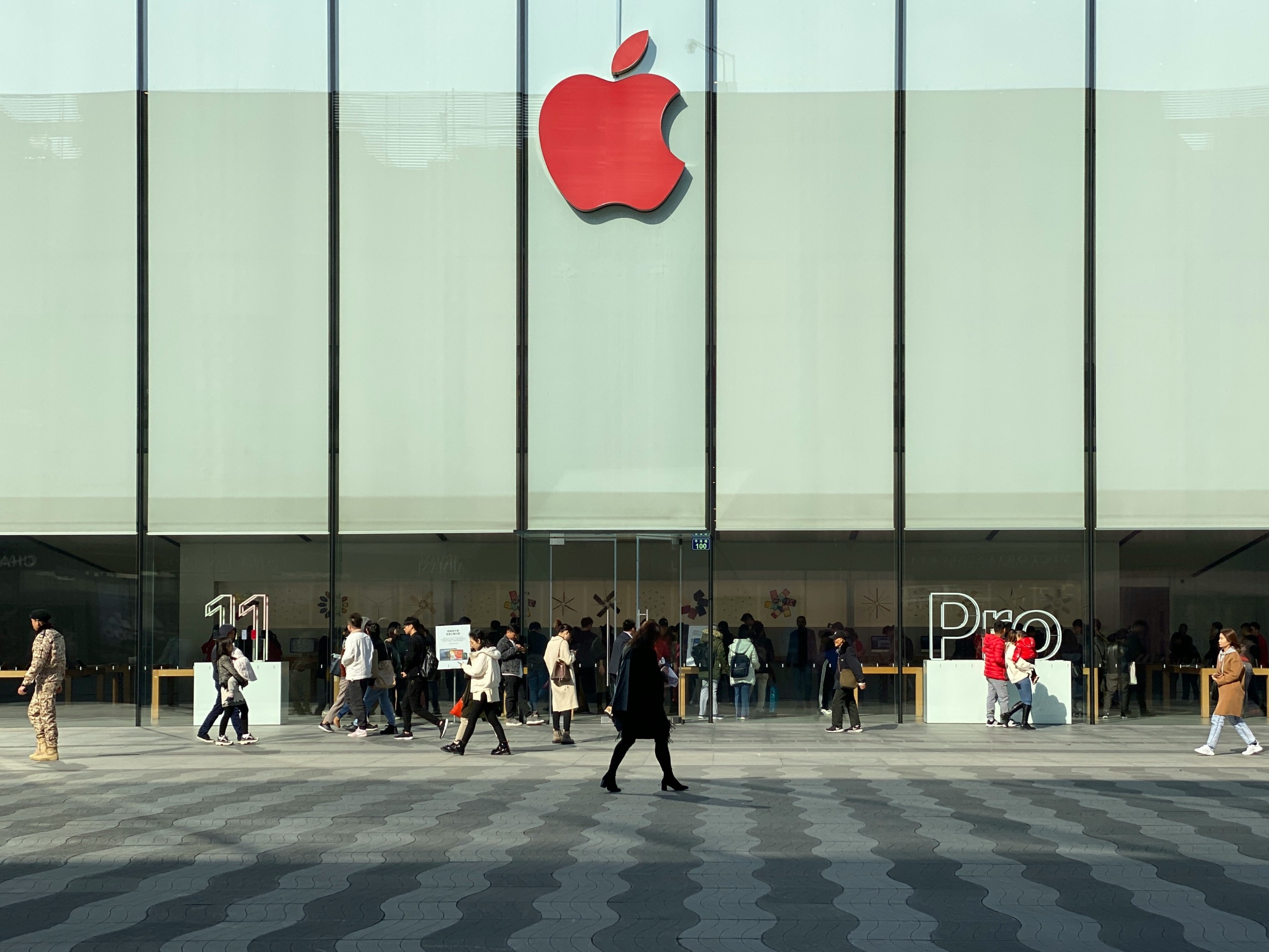
Apple has secretly trained a proprietary large language model for the Chinese market with Alibaba’s technical support — and Beijing approved it — making the iPhone maker the first foreign company the Chinese government has ever cleared to deploy its own AI model to mainland consumers, Reuters reported August 14, citing three people familiar with the situation.
The model will power elements of Apple Intelligence when the feature suite launches in China in the coming months via an iOS software update. It will operate not as a replacement for the Chinese AI systems Apple has already approved with regulators, but alongside them — a “dual-track strategy,” in the words of sources cited by Reuters, that gives Apple a layer of proprietary control no other foreign technology company operating in China has achieved in the generative AI era.
Understanding what Apple has built requires understanding three separate layers: the Apple-trained model, Alibaba’s Qwen handling cloud language queries, and Baidu covering AI-powered search. Which queries route to which layer — and what Chinese law requires of the Alibaba and Baidu components — are the questions the Reuters report raises without answering. Those unanswered questions are the most important thing a Chinese iPhone user needs to know before opting into Apple Intelligence features.
What Apple Built — and What Beijing Had to Approve
China requires every public-facing generative AI service to register with the Cyberspace Administration of China (CAC) and pass content compliance review before reaching consumers, under China’s generative AI registration rules that took effect in August 2023. Until July 15, 2026, every model on that registry belonged to a domestic Chinese company — Baidu, Alibaba, ByteDance, DeepSeek. Apple’s July clearance, which listed Apple Technology Development (Shanghai) Co., Ltd. as the registered entity, was the first foreign company’s proprietary model approval the registry had ever included.
The new Reuters reporting adds a dimension TechTimes’ July 17 coverage did not yet know: the service Apple registered is not simply a resale of Qwen under an Apple interface. Apple trained its own model. That model has passed Beijing’s content compliance review — which means Chinese regulators have made a judgment about what Apple’s model will and will not generate. What that filter required Apple’s model to refuse or reframe has not been disclosed. The “first foreign company” milestone is simultaneously a record of Apple’s model clearing Beijing’s censorship filter.
Apple and Alibaba declined to comment on the Reuters report.
How Does a Three-Layer AI Stack Work on an iPhone?
The architecture that emerges from the Reuters reporting on Apple’s China AI and the July CAC approval creates a three-layer system with no public precedent for a foreign company in China:
Layer 1 — Apple’s own model: Trained with Alibaba’s technical support, this model handles tasks where Apple can apply its own privacy architecture. The specific parameter count, training data, and architecture have not been publicly disclosed. Because it is Apple’s model and can run on-device, it may benefit from Apple’s privacy standards for on-device processing — meaning queries stay on the user’s device and do not reach any external infrastructure.
Layer 2 — Alibaba’s Qwen (language AI): Qwen handles cloud language tasks — text generation, image comprehension, deeper language understanding. Alibaba confirmed Qwen integration into Apple Intelligence experiences for Chinese users. A support guide Apple briefly published and then deleted specified that Mac users must be signed into their own Qwen account to use these features — a detail confirmed by reporting on the deleted guide requiring Qwen account sign-in. That requirement is a significant privacy signal: Qwen interactions are associated with an Alibaba user account, not an anonymous Apple session. Qwen queries bypass Apple privacy protections and do not route through Apple’s Private Cloud Compute system.
Layer 3 — Baidu (search and visual intelligence): Baidu handles Visual Intelligence search and Siri’s web-connected query capabilities — the roles that Google Gemini plays in the version of Apple Intelligence available elsewhere. A Baidu spokesperson confirmed this role to TechCrunch.
In the US, Apple Foundation Models handle on-device tasks; cloud queries go through Apple Private Cloud Compute design, whose cryptographic architecture prevents even Apple from reading user inputs. In China, cloud queries go to Alibaba and Baidu infrastructure — neither of which is part of Apple’s PCC system.
What Chinese Law Requires of Alibaba and Baidu — Regardless of What Apple Promises
This section is not a prediction about what might happen. It describes what Chinese law already requires.
China’s National Intelligence Law (2017), Article 7 intelligence cooperation mandate, states that all organizations and citizens must “support, assist, and cooperate with national intelligence work in accordance with law.” Article 14 grants intelligence agencies explicit authority to demand that cooperation. These requirements apply to Alibaba and Baidu regardless of their stated privacy policies, regardless of where they physically locate servers, and regardless of the Apple logo displayed in the user interface.
China’s Cybersecurity Law (2017, with amendments effective January 2026) separately requires covered network operators to store domestically generated data on Chinese servers and provide government access upon inspection request. The Data Security Law (2021) adds data localization and government-access provisions for data processors operating under Chinese jurisdiction.
Jeremy Daum, writing for China Law Translate, has noted that Daum’s Article 7 enforcement analysis suggests the provision may lack an explicit enforcement mechanism and may not have been designed to require proactive data sharing. That scholarly qualification is worth noting. It does not change what the Cybersecurity Law and Data Security Law independently require — nor does it eliminate the structural legal condition that Alibaba cannot credibly promise to refuse a Chinese government data access demand, because Chinese law structurally removes that option.
What this means in practice for a Chinese Apple Intelligence user:
Any Siri query or Writing Tools request processed through Alibaba’s Qwen or Baidu’s search infrastructure is data that reaches Chinese-jurisdiction servers. Those servers are subject to Chinese government access demands that Apple’s own privacy policy cannot override. As Betanews has noted, no independent security audit published for the Apple Intelligence China implementation has appeared. The absence of a public audit is itself a gap Chinese Apple users should weigh before routing sensitive information through Qwen-powered features.
Apple’s on-device processing through its own proprietary model — the one the Reuters report disclosed — may offer a different picture. On-device queries that never leave the device are not accessible via server-side government demands. The open question is which queries go to Apple’s model and which go to Qwen or Baidu. That routing logic has not been disclosed.
The Competitive Pressure That Drove Apple Here
Beijing did not do Apple any favors by keeping Apple Intelligence out of China for nearly 22 months while domestic rivals integrated AI deeply into flagship hardware. Huawei held 22.6% of China’s smartphone market in the second quarter of 2026, up from 18.1% a year earlier — the highest share Huawei had held since before its US chip supply was cut. Apple held 18.1%, up from 13.9%, and recorded Apple’s 24.4 percent shipment growth — the quarter’s strongest year-over-year gain among major Chinese market players. Analysts broadly expect AI-driven upgrade cycles to accelerate as the market moves toward what IDC AI agent phone 2028 forecast calls the “AI agent phone” around 2028–2029.
The competitive gap was visible in product marketing. Chinese iPhones were sold as “made for Apple Intelligence” from the iPhone 16’s September 2024 launch through at least mid-2026 — a nearly 22-month period during which the headline feature did not exist on those devices. Apple’s Greater China revenue reached $20.5 billion in the April–June 2026 quarter, up 28% year-over-year, but that recovery came from iPhone 17 demand and Android switchers, not from AI features that did not yet exist.
Huawei had been building on-device AI into its flagship handsets throughout the period Apple was locked out. For a company selling premium devices partly on the premise of AI capability, having no AI in its second-largest market is not a sustainable position.
The Apple-Alibaba partnership also emerged from a competitive selection process among Chinese AI providers. Before settling on Alibaba, Apple explored partnerships with Baidu (signed for specific capabilities as early as 2024), DeepSeek, and ByteDance. Alibaba’s Qwen series emerged as the preferred foundation model partner due to a combination of consumer data assets, an existing regulatory relationship with the CAC, and reported optimization of Qwen 3 for Apple’s MLX on-device inference framework.
What Was Beijing Getting From the Deal?
The regulatory timeline raises a question the reporting does not fully address: why did Beijing grant this clearance now, and why to Apple specifically?
Apple had diplomatic leverage. Tim Cook visited Beijing in May 2026 as part of a US trade delegation, and analysts attributed the subsequent approval in part to relationships Cook built with Chinese officials over more than a decade. Apple is also deeply embedded in Chinese manufacturing supply chains — a dependency Cook has acknowledged publicly. Beijing has an interest in keeping Apple’s premium manufacturing ecosystem intact, and that interest provides Apple unusual leverage.
The approval also came with conditions that constrain Apple in ways other Chinese AI companies are not constrained. Alibaba is contractually barred from model training on data submitted through Apple Intelligence interactions — a restriction that protects Apple’s user relationship but also reveals how carefully Apple negotiated the terms of the partnership, and how unusual those terms are in China’s AI ecosystem.
The Anthropic Allegation Hanging Over Qwen
The AI model Apple chose as its primary cloud language layer carries a contested history. In June 2026, Anthropic’s Senate Banking Committee letter alleged that operators affiliated with Alibaba’s Qwen lab had run approximately 28.8 million systematic API queries against Claude over six weeks in what Anthropic characterized as a model distillation campaign — harvesting Claude’s outputs to train Qwen. Alibaba has denied the allegation.
The H.R.8283 model theft legislation text — the Deterring American AI Model Theft Act of 2026 — introduced in the 119th Congress in April 2026, would create a framework to address model extraction attacks against US AI companies by entities in countries of concern, a category that includes China. The bill had not passed as of August 15, 2026, and the Apple-Alibaba partnership is legal under current US law.
The allegation matters for context: if Qwen’s capabilities were shaped in part by unauthorized distillation from Claude, the model Apple is now deploying to Chinese iPhone users may carry capabilities derived from a competitor’s intellectual property. Apple has made no statement about the allegation or its relevance to Qwen’s use in Apple Intelligence.
Does Routing Through Apple’s Model Actually Solve the Privacy Problem?
Analytically, the three-layer architecture creates two distinct privacy regimes on the same device.
For queries processed by Apple’s proprietary model on-device: Apple’s own privacy standards likely apply. The query never leaves the device, so it cannot be accessed by Alibaba, Baidu, or Chinese intelligence agencies via server-side requests.
For queries routed to Qwen or Baidu: the Chinese intelligence law framework applies in full. The Qwen sign-in requirement means those queries are associated with an identifiable Alibaba account. Apple’s Private Cloud Compute protections do not extend to third-party infrastructure.
The critical unknown is the routing logic — the rule that determines which queries go to Apple’s model and which go to Qwen or Baidu. That logic has not been publicly disclosed, and Apple has published no privacy documentation specific to the China version of Apple Intelligence. The ProgressiveRobot architecture analysis describes the structure as driven by regulatory strategy as much as by engineering — splitting tasks between Apple’s model and Chinese-jurisdiction infrastructure allows the regulatory risk of a single unapproved foreign model to be distributed across distinct layers.
Until Apple publishes the routing logic and an independent security audit of the China implementation, Chinese Apple users cannot know which of their interactions with Apple Intelligence stay with Apple and which reach infrastructure subject to Chinese government access demands.
Frequently Asked Questions
When will Apple Intelligence actually be available to Chinese users, and what will trigger the rollout?
No consumer launch date has been announced. The CAC granted regulatory clearance on July 15, 2026 — a prerequisite for launch, not a launch date itself. Based on historical patterns between CAC approval and public availability, analysts expect the rollout in the third or fourth quarter of 2026. Apple’s fall hardware event, which typically introduces new iPhone models and software releases, is one natural delivery point. Whether the rollout begins on existing devices like the iPhone 17 series or is bundled with the iPhone 18 launch will likely depend on how much competitive pressure Huawei’s AI-equipped phones are generating in the premium segment. Apple has made no announcement.
What is the privacy difference between using Apple Intelligence in China versus other countries?
In the US and most markets, cloud queries routed by Apple Intelligence pass through Apple’s Private Cloud Compute — a system cryptographically designed so that even Apple cannot read user prompts. In China, cloud language queries appear to route through Alibaba’s Qwen, and search queries through Baidu. Neither Chinese system is part of Apple’s PCC architecture. Alibaba and Baidu are subject to China’s National Intelligence Law (2017), Article 7, which requires all Chinese organizations to cooperate with government intelligence requests, and to the Cybersecurity Law (amended January 2026), which requires data stored on Chinese servers to be available for government inspection. Queries that stay on-device — processed by Apple’s own proprietary model without reaching cloud infrastructure — may avoid this exposure, but Apple has not published the rules determining which queries go where.
Why did Apple build its own model instead of simply relying on Qwen for everything?
Control. Apple’s stated product philosophy prioritizes ownership of every layer of its software and hardware stack. Relying entirely on Qwen would have left Apple without a proprietary AI layer in its second-largest market — meaning the AI experience on Chinese iPhones would have been governed entirely by Alibaba’s product decisions, content policies, and service continuity. Building its own model gives Apple a degree of control over the on-device AI experience even within China’s regulatory constraints. It also accomplished something commercially significant: becoming the first foreign company Beijing has ever approved to deploy a proprietary generative AI model in China — a status no other US technology company, including OpenAI, Google, or Microsoft, has achieved.
What is the Anthropic allegation against Alibaba, and does it affect the model Chinese iPhone users will use?
In June 2026, Anthropic’s Senate Banking Committee letter alleged that operators affiliated with Alibaba’s Qwen lab ran approximately 28.8 million systematic API queries against Claude — Anthropic’s AI system — over a six-week period in what Anthropic characterized as an unauthorized model distillation campaign designed to harvest Claude’s capabilities for training Qwen. Alibaba has denied the allegation. The H.R.8283 model theft legislation text was introduced in the 119th Congress to create a legal framework addressing this conduct, but had not passed as of August 15, 2026. The practical relevance for Chinese iPhone users is indirect: if Qwen’s capabilities were shaped by distillation from Claude, the model routing their queries may incorporate capabilities derived from a competitor’s intellectual property, without either company’s users having consented to that process. Apple has not commented on the allegation or its relevance to the Qwen integration.