

Ancient Egyptian princesses may have been skilled warriors

A new study of six royal skeletons from a cemetery near Cairo has revealed that ancient Egyptian princesses buried with weapons carried the physical marks of archery on their bones.
The changes in their arms and hands match the strain of drawing a bow again and again.
The finding reopens a long-standing question about the weapons found in the graves of royal women.
Researchers have often read these as symbols of rank rather than proof of real fighting or hunting.
If the skeletal marks came from repeated bow use, some elite Egyptian women trained in ways their culture usually reserved for men.
Dahshur’s forgotten skeletons
The skeletons come from Dahshur, a royal burial ground on the desert plateau south of Cairo. The site was excavated by French archaeologist Jacques de Morgan in 1894 and 1895.
His teams opened intact chambers holding a king and several princesses of Egypt’s late Middle Kingdom. For more than a century the bones sat largely unstudied.
The original nineteenth-century examiners looked only at the king and one princess. The rest stayed boxed in a Cairo museum basement until a curation project reopened them in 2020.
A new look at the royal remains
The reexamination was led by Dr. Zeinab Hashesh, a bioarchaeologist at Beni-Suef University (BSU) in Egypt, working with colleagues in Cairo and London.
Her team combined close study of the bones with X-rays and chemical tests on the dark resins stuck to them.
One skeleton belonged to King Hor, whose gilded burial mask made him one of Dahshur’s best-known finds. He and Princess Noub-Hotep lay in neighboring shafts, while four other women came from tombs around an earlier pyramid nearby.
One had no name at all. By matching that skeleton to old burial records, the team determined that it most likely belongs to Princess Sathathormeryt.
Dr. Hashesh told Earth.com that the reassessment’s central claim rests on lining up two kinds of evidence.
“What convinced us that these weapons were actively used rather than merely symbolic was the close correspondence between skeletal markers of activity and the burial assemblages,” said Dr. Hashesh.
Skeletal signatures of archery
Bones are not fixed. Where a muscle or ligament pulls on the skeleton, hard repeated loading thickens and roughens the attachment site. In addition, the shaft can slowly rebuild itself to carry the strain.
Drawing a bow is one of those repeated loads. It pulls on much of the upper body. The forearm, the muscles that grip and turn the hand, the shoulder, and the chest all take the strain.
In this way, archery leaves a recognizable pattern of thickened attachments and slight asymmetry between the two arms.
That signature is not unique to Egypt. One paper on Neolithic farmers in France found that men buried with arrowheads carried heavier forearm and collarbone development than men without them.
These bone markers tied the findings to bow use rather than farm labor.
Signs of habitual, long-term practice
Princess Noub-Hotep, who lay beside the king, showed the clearest case. The muscle attachment sites along her forearms and right hand were strongly built.
Furthermore, one of the long bones in her right palm was noticeably bowed, a change that repeated gripping and drawing can produce.
Arrows had been placed in her tomb, and the heavier development on her right side suggests a right-handed draw.
The bowing and the developed muscle are not features a body is born with.
“These are physiological adaptations to the physical stress of stabilizing and drawing a bow, which only occur through habitual, long-term practice during life,” Dr. Hashesh told Earth.com.
Other royal evidence
Princesses Khenmet and Itaweret showed extra bone built up where the muscles that rotate the forearm and steady the elbow attach.
These bone markers are consistent with pulling a bowstring. Itaweret also had strong chest and shoulder attachments on both sides.
Princess Ita’s bones told a slightly different story. Her forearms and the small muscles of her hand were unusually robust.
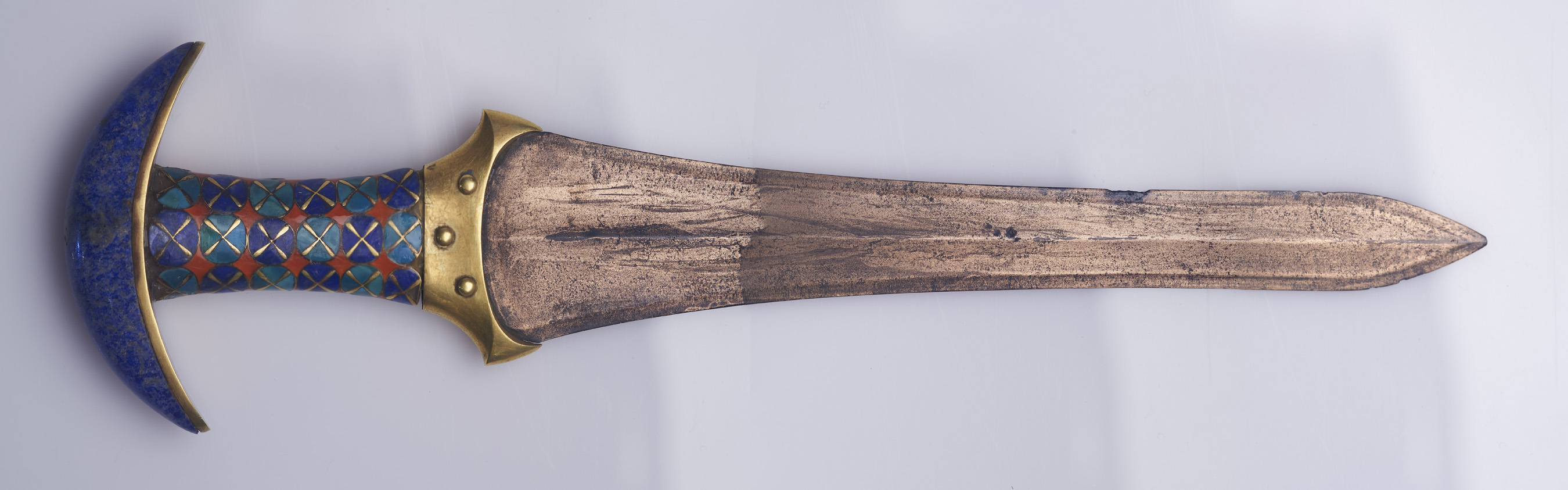
This indicated the sort of grip strength linked to holding a weapon such as a dagger or mace. A finely made dagger sat among her grave goods.
King Hor carried comparable marks. He had uneven muscle development between his arms, and a worn hollow in his right shoulder socket – both of which fit the act of drawing weapons.
Evidence of skilled medical care
The skeletons also carry a record of injuries that had healed. King Hor had a broken bone in his hand that had knit back together completely.
He also had two healed injuries on his skull, showing the wounds happened well before he died.
Princess Itaweret had healed rib fractures and small healed breaks in her foot, injuries the researchers link to a fall or a hard blow.
The way these fractures mended, without twisting or infection, suggests careful setting and aftercare.
Egyptian physicians of this era already knew how to treat such wounds. A surviving surgical text describes setting fractures, splinting, and dressing wounds.
A review of ancient shoulder injuries noted that healed breaks like these mark patients who lived long after treatment. The mended bones are thus a testament to the danger and the care that followed.
When asked by Earth.com what the healed injuries reveal about palace life, Dr. Hashesh replied, “It shows that while their status did not shield them from physical risk, it provided the effective treatment necessary to survive it.”
Bones point to family ties
Several of the individuals share unusual features in the spine and skull that tend to run in families.
These include a gap in the bony arch of certain vertebrae, an extra fusion at the base of the spine, and matching quirks in the small bones of the hands and feet.
Because such traits are inherited, their repeated appearance across the group supports close kinship, and likely marriage within the royal family.
This was a common practice in Egyptian dynasties. The burials themselves were also arranged in a way that seems to reflect these ties.
Royal embalming tradition
The embalming ran the same direction. Chemical analysis of the black resin on the bones identified a blend of frankincense and juniper across nearly every individual. One princess was treated using juniper alone.
Neither material grew near Dahshur in any quantity. Frankincense came through trade routes reaching toward the Horn of Africa, and the juniper likely traveled up the Nile from the south.
Using the same costly imports on nearly everyone suggests a single, regulated way of preparing the royal dead.
Rethinking women and warfare
Before this reassessment, no one could say whether the weapons in these tombs were functional equipment or purely symbolic.
The bones now tilt that reading toward real use, at least for archery, and toward women whose bodies were marked by skilled, repeated effort.
A DNA study revealed that a richly armed Viking buried in Sweden, long assumed to be a man, was actually a woman.
Like the Dahshur skeleton, the evidence came directly from the body, forcing researchers to rethink ancient assumptions about women and warfare.
What the study cannot yet prove is exactly how these women used their weapons, whether in hunting, ritual, or something closer to combat.
In addition, DNA and chemical work still to come may sharpen the family tree and reveal where these royals grew up.
For now, the plainest new fact is that elite women of the Egyptian court left behind bones bearing changes consistent with repeated bow use – challenging a familiar assumption about who practiced archery in the ancient world.
The study is published in the journal Frontiers in Environmental Archaeology.
—–
Like what you read? Subscribe to our newsletter for engaging articles, exclusive content, and the latest updates.
Check us out on EarthSnap, a free app brought to you by Eric Ralls and Earth.com.
—–
Credit: Source link
Comments are closed.