

America is 250. Let’s love it now and always
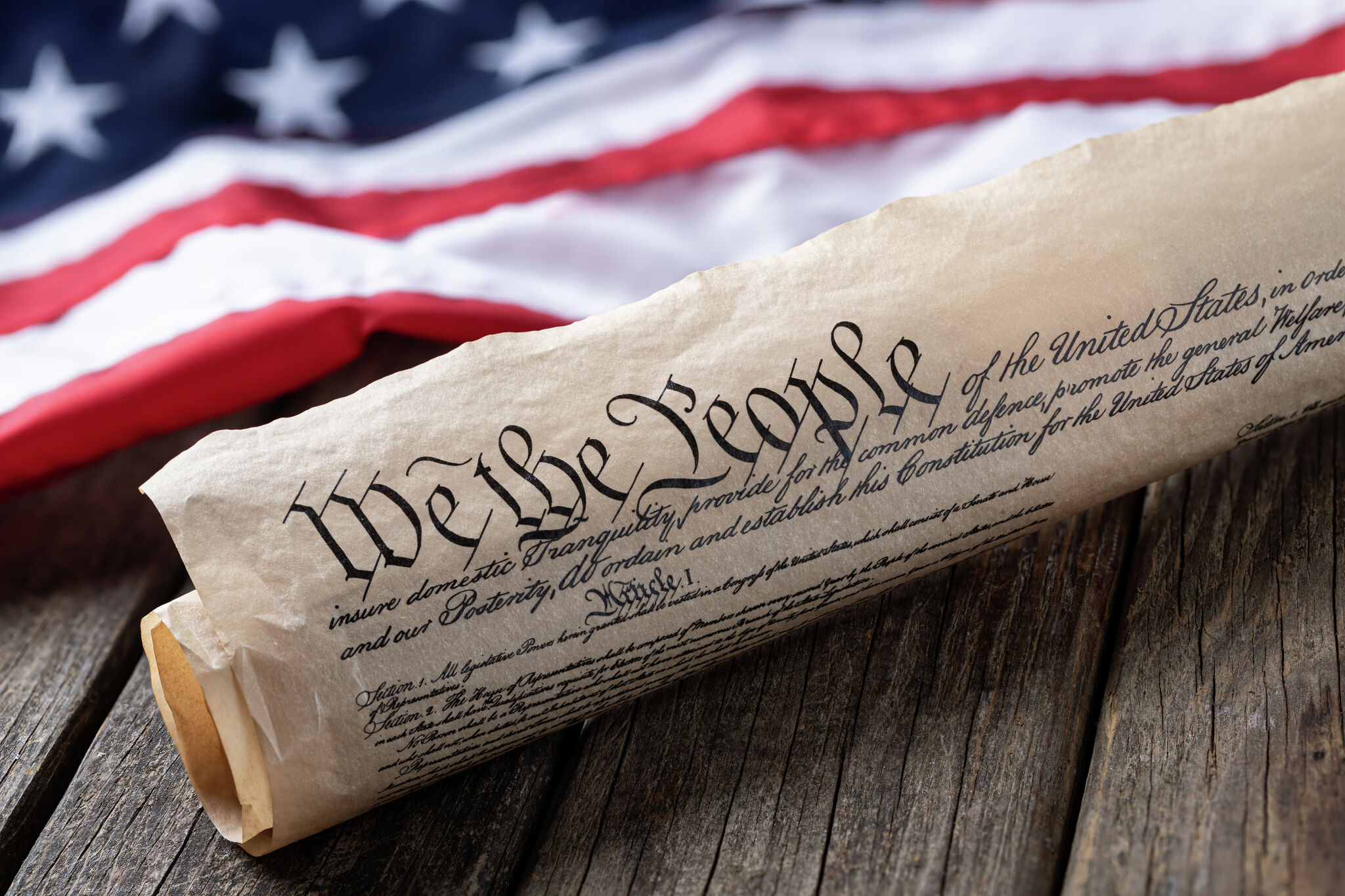

This editorial is part of a series of essays reflecting on the United States’ 250th year of independence. Read them all at dallasnews.com/250.
Oh, let’s love with hearts bursting with joy this imperfect place, this country of ours, this nation born of hope and suffering for freedom, this beautiful land that sustains us and this collection of people that is us, Americans.
It’s our birthday, and we should be happy and grateful. We have 250 years to celebrate, 250 years of hard work toward the more perfect union we are ever trying to be, 250 years of labor to live up to the opening words of a declaration of self-evident truths of human equality and our natural rights to be alive and to be free to seek our happiness where we might find it.
Article continues below this ad
We were created to be free. We didn’t need Thomas Jefferson or the philosophers who came before him to tell us that. We know it in our hearts. But the words matter; the philosophy matters.
They mattered so deeply on July 4, 1776, that the men who signed the Declaration of Independence understood that they were likely signing their own death warrants. They knew that their heads could well end up on pikes in London as a warning to any who might thereafter challenge the tyranny of monarchy.
The miracle that followed is one that too many of us have lost track of 250 years later. We take for granted now what was at risk and what was gained.
Just eight days before the signing of the declaration, Admiral Richard Howe’s fleet of 400 British warships carrying 32,000 troops had sailed into New York harbor. The world’s most powerful navy carrying troops of the world’s most powerful empire arrived to crush a rebellion.
Article continues below this ad
There was no reason to believe they wouldn’t succeed. For years thereafter, George Washington dragged around the colonies a near-starving army, often frozen and unpaid, escaping defeat in the dead of night and accepting that, most of the time, victory meant just living to fight another day.
The British surrender at Yorktown after seven years of war stands, still, as one of the most unlikely outcomes in military history.
That moment, when Gen. Charles Cornwallis gave up his army and Washington excused the British from this new nation, was a defining line in all of human history. It was the beginning of the realization in government of an abstract philosophy of human freedom, of the inherent right to self-determination that no society of people had yet achieved.
Almost 100 years before Cornwallis’ surrender, the Enlightenment philosopher John Locke undermined both the idea that kings enjoyed a divine right to rule and that the condition of human slavery was acceptable.
The first words of the first chapter of Locke’s Two Treatises of Government declare: “Slavery is so vile and miserable an estate of man, and so directly opposite to the generous temper and courage of our nation, that it is hardly to be conceived that an Englishman, much less a gentleman, should plead for it.”
Article continues below this ad
The eighth chapter states that because men are by their “nature all free, equal, and independent, no one can be put out of this estate and subjected to the political power of another without his own consent, which is done by agreeing with other men, to join and unite into a community for their comfortable, safe, and peaceable living, one amongst another, in a secure enjoyment of their properties, and a greater security against any that are not of it.”
These are the ideas, the self-evident truths, that were at stake in the war that was codified on July 4, 1776. They are the truths that won because Americans fought and died for them.
That is what we are celebrating. That is what should make us so joyful and thankful as we celebrate Independence Day. What happened was as unlikely as it was profound. The truths we hold as self-evident became manifest in the victory Washington claimed on the Chesapeake Bay.
No one promised us a perfect nation. And the nation we received was imperfect from its founding. The central contradiction of slavery in a nation created on the principle of inherent human freedom haunted the United States from its earliest days, and its legacy haunts us still.
Jefferson, a student of Locke and a slave owner bound in deep, personal contradictions, understood very well how evil slavery was and how antithetical its existence in America was to the principles of the revolution.
Article continues below this ad
His original draft of the declaration invoked the “execrable commerce” of the slave trade as a charge against King George III, accusing him of waging “cruel war against human nature itself” by taking “a distant people who offended him, captivating & carrying them into slavery in another hemisphere.”
And still, those who risked everything to undo the tyranny of Britain lacked the courage or the interest to do anything about the tyranny they imposed. It would take the better part of another century, and the lives of hundreds of thousands of Americans, to undo those shackles.
To acknowledge that history is not to dampen the joy of celebration now. The idea of freedom won again. It won through suffering. It won through impossible odds, once more.
Abraham Lincoln, the author of emancipation, did not begin the Civil War with the goal of freeing enslaved people. He began with the idea of preserving the United States. As he wrote to the powerful newspaper publisher Horace Greeley, “My paramount object in this struggle is to save the Union, and is not either to save or to destroy slavery.”
But a union built on the foundation of natural human freedom could not survive with an institution opposed to it. Lincoln understood that, and today it is as self-evident to us as freedom from a king was to the founders. We cannot conceive of a nation that would accept it.
Article continues below this ad
That’s part of the joy because it’s part of the progress, the long journey of a more perfect union.
The rule of kings and tyrants arises out of no real idea. The supposed “divine right” was so flimsy it couldn’t hold up under examination. Monarchy, autocracy and tyranny arise from the exercise of power, the blind acceptance of tradition, our human habit, as Jefferson understood it, “to suffer, while evils are sufferable.”
They are what happens when the free do not band together to demand their freedom, even at the risk of their own lives.
It’s fashionable now to look at the failures of our own country and to condemn our nation as the founders condemned the government they lived under. But that’s to ignore the critical difference. The great benefit of a democracy is the ability to love the best of what we are and work to improve the worst.
Our history is not our destiny. We can accept and forgive, even with a love that is like the love of ourselves, the contradictions and failures of the past. That great lover of America, Walt Whitman, told us how to do this long ago.
Article continues below this ad
The past and present wilt—I have fill’d them, emptied them.
And proceed to fill my next fold of the future…
Do I contradict myself?
Very well then I contradict myself,
(I am large, I contain multitudes.)
Our nation is a nation of multitudes and the contradictions that come with multitudes.
There is always work to do. There are always threats to our ability to live among one another in peaceful self-determination and the right to resolve our differences through democratic processes.
That work is part of the bargain of freedom. We must accept the political role of free citizens and treat it with the seriousness it demands.
For all of that, we can and must say today that we love our nation, for all of its flaws and all of its promise.
Because the United States of America is a beautiful promise upon a beautiful idea, that we are free and are born to be free and must live in freedom together, seeking always and every day to make a more perfect union among one another.
Have thoughts about this? Send a letter to the editor using our letters form or email letters@dallasnews.com. Letters should be no more than 200 words and include the first and last name of the writer and city of residence.