

Afreximbank targets $5.18 billion Angola energy pipeline to move local firms from contractors to owners
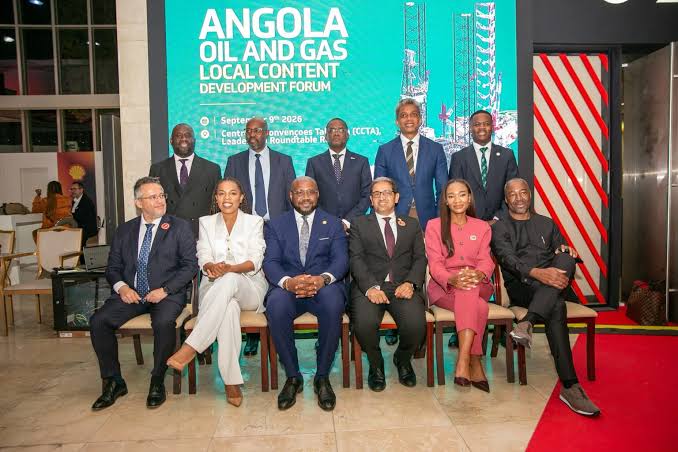
Afreximbank is seeking to turn Angola’s local-content agenda into a broader push for domestic ownership of oil and gas assets, with a $5.18 billion pipeline of projects identified as the African Export-Import Bank looks to help local companies move beyond service contracts and into larger operating and investment positions.
The financing opportunities were highlighted at an Afreximbank Local Content Development Forum held in Luanda on September 9, bringing together government institutions, financial institutions, Angolan companies and industry operators to examine how capital, partnerships and transaction structures could expand domestic participation across the petroleum value chain. The pipeline includes $2.5 billion for Lobito Oil, $1.4 billion for Amufert, $1 billion for Sonangol and $280 million for Itracom.
The forum reflects a shift in the way African oil-producing economies are approaching local content. Rather than measuring participation primarily through the number of domestic companies supplying goods and services to international operators, Afreximbank is pushing for Angolan firms to build the balance sheets, technical capacity and financing structures required to own assets and become operators themselves.
Haytham Elmaayergi, Afreximbank’s Executive Vice President for Global Trade Bank, said the bank’s next phase of engagement in Angola would focus on extending its financing and transaction-structuring capabilities to a broader group of privately owned Angolan companies. The bank has already invested close to $2 billion in Angola’s oil and gas sector, including transactions involving the Cabinda Refinery, Amufert, Sonangol and Etu Energias.
The distinction between participation and ownership matters because service contracts typically generate revenue for domestic firms without necessarily giving them exposure to the longer-term value of an energy asset. Ownership and operatorship, by contrast, can provide companies with greater control over capital allocation, production decisions, technology, procurement and future investment.
For Angola, which remains heavily dependent on hydrocarbons for export earnings and public finances, developing a larger pool of domestic energy companies could also help retain more value within the economy. The challenge is that moving from subcontracting to ownership requires substantially more capital, stronger corporate governance, technical expertise and the ability to manage complex commercial and operational risks.
Those constraints were central to discussions at the Luanda forum. Participants identified access to appropriate financing, bankability, execution capacity and market access as some of the main barriers limiting the expansion of indigenous companies. The financing challenge is particularly important for capital-intensive oil and gas projects. Local companies may have the technical capability to participate in a project but lack the balance sheet required to acquire an interest in an asset, provide guarantees, purchase specialised equipment or finance working capital through lengthy project cycles.
Afreximbank’s proposed role therefore extends beyond conventional project lending. Discussions at the forum covered project finance, trade finance, downstream infrastructure and industrial development, creating a financing framework that could support companies at different stages of the energy value chain. The $5.18 billion pipeline provides an immediate test of that approach. The projects span upstream and downstream activities as well as industrial development, meaning that their financing needs are likely to vary considerably. The objective will be to match appropriate forms of capital to each project rather than treat local-content financing as a single category.
Amufert, for example, represents the industrialisation dimension of Angola’s energy strategy. The fertiliser and ammonia project links the country’s hydrocarbon resources with agricultural inputs and manufacturing, potentially creating value beyond crude oil exports. Lobito Oil, meanwhile, forms part of the country’s broader effort to develop petroleum assets and related infrastructure around the Lobito corridor.
Sonangol’s financing requirements have an even broader strategic dimension because the state oil company remains central to Angola’s petroleum industry and is also involved in the country’s transition towards a more commercially oriented energy business. Itracom adds another component to the pipeline, illustrating the potential for oil and gas investment to generate demand across associated industrial and infrastructure activities.
Afreximbank is also drawing on examples elsewhere in Africa to demonstrate what larger domestic participation can look like. Nigeria’s Oando and Heirs Energies were highlighted at the forum as examples of indigenous companies that have moved into larger ownership and operating positions. Oando’s $783 million acquisition of Nigerian Agip Oil Company increased its interests in Oil Mining Leases 60 to 63 from 20% to 40%. Heirs Energies, meanwhile, acquired a 45% participating interest in OML 17 and assumed operatorship of the asset. Afreximbank was part of the financing structure supporting the transaction, which was valued at $1.1 billion.
These transactions demonstrate the scale of capital required for African companies to acquire producing assets. They also illustrate why development banks and regional financial institutions can play a different role from commercial lenders: they can help structure complex transactions, mobilise other financiers and provide financing instruments suited to projects with longer investment horizons.
The Nigerian examples are particularly relevant for Angola because they challenge the assumption that African companies must remain contractors while international oil companies retain ownership and operatorship of the most valuable assets. However, replicating that model will require more than financing. Companies need credible governance systems, experienced management teams, technical capabilities, access to international markets and the ability to withstand commodity-price cycles. Banks also need sufficient information to assess project risks and structure transactions that can withstand changes in production, prices and operating conditions.
Angola’s wider economic environment makes the issue more urgent. The country is attempting to diversify its economy while managing continued dependence on oil. The International Monetary Fund said in September that favourable external conditions had slowed some of the reforms needed to reduce Angola’s heavy dependence on oil and urged continued fiscal consolidation, monetary prudence and greater exchange-rate flexibility. At the same time, Angola is seeking to deepen its domestic capital markets. The government is considering opening its $18.6 billion local government bond market to foreign investors and exploring potential inclusion in a JPMorgan frontier-market local-currency debt index. Such measures could broaden financing sources and strengthen the financial infrastructure available to domestic businesses.
The energy sector itself is also entering another investment cycle. TotalEnergies said in September that it plans to invest $10 billion in Angola over the next five years with its partners, including the $6 billion Kaminho project, which is expected to begin production in 2028. That pipeline creates a potential market for Angolan suppliers and service providers, but it also raises the question of whether domestic companies will have sufficient capital and capacity to capture a meaningful share of the associated investment.
This is where Afreximbank’s local-content strategy could become more consequential. If financing is structured around helping domestic companies acquire equipment, develop infrastructure, take equity positions and participate in larger transactions, the impact could extend beyond individual contracts into the development of stronger Angolan corporate balance sheets. The risk, however, is that local-content programmes remain focused on short-term procurement targets without creating companies capable of competing independently. The forum’s emphasis on ownership, bankability and scale suggests an attempt to address that gap.
For Angola, the measure of success will therefore not simply be how many contracts are awarded to local firms. It will be whether domestic companies emerge with the capital, technical expertise and ownership positions needed to participate in the sector on a larger and more sustainable basis. The $5.18 billion pipeline provides a sizeable opportunity. But converting that pipeline into domestic industrial capacity will depend on whether Angola can align development finance, commercial banking, local capital, government policy and international operators around a common objective: moving local content from participation in the oil economy towards ownership of the value it creates.
Was this article helpful?
Credit: Source link