

ADF Rebels Kill 36 In Devastating DR Congo Border Attacks
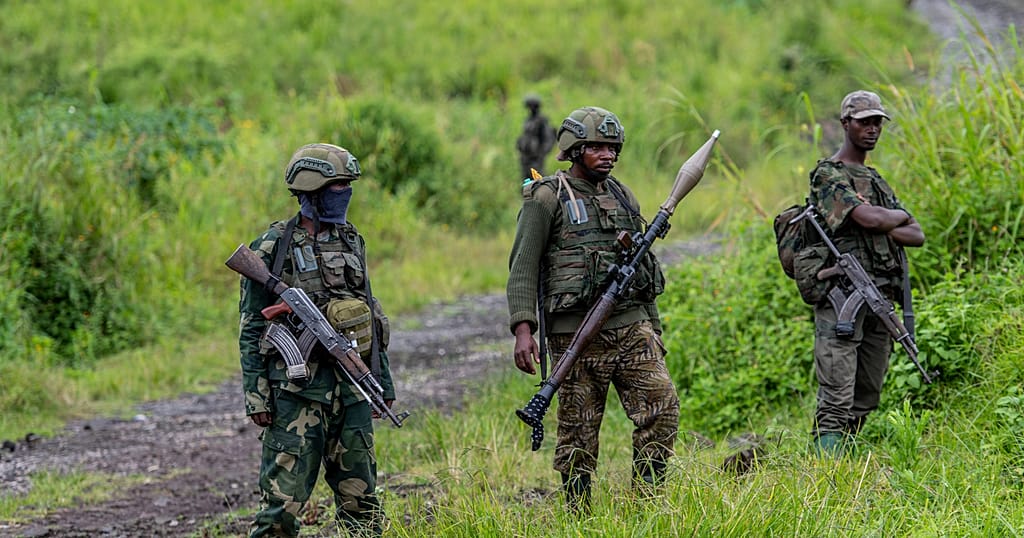
Suspected militants belonging to the Islamic State-aligned Allied Democratic Forces (ADF) have massacred at least 36 people, including women and children, during a brutal, highly coordinated two-day offensive in the dense forests of northeastern Democratic Republic of Congo. Local officials and deeply traumatized security sources confirmed the staggering death toll on Thursday, exposing the chronic vulnerability of civilian populations in the volatile border regions.
The horrific slaughter in the commercial town of Biakato and several surrounding isolated farming hamlets underscores the catastrophic failure of ongoing, heavily funded regional military interventions. Despite the combined deployment of Congolese and Ugandan armed forces over the past three years, the Ugandan-born insurgency continues to operate with terrifying impunity, systematically destabilizing the mineral-rich territories of North Kivu and Ituri and precipitating a massive, underreported humanitarian crisis.
The Anatomy Of A Massacre
The latest wave of violence demonstrates the ADF’s signature blend of stealth and absolute brutality. According to local civil society leaders, the assault on Biakato commenced under the cover of darkness. Heavily armed fighters infiltrated the town, bypassing rudimentary security perimeters before initiating a methodical killing spree. Survivors report that the insurgents deliberately utilized machetes alongside firearms, a psychological terror tactic designed to maximize panic and conserve ammunition.
By the time government security forces managed to secure the immediate area, the bodies of at least 15 civilians—including a child and multiple women—had been recovered from the blood-soaked streets of Biakato. However, the violence did not remain contained within the town. Splinter groups of the militia subsequently moved deeper into the dense surrounding jungle, targeting four isolated agricultural villages situated directly on the porous border between Ituri and North Kivu provinces.
In these remote hamlets, at least 21 additional civilians were slaughtered. The victims were predominantly impoverished farmers, caught completely defenseless while tending to their fields. The geographical isolation of these villages, characterized by thick canopy forest and severely degraded road infrastructure, routinely severely hampers the rapid deployment of medical and military assistance, allowing the perpetrators to vanish back into the jungle long before state authority arrives. Details regarding the exact number of individuals abducted during the raids remain under independent verification, though the ADF notoriously utilizes mass kidnapping to forcibly recruit child soldiers and logistical porters.
A Decade Of Unchecked Terror
The Allied Democratic Forces present one of the most complex and lethal security challenges on the African continent. Originally established in the late 1990s with the explicit objective of overthrowing the Ugandan government in Kampala and establishing a hardline Islamic state, the group was relentlessly pushed across the border into the vast, ungoverned spaces of eastern DRC. Over the subsequent two decades, the ADF metastasized, embedding itself deep within the illicit local economy and forging lucrative alliances with transnational smuggling syndicates.
In recent years, the organization’s public alignment with the Islamic State has injected a new, deeply ideological fanaticism into their operations. Security analysts at the United Nations Organization Stabilization Mission in the Democratic Republic of the Congo (MONUSCO) have extensively documented the ADF’s tactical evolution, noting their increasing reliance on improvised explosive devices (IEDs) and sophisticated ambush techniques. Their operations are no longer merely localized banditry; they represent a coordinated campaign of asymmetric warfare.
- Civilian Toll: Over the past five years, human rights monitors estimate the ADF is responsible for the deaths of over 4,000 Congolese civilians in North Kivu and Ituri alone.
- Military Futility: The joint “Operation Shujaa,” launched by the Ugandan People’s Defence Force and the Congolese military in 2021, has repeatedly failed to secure the deeply forested terrain.
- War Crimes Allegations: A comprehensive report published by Amnesty International explicitly accuses the ADF of systematic crimes against humanity, including mass rape and extrajudicial executions.
- Economic Devastation: The relentless violence has paralyzed the agricultural sector in the region, triggering acute food insecurity and displacing hundreds of thousands of residents into squalid, disease-ridden camps.
The Failure Of The International Community
The international response to the butchery in eastern DRC remains glaringly inadequate. While the United Nations has repeatedly issued forceful condemnations and implicated the ADF in an exhaustive litany of atrocities—including extortion, mass kidnapping, and the illicit taxation of vital transit routes—the deployment of MONUSCO peacekeepers has proven largely ineffective in deterring mobile, heavily armed guerrilla units operating within near-impenetrable jungle terrain.
For the citizens of Kenya, Tanzania, and the broader East African Community, the persistent instability in the DRC poses a severe, escalating economic and security threat. The rampant smuggling of conflict minerals—including gold and coltan—directly funds the ADF’s military apparatus, creating an illicit economy that distorts regional trade markets. Furthermore, the massive influx of desperate Congolese refugees crossing borders places an unbearable strain on the social infrastructure of neighboring nations.
The massacre at Biakato is not an isolated tragedy; it is a grim indictment of a shattered security architecture. Until the root causes of the conflict—the complete absence of state authority, the illicit exploitation of natural resources, and the sophisticated funding networks of the militias—are violently severed, the forests of North Kivu will remain a theater of unrelenting horror. The blood of the innocent continues to stain the soil of a nation abandoned by the very forces sworn to protect it.
Credit: Source link