

A new “walking shark” was found in Papua New Guinea; scientists say its tiny range could put it at risk of extinction |
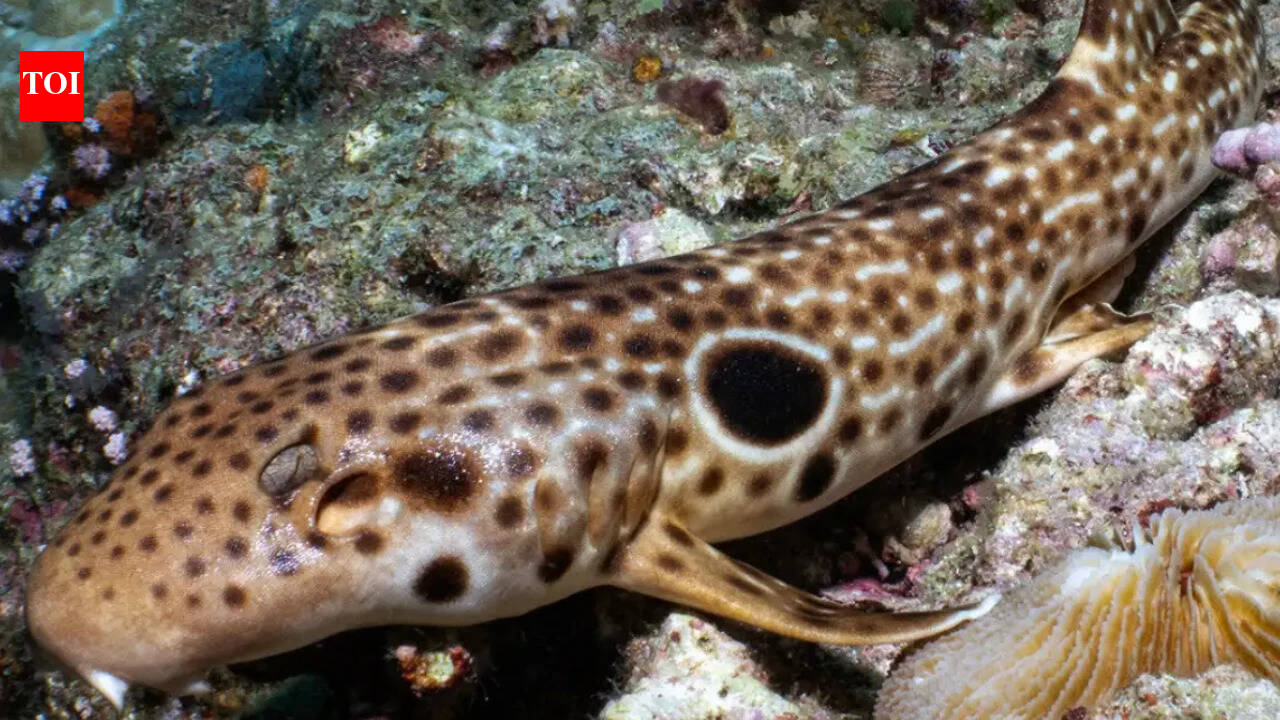
People in southeastern Papua New Guinea have a local name for a small shark that moves across shallow reefs using all four fins like limbs: kadedekedewa, loosely meaning “dog shark” or “lazy shark” because of its slow, four-limbed gait. Scientists have now confirmed that animal as an entirely new species, naming it Hemiscyllium dudgeonae, or Dudgeon’s walking shark. It belongs to a small group of sharks found only in Australia and New Guinea, whose members use their pectoral and pelvic fins to move across reef flats rather than relying entirely on swimming. The species was first encountered by ecologist Christine Dudgeon during a night dive in March 2025 in the shallow waters of Milne Bay, southeastern Papua New Guinea, while researchers were searching for a different, already known walking shark. Genetic and morphological analyses later confirmed that the unusual animal represented a species previously unknown to science. Researchers now believe its restricted range could make it highly vulnerable to environmental threats.
How a chance encounter in Milne Bay led to a new walking shark species
Dudgeon was diving in search of Michael’s epaulette shark, Hemiscyllium michaeli, when she encountered a slender shark roughly 2.5 feet long moving across the seafloor. She shone her torch ahead of the animal, causing it to freeze, and then caught it by hand and brought it back to the research boat. There, lead author Jessica-Anne Blakeway immediately noticed that its colour pattern did not match the species the team had been looking for. Instead of the leopard-like spots expected on H. michaeli, the shark had distinctive white dashes, brown freckles and white spots across its body.The team continued searching the surrounding reefs over the next two nights and ultimately collected 12 individuals displaying the same distinctive pattern. Genetic analysis later confirmed that the animals represented a separate species. All but the three specimens designated as type specimens were released alive after researchers collected blood and tissue samples.
Why researchers believe Dudgeon’s walking shark has a narrow and fragile range
The species is formally described in the paper A review of walking shark (Hemiscylliidae: Hemiscyllium) distributions in Papua New Guinea and description of a new species, published in the Journal of the Ocean Science Foundation in June 2026. The discovery brings the total number of recognised Hemiscyllium species to 10 and represents the first new species added to the genus since 2013.Researchers currently know the species from the Amphlett Islands to the Trobriand Islands in Milne Bay Province. The paper records individuals from shallow seagrass beds, mangrove roots and reef habitats, with some specimens collected at depths of less than 2 metres and others deeper. The researchers caution that the species’ true distribution may extend farther than the areas surveyed so far, meaning its currently known range may not represent its full range.
What threats Dudgeon’s walking shark faces in Papua New Guinea’s coastal waters
Researchers have raised conservation concerns precisely because the newly described shark appears to have a restricted geographic range. The species faces potential pressure from habitat degradation, fishing activity and climate change, according to the University of the Sunshine Coast and the researchers’ paper.The concern is particularly significant because several other walking sharks already have restricted distributions and conservation problems. The University of the Sunshine Coast says five of the 10 recognised species are already listed as threatened with extinction on the IUCN Red List under criterion B, which relates to restricted geographic range. H. dudgeonae, however, does not yet have an IUCN Red List classification. Researchers plan to return to Papua New Guinea in October to gather additional information that could help the IUCN assess whether the species should be listed as vulnerable or endangered.The discovery therefore comes with an unusual sense of urgency. Scientists have only just established that Dudgeon’s walking shark exists, but its apparently limited range means researchers want to understand its population and threats before environmental pressures become more severe. As the team continues surveying Papua New Guinea’s shallow reefs, the new shark is also adding another piece to a remarkably diverse group of species that scientists are still learning how to map and protect.
Credit: Source link