

A fresh look at the Sahel (I)
- The transformation of the Sahel
- The crisis in Mali
- Russian troops surrender
- The role of the Afrika Korps
For months now, we have had our eyes firmly fixed – and with good reason – on events in the Middle East, as the consequences of the war between the United States and Israel on one side and Iran on the other are extremely serious and affect the whole world. However, just as happened with the war in Ukraine – to which we no longer pay even a third of the attention we did a couple of years ago – this conflict has caused us to turn our attention away from a region that is just as important, if not more so, given the consequences of what is happening there for Europe and especially for Spain.
The transformation of the Sahel
The Sahel is undergoing an unprecedented transformation that is radically reshaping its security architecture and regional geopolitics during the first half of this year. Over recent years, a series of factors have converged, leading to the definitive collapse of traditional multilateral frameworks, symbolised by the forced withdrawal of the United Nations peacekeeping force (MINUSMA), the end of French counter-terrorism operations such as Serval and Barkhane, and the implosion of the G5 Sahel, leaving a governance vacuum that the region’s state forces have been unable to manage autonomously. Instead, the geographical area comprising Mali and Burkina Faso has become the epicentre of a militarised autocratic experiment under the aegis of the Confederation of Sahel States (AES), established in September 2023 and consolidated through economic and military integration projects during 2025 and 2026.
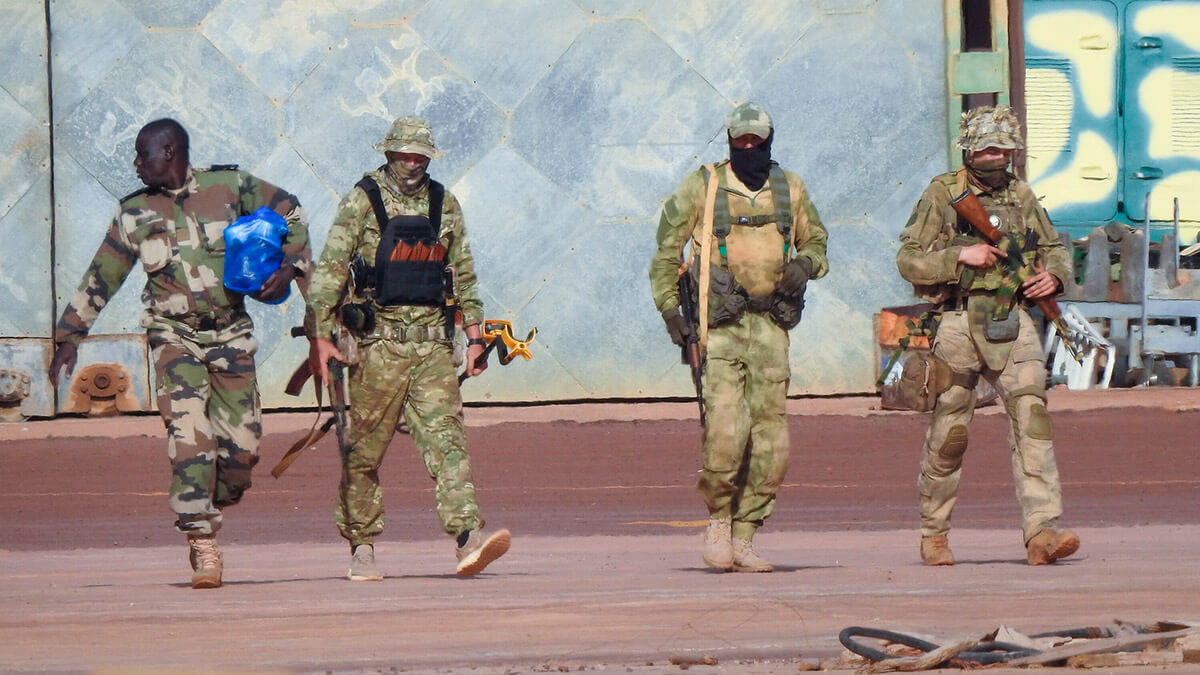
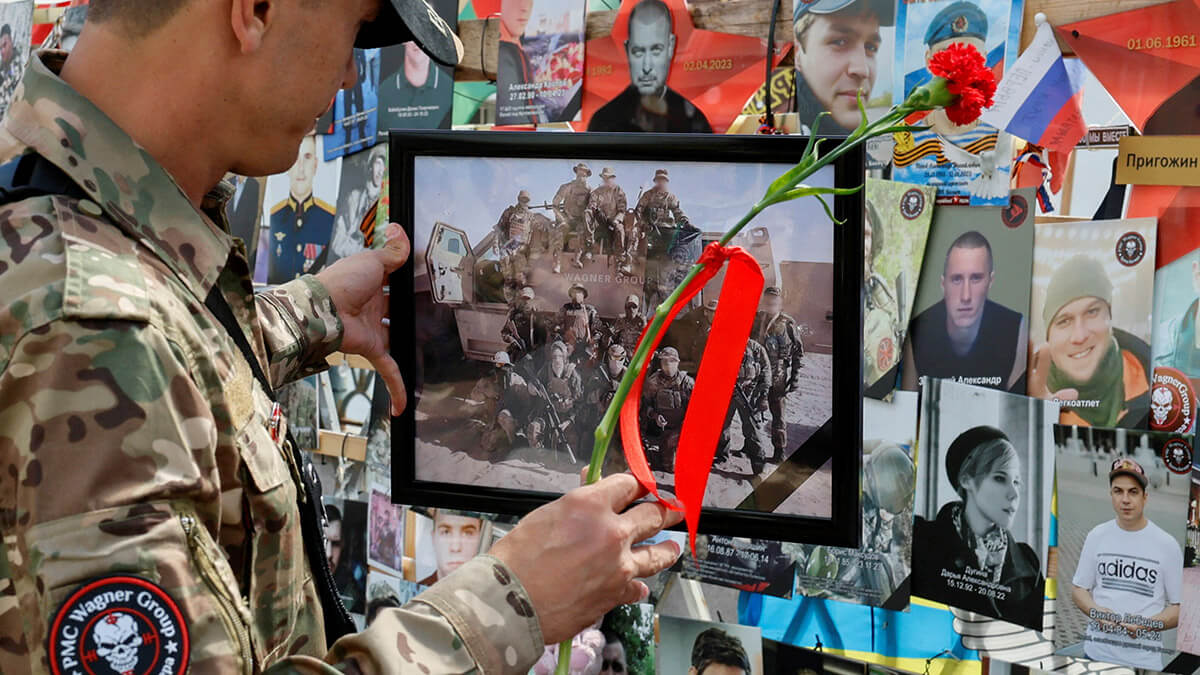
This break with the regional post-colonial order has not only politically isolated these military juntas from traditional blocs such as the Economic Community of West African States (ECOWAS), but has also unleashed intense competition between global powers with interests in the region. Whilst the Russian Federation seeks to consolidate its presence through the “Afrika Korps”, the state structure that took over the operations of the disbanded Wagner Group, the Republic of Turkey is emerging strongly as an alternative and indispensable security partner, combining the transfer of military technology with a commercial pragmatism that sidesteps Western demands regarding human rights. And these dynamics are filling the void left by the very party that, in its own interests, ought to be playing a leading role in the region.
And in the face of this polarisation with authoritarian overtones, Mauritania is emerging and standing out as the last bastion of democratic stability on the western flank of the Sahel, maintaining close cooperation with NATO and the European Union, whilst dealing with the devastating humanitarian repercussions of its neighbours’ conflicts and acting as a buffer and a containment mechanism against the spread of the jihadist threat and destabilisation.
The convergence of armed violence, inter-ethnic, social, tribal and political tensions, and prolonged economic blockades has created a humanitarian emergency of systemic proportions with potentially devastating consequences for the region. According to data from the United Nations Office for the Coordination of Humanitarian Affairs (OCHA), so far in 2026, more than 24 million people in the Sahel are in need of urgent humanitarian assistance and protection.
The crisis in Mali
Mali entered a phase of critical instability on 25 April 2026, when the country was rocked by the largest coordinated offensive by armed insurgent groups since the Tuareg uprising of 2012. This operation highlighted the utter ineffectiveness of the unilateral stabilisation strategy pursued by the junta led by General Assimi Goïta.
The attack that launched the offensive targeted the nerve centre of the defence apparatus in the capital, Bamako, and its fortified military suburb of Kati. Commandos from the jihadist terrorist group Jama’at Nusrat al-Islam wal-Muslimin (JNIM) carried out a high-powered vehicle-borne improvised explosive device (VBIED) attack on the private residence of Mali’s influential Defence Minister, General Sadio Camara, killing him instantly. Camara, regarded as the main political architect of Mali’s rapprochement with Russia and the figure responsible for dismantling agreements with Western powers, was a key figure in maintaining the cohesion of the military junta.
In the same coordinated military operation, the jihadists attacked the air base near Modibo Keïta International Airport in Senou, where strategic aviation infrastructure was destroyed, and stormed the offices of the National Intelligence Service, inflicting extremely serious injuries on its director-general, Colonel Modibo Koné.
The simultaneity and scale of the raids on Bamako, Kati, Gao, Mopti, Sévaré and Kidal completely overwhelmed the state intelligence apparatus’s early warning capabilities. The loss of the Defence Minister forced the junta to immediately impose a three-day night-time curfew in the capital and to urgently restructure the Defence General Staff. The Chief of the Defence Staff, General Oumar Diarra, was relieved of his post and appointed Deputy Minister with the role of Assistant to the Presidency for the transition. Diarra was replaced at the helm of the country’s military operations by Brigadier-General Elisée Jean Dao, who was entrusted with the almost impossible task of containing the multiple open fronts in central and northern Mali.

As an immediate response to the insurgents’ use of highly mobile tactics in semi-urban and rural areas, the Malian government issued a decree-law on 3 June 2026 strictly prohibiting the use of motorbikes in the central and northern regions of the country. These regulatory measures were intended to restrict the freedom of movement of JNIM units, which rely on motorbikes as their primary means of rapid transport and for conducting asymmetric attacks in rugged terrain.
At a strategic and symbolic level, the most catastrophic military setback for the Bamako junta and its Russian partners was the fall of the iconic city of Kidal on 26 April 2026, just 24 hours after the offensive began. Kidal, which had been wrested from the Tuareg rebels in November 2023 by the Malian army and private contractors from the then Wagner Group amidst an intense nationalist propaganda campaign, represented the crowning glory of Goïta’s rhetoric on territorial sovereignty.
Russian troops surrender
The defensive collapse of the stronghold was devastating. Mixed columns of fighters from the Azawad Liberation Front (FLA) and JNIM commandos surrounded the town’s military camp and the central market. Finding themselves outnumbered and lacking effective air support, the Russian officers decided to negotiate a surrender and evacuation agreement independently with the FLA’s military leaders, Bilal Ag Acherif and Commander-in-Chief Alghabass Ag Intalla. Under the terms of this agreement, the Russian troops handed over the military base and were escorted safely out of the northern desert region, leaving the Malian regular units sharing the garrison to fend for themselves.
The result was the capture of at least 200 soldiers from the Malian army, who were subsequently held as prisoners of war by the armed wing of the FLA. The official spokesperson for the Tuareg group, Mohamed Elmaouloud Ramadane, publicly confirmed that these prisoners would be used as bargaining chips and instruments of political pressure in future peace negotiations or talks on the demarcation of territorial borders.
The coordinated assault and subsequent capture of Kidal highlighted the operational maturity of the tactical alliance patiently negotiated in 2024 between JNIM, with its Salafist-jihadist ideology, and the FLA, a secular and nationalist movement seeking Tuareg ethnic self-determination. Despite holding diametrically opposed views on the organisation of the state and the implementation of sharia law, their shared existential hostility towards the military junta in Bamako and the Russian occupation acted as a powerful catalyst for their cooperation on the ground.
Following their military success in the north, on 28 April 2026 the JNIM formally declared a total economic blockade of the capital, Bamako, threatening to execute any transport operator or civilian who assisted in supplying government garrisons in the southern region. This suffocating blockade campaign was reinforced by the territorial control exercised by the jihadist factions of the Macina Liberation Front over the agricultural lowlands of the inner Niger Delta.
The impact on Bamako’s critical infrastructure and socio-economic resilience has been catastrophic.
To counter the insurgents’ advances, the Malian Armed Forces and their Russian allies have implemented an aggressive and violent counter-insurgency doctrine, characterised by the massive use of indiscriminate air strikes and ground-based reprisals against specific communities accused of sympathising with the jihadist ranks.
This disregard for the minimum standards of warfare has been facilitated by the Malian regime’s sovereign decision to formally withdraw from the Economic Community of West African States (ECOWAS) in January 2025, and by its withdrawal from the Rome Statute of the International Criminal Court (ICC), announced in September 2025, thereby eliminating any mechanism for international accountability and judicial investigation within Malian territory.
The role of the Afrika Korps
One of the main conclusions to be drawn from the events of the first half of 2026 is that they have highlighted the profound operational limitations of the new Russian model for projecting force in the Sahel, structured around the Afrika Korps, which is now under the direct control of the Ministry of Defence in Moscow following the dismantling of the Wagner Group’s informal corporate network in 2025. Although the shipment of heavy consignments of armaments and armoured vehicles via the Guinean port of Conakry suggested a redoubled commitment by the Kremlin to the Sahel theatre, the actual performance of these forces on the ground has proved to be markedly conservative and lacking in initiative and offensive ambition.
The Russian contingent deployed in Mali, consistently estimated at between 1,000 and 2,500 trained troops, has proved incapable of carrying out sustained pacification operations or long-range patrols deep into the desert. Unlike their Wagner predecessors, who were more inclined to take the risk of a frontal assault to seize valuable mineral resources independently, the Afrika Korps prioritises almost exclusively the static security of the resources and facilities of Assimi Goïta’s regime in the capital and the protection of its own personnel.
This defensive and fearful stance in the face of the possible use of MANPADS by the FLA explains why the Russian commanders decided to capitulate and withdraw from Kidal by land without offering active resistance, dealing a devastating blow to the Sahelian junta’s official narrative.

Despite these shortcomings on the ground, Russia maintains a firm grip on the diplomatic relations of the Confederation of Sahelian States (AES). On 8 July 2026, Niger’s capital, Niamey, hosted the second ministerial session of official consultations between the foreign ministries of the AES and the Russian Federation, led by Russian Foreign Minister Sergei Lavrov. At the meeting, it was agreed to consolidate the joint military alliance, to organise a strategic summit on Russian soil for 2027, and to formally launch collaboration with Russian state media. This development, which should set alarm bells ringing in every EU foreign ministry, has, incomprehensibly, gone almost unnoticed and reaffirms the reality that Russia is filling the vacuums left by Europe. These are spaces that will become increasingly difficult to reclaim with each passing day.
And this is no trivial matter, for at a time when everything relating to actions in the cognitive domain is of central importance, this state media cooperation agreement guarantees Moscow a monopoly on audiovisual information and propaganda in the central Sahel region, reinforcing the influence of the Eurasian security narrative.
As we can conclude, the situation continues to deteriorate and is becoming increasingly worrying for Europe. Meanwhile, on this side of the Mediterranean, we continue to turn a blind eye to what is happening there.
Credit: Source link