

A Country ‘Gripped by Fear’ — What Follows in the Wake of Colombia’s Elections
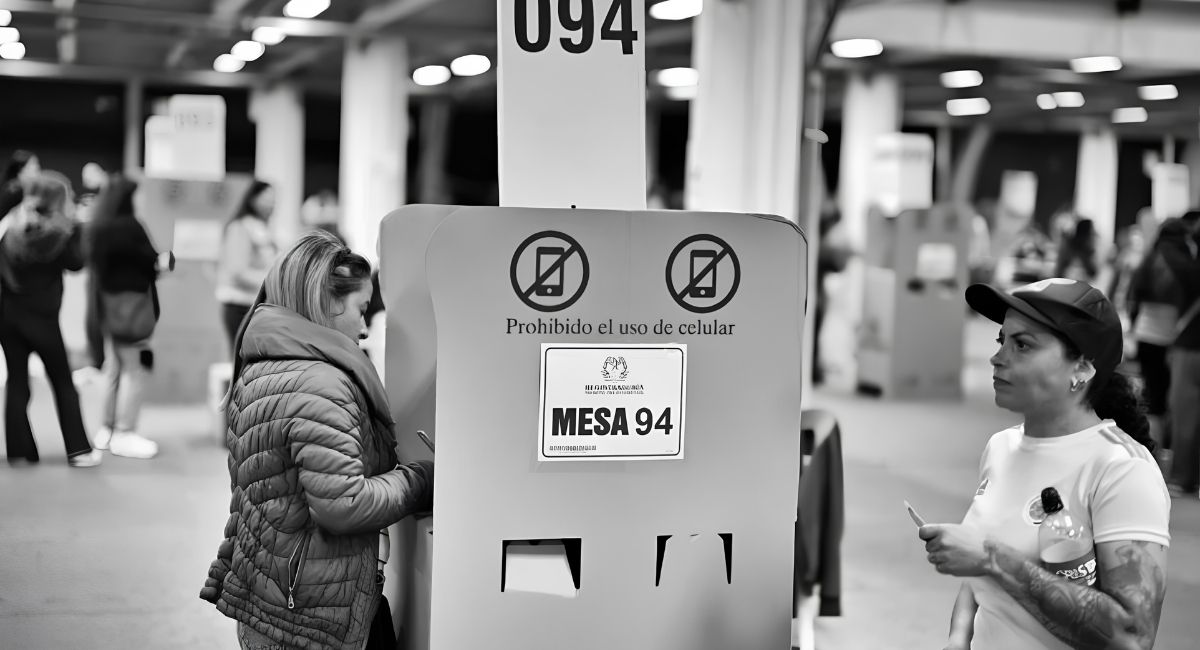
Colombia has become the latest Latin American nation to swing right after the surprise June 21 election win by lawyer and businessman Abelardo de la Espriella. The upstart candidate narrowly beat his rival and progressive standard bearer Iván Cepeda.
Experts say de la Espriella’s win raises serious concerns over human rights, democracy and a fragile peace process that could return Colombia to the violence of years past.
“The language of polarization obscures more than it reveals,” said Beatriz Magaloni, a political scientist and senior fellow at Stanford University, where she directs the Poverty, Violence, and Governance Lab and co-directs the Democracy Action Lab.
Speaking during a June 12 ACoM virtual news conference, Magaloni said the political divide in Colombia — where de la Espriella appears to have won with 49.7% of the vote compared to 48.7% for Cepeda — is less ideological than the results might otherwise indicate.
“Polarization suggests that citizens disagree about policy, divisions between left and right,” she noted. “In Latin America today, although at first sight it does appear as a confrontation between left and right, it’s really not ideological, but about the way people experience what they see as the state failing them in their everyday lives.”
Tough on crime?
In Colombia’s cities and semi-urban areas, Magaloni said, residents “suffer crime, they suffer extortion, they suffer insecurity,” and see in de la Espriella’s tough-on-crime message “a really interesting solution.”
It is a solution, she adds, consciously modeled after Salvadoran President Nayib Bukele, after whom de la Espriella — nicknamed ‘Tiger’ — has styled himself both outwardly and in terms of policy. One of de la Espriella’s key campaign pledges is the construction of 10 mega-prisons across Colombia much like the notorious CECOT prison in El Salvador.
But in rural Colombia, where many of the country’s historically marginalized Afro-Colombian and Indigenous communities live, Magaloni described residents “being terrorized” by the expansion of armed criminal groups fighting for profit and control of land, mining and drug-trafficking corridors.
Between mid-2022 and mid-2025 — under the tenure of outgoing president Gustavo Petro, Colombia’s first leftist leader — armed groups expanded in size by 45%, numbering some 21,958 people.
“These criminal organizations live from drug trafficking, extracting oil,” said Magaloni, adding, “they live from extorting populations” that de la Espriella repeatedly demeaned in campaign statements widely condemned as racist.
“What I fear about the emphasis on security,” she continued, “is that these organized criminal groups that are violating human rights and extracting resources are not necessarily going to be in the radar of a government that doesn’t pay attention to the demands of these populations.”
A land dispute turns deadly
Manuel Ortiz, sociologist, documentary photographer, journalist, and audiovisual consultant for the Democracy Action Lab at Stanford University, discusses land ownership disputes and violence in rural Colombia.
Manuel Ortiz is a sociologist and documentary journalist with Stanford’s Democracy Action Lab. He recently returned from Cauca in Colombia’s southwest, where a territorial dispute between two Indigenous groups turned violent on May 21, leaving at least seven people dead and more than 100 injured.
The clash, he says, highlights the underlying issues complicating Colombia’s fraught peace process.
“Both communities recognize that the main problem is not the other” but rather the scarcity of arable land needed to support a growing population, said Ortiz, who traced the dispute in Cauca to the presidency of Álvaro Uribe from 2002 to 2010.
At the time, mass displacement allowed large rural landholders to seize territory abandoned by Indigenous and Afro-Colombian farmworking communities fleeing violence. Colombia has among the world’s largest populations of internally displaced people.
Those same communities are now struggling to recover this lost land, a process Petro sought — if imperfectly — to oversee.
Ortiz echoes Magaloni, saying these latest elections were less about traditional left versus right and more about sustaining “peace agreements and restoring land versus returning to periods of violence and land-grabbing.”
De la Espriella’s victory, Ortiz said, portends “more fights like the one we saw in Cauca … the people have to live and work somewhere, so they will start fighting for the little piece of land that they still have.”
‘Openly fascist’
Colombia finds itself “gripped by fear,” says Alex Sierra, an anthropologist with the Bogotá-based Centro de Estudios Sociojurídicos Latinoamericanos (CESJUL).
“Some fear that Abelardo will persecute and murder those of us who oppose him,” noted Sierra, speaking the day after polls closed. “Others fear that the left, by refusing to recognize the election results, will create an atmosphere of violence.”
Petro alleged irregularities following the first round of voting and has rejected any declaration of victory by de la Espriella until the final count is ratified. Cepeda has likewise yet to concede.
During his campaign de la Espriella also vowed to “gut the left,” a phrase opponents took literally as a threat of violence.
Sierra, who has spent decades documenting human rights abuses across Colombia and Latin America, said activists on the left — including young people injured by “non-lethal” police weapons during protests five years earlier — “fear the return” of what he called an “openly fascist” style of policing.
He added de la Espriella will also face significant challenges confronting the country’s growing paramilitary presence.
More than 57 armed groups with “war-fighting capability” already control territory across Colombia, a situation that threatens “a dramatic spiral of new violence,” warned Sierra. De la Espriella — himself a naturalized U.S. citizen — has said he would welcome U.S. military support in taking on the groups.
Drawing on his own work observing recent elections in Honduras and Chile, Sierra said he has identified “a pattern of Donald Trump generating direct interference” in the region’s elections, interference which carries “a very negative impact” on democracies that remain “very fragile” and shaped by a “historical fear” of U.S. influence.
Security versus democracy
Beatriz Magaloni, professor of political science and senior fellow, Stanford University; director, Poverty, Violence, and Governance Lab; and co-director, Democracy Action Lab, explains why people give up on democracy and vote for authoritarian, anti-democratic leaders.
Migration is another central theme of this election, Magaloni adds.
Colombia has been the largest host country for Venezuelan migrants, absorbing nearly 3 million fleeing rampant violence, economic collapse and political repression. While Colombia’s government took early steps to integrate these new arrivals, “we still observe a lot of difficulties and problems,” said Magaloni.
As in Chile, which just saw an election defined largely by fears of crime and immigration, surveys conducted by Magaloni’s team across Latin America found that 67% of respondents “regard insecurity as the most important problem,” above concerns about democracy, due process and human rights.
“What I have found in our interviews is that [people in Latin America] … are willing to tolerate approaches to security that disregard [these principles],” Magaloni said.
“The problem is that democracy itself is failing to provide those solutions,” she added, “Voters everywhere are telling us that democracy has to deliver for people to continue to embrace it.”