

Why Tshisekedi’s Rwanda Complex is Failing The DR Congo
1
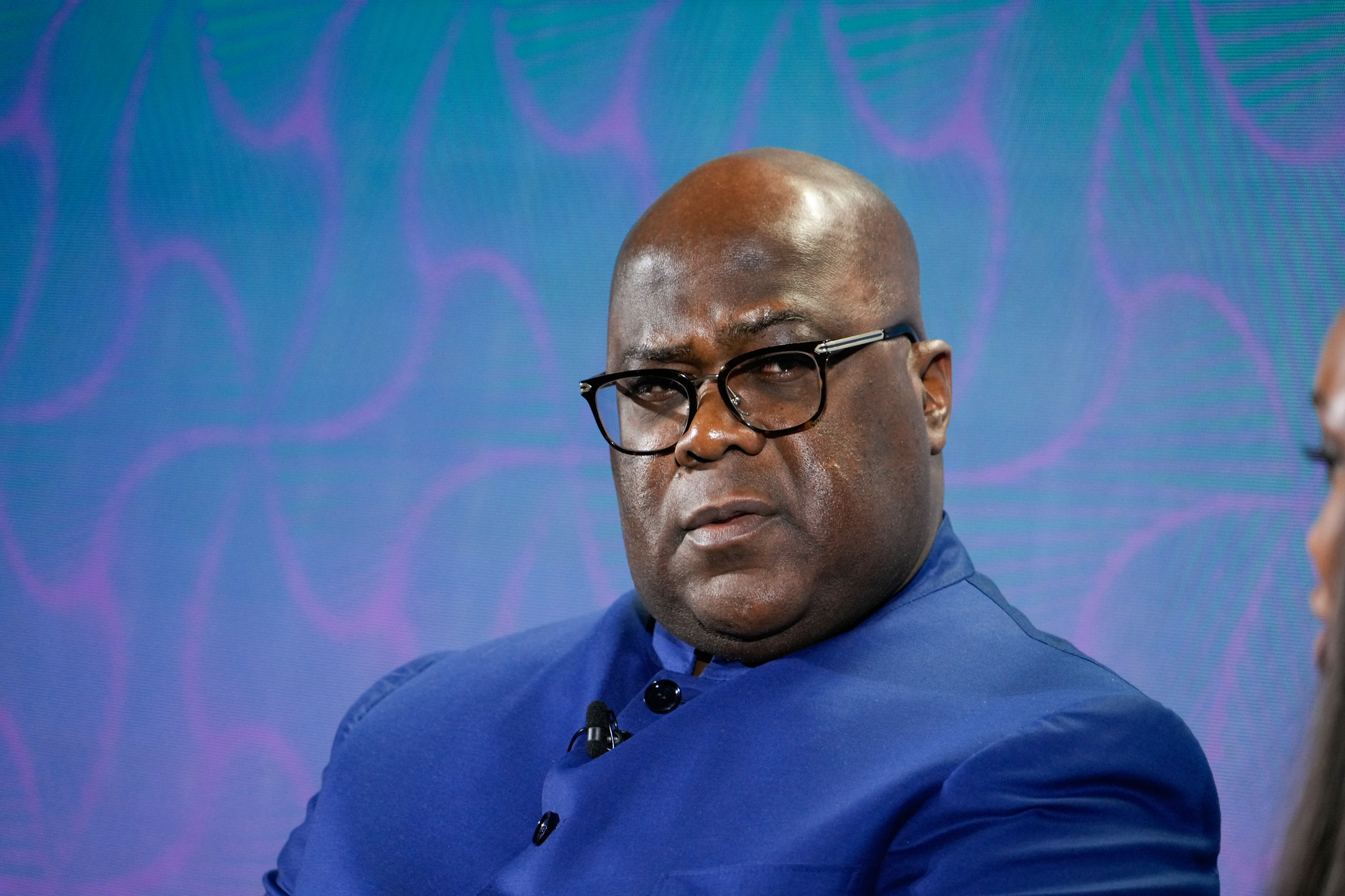
There is something profoundly tragic about watching a nation of over 100 million people reduce its entire governance strategy to a manic, poorly executed imitation of its smaller neighbor. Yet this is precisely the spectacle unfolding in the DR Congo under Félix Tshisekedi.
From tourism branding to migrant relocation, Kinshasa has developed a compulsive habit: whatever Rwanda does, the Congo must copy, without the slightest understanding of how Rwanda got there. The result is a series of embarrassing failures.
Consider the Kinshasa’s foray into sports tourism. Seeking to replicate Kigali’s successful “Visit Rwanda” campaign, which saw Arsenal, Paris Saint-Germain, and more recently Atlético Madrid sporting the country’s brand on their jerseys, Kinshasa scrambled to secure its own European club partnership. The deal with AS Monaco was announced with great fanfare. Here, finally, was the DR Congo taking its rightful place on the global tourism stage.
There was only one problem: the DR Congo has virtually no tourism industry to market.
Had Congolese understood Kigali’s strategy, they would have noticed that Rwanda’s tourism success did not begin with jersey sponsorships. It began with two decades of deliberate, painstaking investment in actual infrastructure. Before Arsenal ever wore “Visit Rwanda,” the country had:
a) Transformed Nyungwe National Park from a neglected forest reserve receiving 2,386 visitors in 2005 into a fully operational national park. By 2016, all three of Rwanda’s parks were drawing 88,184 visitors, with Nyungwe’s steady growth forming a big part of that surge.
b) Reintroduced at enormous expense animals that had become extinct.
c) Developed specific tourism products: canopy walkways, zip lines, guest houses, coffee shops, and the 110-kilometer Nyungwe Traverse trail.
d) Created community benefit schemes that returned 10% of tourism revenues to local communities, funding health centers, schools, and agricultural cooperatives.
e) Established security, service standards, and wildlife protection protocols that made destinations safe and reliable.
Meanwhile, travelling to Congo remains prohibitively expensive not because of high permit costs—gorilla permits are actually cheaper at $400 versus Rwanda’s $1,500—but due to limited tourism infrastructure, poor road conditions, security concerns, and the need for armed escorts.
And unsurprisingly, the Monaco deal predictably collapsed into scandal. The Congolese government has yet to provide a transparent accounting of funds involved, and investigators are examining whether the deal served primarily to move money out of the country under the guise of tourism promotion.
If the tourism imitation was incompetent, the regime’s migrant relocation initiative is cynical, bordering on cruel.
In April 2026, Kinshasa announced it would receive 15 third-country nationals deported by the United States under a “temporary reception arrangement.” The Congolese government framed this as a humanitarian gesture. Yet it quickly became clear that Kinshasa was not prepared to provide these asylum seekers with even the bare minimum for survival.
This is where the imitation of Rwanda becomes truly farcical, because it fundamentally misunderstands what Rwanda has been doing for years. Again, Rwanda’s migration partnerships did not begin with the UK or the US. They began closer to home, born from a genuine humanitarian impulse.
Bukavu
In 2017, after CNN broadcast footage of African migrants being auctioned as slaves in Libyan detention centers, Rwanda stepped forward.
“It is just a humanitarian action,” said Germaine Kamayirese, then Rwanda’s Minister of Refugee Affairs. “Any African should aim to do the same.”
Rwanda established the Emergency Transit Mechanism to receive nearly 1,800 refugees from Libyan detention camps where they faced rape, torture, and death. More recently, it accepted over 200 students from Sudan’s University of Medical Sciences and Technology after civil war made their campus uninhabitable.
These were not cynical plays for Western favor. They were genuine acts of African solidarity, undertaken at Rwanda’s own initiative. The UK and US partnerships emerged as a natural occurrence of countries recognizing that Rwanda was a serious partner willing to help resolve a global migration crisis.
Kinshasa, by contrast, entered the migration space for precisely the wrong reasons: to win Washington’s favor. There was no preparation. No infrastructure for reception or integration. No clear policy framework. No understanding of what hosting migrants actually requires. This looked like a presidential whim, not a national strategy.
“Seeing Rwanda everywhere won’t make us move forward. Looking lucidly at our own weaknesses, yes,” recently observed Walter Nkuy, a Congolese political scientist researcher.
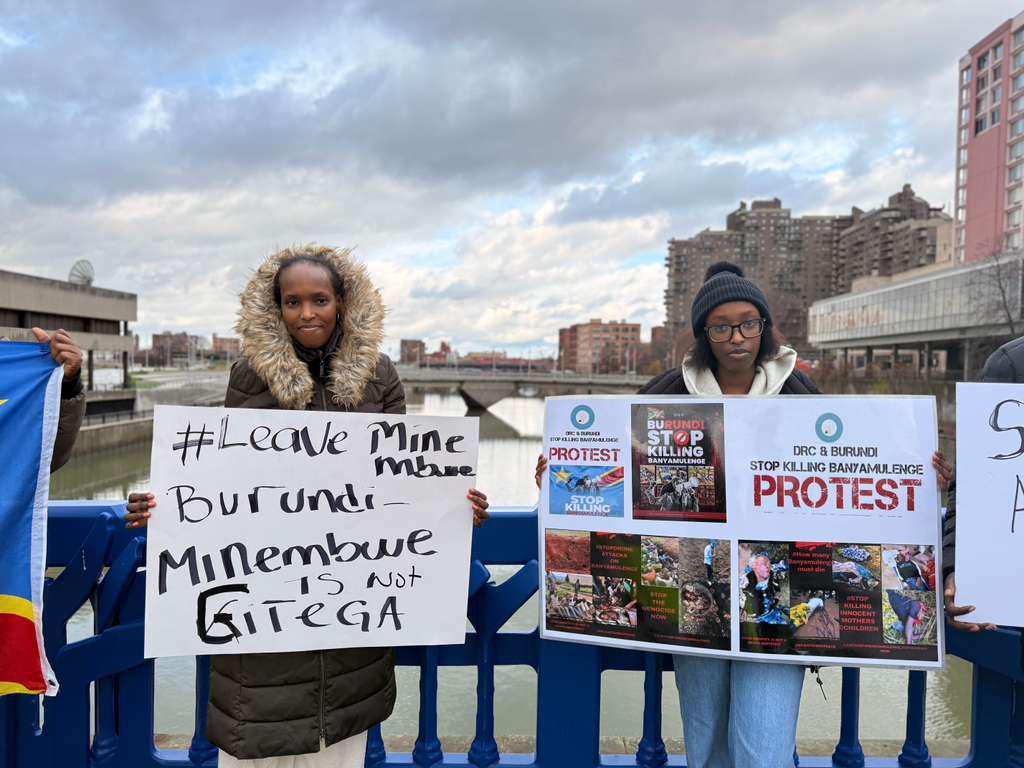
Such lucidity would reveal that one of Congo’s primary weaknesses has nothing to do with Rwanda. It is the absence of national unity, a fragmentation that Tshisekedi has not only failed to address but has actively exacerbated. Under his rule, the Banyamulenge and other Congolese Tutsi communities are systematically targeted, displaced, and killed while the government either watches or participates in their persecution. He has allowed rhetoric that labels these communities “foreigners” to flourish, echoing the genocidal logic that preceded the 1994 massacre of Tutsis in Rwanda.
These are real fractures and priorities. And Tshisekedi has addressed neither because both require governance instead of theater.
Rwanda’s model works because it was built from the ground up. Tshisekedi wants the headlines without the work. He wants Arsenal jerseys without roads to national parks. He wants Washington’s approval and uses migrants as bargaining chips. He wants Rwanda’s outcomes without Rwanda’s foundations. This is bound to fail.
The Congo deserves more than a president who sees Rwanda in every mirror and refuses to see his own country’s ills in any.
Lionel Manzi is Political commentator, Editor at the Pan-African Review
Visited 1 times, 1 visit(s) today
Credit: Source link