

DR Congo Ebola cases top 5,500 as WHO warns of ‘defining moment’
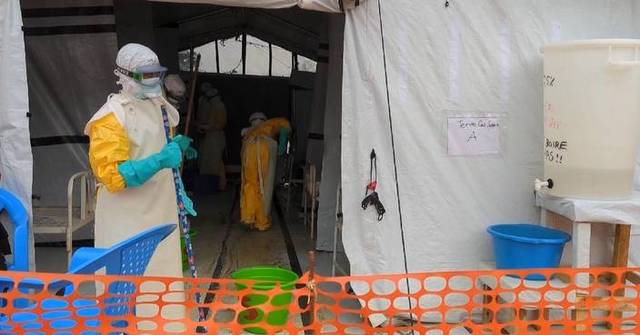
Confirmed Ebola cases in the Democratic Republic of the Congo (DRC) have surpassed 5,500, with more than 2,600 deaths, government figures showed Monday, as the World Health Organization (WHO) said the outbreak has reached a “defining moment” more than 100 days after it was declared.
The latest official tally, with data through Saturday, recorded 5,514 confirmed cases and 2,642 deaths, putting the case fatality rate at 47.9 percent. A total of 1,200 patients have recovered.
The outbreak has spread to 57 health zones in Ituri, North Kivu, South Kivu, Haut-Uele, Bas-Uele and Tshopo provinces. [XINHUA]
The WHO said Monday that the epidemic has become the fastest-growing Ebola outbreak ever recorded in the DRC, warning that transmission continues to outpace control efforts.
“This outbreak has reached a defining moment,” WHO Regional Director for Africa Mohamed Janabi said in a statement.
While acknowledging the progress achieved over the past three months, Janabi cautioned that incremental gains would not be enough and called for a significant acceleration in response measures.
“The choices we make now will determine how quickly we can bring this outbreak under control, protect and save lives,” he said.
Ituri remains the epicenter, accounting for about 85 percent of all cases and 79 percent of deaths, according to the WHO.
The outbreak, caused by the Bundibugyo ebolavirus, was declared by DRC authorities in May. No licensed vaccine or specific therapy is currently available for this strain.
The WHO said clinical trials of potential treatments and evaluations of candidate vaccines are ongoing. The first emergency-listed molecular diagnostic test for Bundibugyo virus disease has also been deployed.
DR Congo Ebola cases top 5,500 as WHO warns of ‘defining moment’
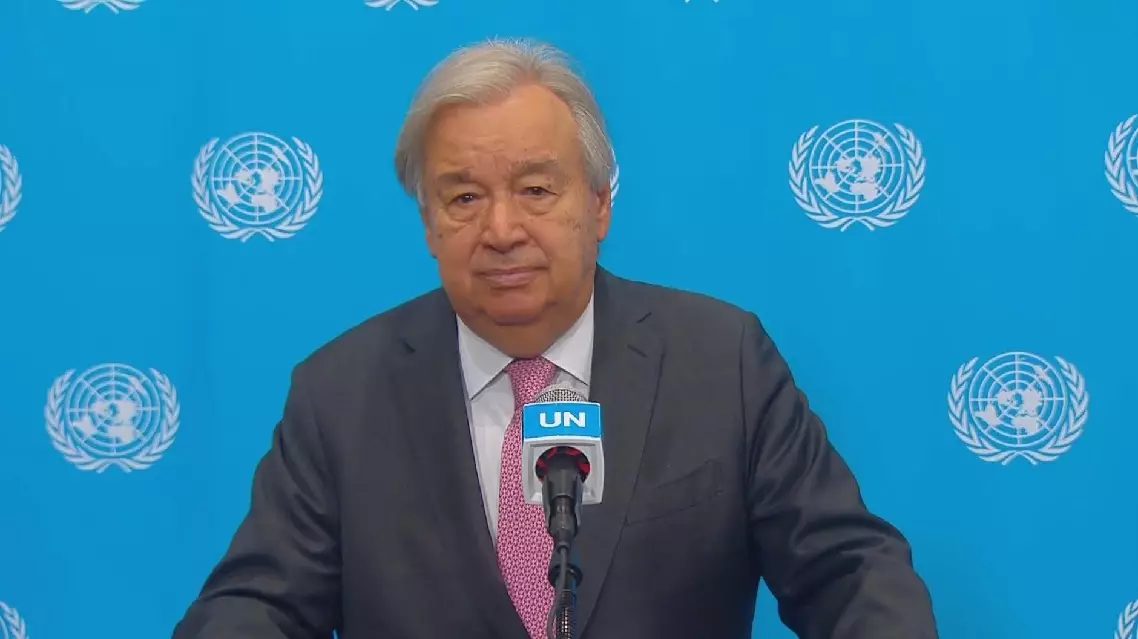
UN Secretary-General Antonio Guterres on Monday called for engagement and cooperation of relevant parties for a confidence-building mechanism that aims to safeguard the movement of essential goods through maritime choke points.
Guterres said a task force he established in March for the Strait of Hormuz crisis has worked to develop “a practical and time-bound confidence-building mechanism focused initially on fertilizers and related raw materials — but with the ability to be extended to other products.”
“Navigational rights and freedoms are not abstract principles, they are international law. Those rights and freedoms are vital for international peace and security and for the flow of food, energy and essential goods on which billions of lives depend. The mechanism would not authorize passage through the State of Hormuz or alter the rights or obligations of any Member State and their international law. Sovereign decisions remain entirely with participating Member States. United Nations would serve as a neutral facilitator and the purpose is simple to reduce immediate risks, support more orderly and predictable transit, and help rebuild the confidence necessary for diplomacy and de-escalation,” he stated at a press briefing.
The mechanism can be operationalized quickly as international support for this effort has been encouraging, particularly from vulnerable countries that understand what is at stake when maritime lifelines are disrupted, he said. “What is needed now is the cooperation and political will of the parties. I urge all concerned to engage seriously and constructively.”
Guterres cautioned that the mechanism is not a substitute for fully restoring navigational rights and freedoms, or for the political solutions needed to end these conflicts. But it is a practical first step. A demonstration that, even amid conflict, it is possible to reduce risks, protect civilians and safeguard the movement of essential goods, said Guterres.
“The alternative is continued disruption, deeper mistrust and mounting hardship for people far beyond the regions directly affected,” he warned.
Guterres called for full respect for international law, including the law of the sea and international humanitarian law; protection for civilian shipping, infrastructure and civilian seafarers; the upholding of navigational rights and freedoms; an immediate end to attacks against commercial shipping and civilian infrastructure in the Black Sea; the full restoration and respect of navigational rights and freedoms in the Strait of Hormuz; and an end to attacks against shipping in the Red Sea and around Bab al-Mandab.
“Maritime choke points must never become instruments of coercion. And the world’s food supply must never become collateral damage of conflict,” said Guterres.
UN chief calls for cooperation on maritime shipping mechanism
Credit: Source link