

Seizing the momentum: a new era for China-Thailand-Gulf cooperation
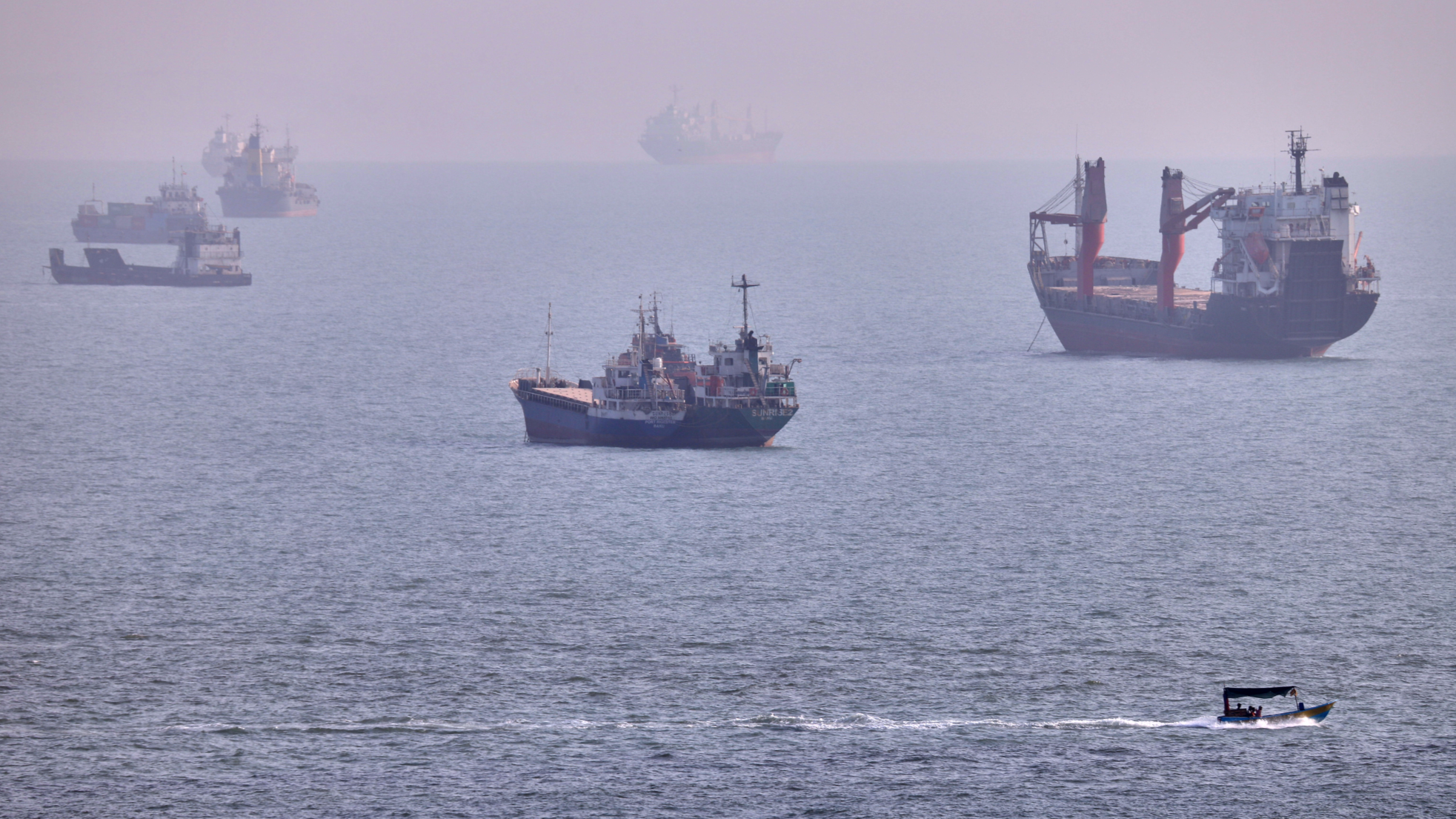
Josephine Ko says whoever first establishes a credible trade mechanism will command the rule-making power of the post-crisis era
The Strait of Hormuz and the Bab el-Mandeb (Mandeb) Strait — the world’s two key energy arteries — are under simultaneous stress. The former carries roughly a quarter of global seaborne oil, while the latter guards the throat of the Red Sea. With supply chains fractured, energy prices volatile and trade corridors blocked, the shockwaves are spreading to every corner of the globe. At the same time, the Russia–Ukraine conflict continues to deteriorate, US–Iran confrontation is intensifying, and the risk of wider conflict in Europe is rising — geopolitics is undergoing its most violent convulsion since the end of the Cold War.
But crisis also means opportunity. A global “capital migration” is now underway. Driven by geopolitical conflict and policy uncertainty, large amounts of capital and talent are accelerating their exit from the United States, Russia and Europe, in search of new safe havens that combine stability, growth potential and institutional safeguards. Henley & Partners estimates that around 165,000 millionaires will relocate across borders in 2026; global capital is shifting focus from “efficiency first” to “safety first”, redrawing the map of the world economy.
Every collapse of an old order is the labor pain of a new one. When the old rules fail, whoever first builds the new rules will define how the next era is played. Take Thailand, for example, which is being hit on multiple fronts. About 60 percent of its crude oil imports come from the Middle East, so blocked straits send energy costs soaring. By 2026, manufacturing capacity utilization had fallen to 57.47 percent, factory closures are spreading, and unemployment rose to 0.94 percent; Middle East tourist bookings have almost vanished. Thailand’s tourism, investment and broader economy lean heavily on Chinese and Middle Eastern investors and visitors — with both clienteles and capital sources shrinking, the country faces a systemic shock. Or consider the Gulf states: energy facilities damaged, freshwater scarce, food and medical supplies disrupted. Around 85 percent of their food is imported, and some 90 percent of the United Arab Emirates’s imports pass through Jebel Ali Port. In 2026, regional stock markets have lost up to $120 billion, with five lifelines under simultaneous strain and post-crisis reconstruction urgently needed.
Whether it is China, Thailand or the Middle East, the future must return to the fundamentals of real-economy demand, and reposition within the restructuring of global industrial chains by raising the quality of industry. The shift is from chasing single technology fads to a systematic upgrade across energy security, food and water security, healthcare and longevity, AI data infrastructure, and talent cultivation. Concretely, progress must be made in five directions at once: top-tier healthcare and frontier technology; financial talent and institutional systems; AI infrastructure; food safety standards; and cultural-education soft power — thereby building an industrially competitive ecosystem with global reach.
Only through such entity-demand-based, systematic upgrading can a sustained positive cycle of talent and capital be formed, laying the long-term competitive foundation for regional cooperation.
The Middle East holds world-class oil and gas capital, control over critical straits and monetary discourse, and formidable sovereign-wealth and financial systems. China brings leading energy-infrastructure capacity, a complete manufacturing system, AI compute power, and strengths in traditional Chinese medicine (TCM) and innovative healthcare. Thailand contributes cultural soft power, internationally recognized medical services, an agricultural base, and a unique geographic position as an Association of Southeast Asian Nations (ASEAN) strategic hub — making it a solid anchor for regional cooperation.
This is not zero-sum trade, but a strategic, multilevel interlock built on comparative endowments: energy, capital, currency, AI, healthcare (including TCM and regenerative medicine), manufacturing, services and location can be deeply fused into a community of shared interests.
China, Thailand and the Gulf states should set up a cooperation platform.
Existing mechanisms cannot carry the explosive growth that such integration makes possible. The biggest pain point in cross-border cooperation is not the absence of channels, but the absence of trust and of a clear point of call. I therefore propose that the governments of China, Thailand and the Gulf states jointly establish a permanent, physical platform focused on five sectors: energy, healthcare, food, water resources, and digital finance. Its core mechanisms would include:
• Joint government certification — the three sides set unified screening standards, with multiple governments endorsing qualified enterprises;
• Coordinated government backstopping — governments can step in to resolve major performance disputes, driving trust costs toward zero;
• Physical clustering — enterprises across the five sectors gather in one place for one-stop evaluation, negotiation and signing;
• Full-cycle closed-loop services — from matching demand to after-sales supervision, lowering institutional transaction costs.
This platform would not only serve the internal needs of the three parties, but also receive globally mobile capital and talent — offering a “credible transaction” ecosystem jointly guaranteed by several governments, so that funds and professionals seeking safe harbor can find stable, transparent and efficient channels within the region, and so attract more specialists and investors from around the world.
In July 2026, the China–ASEAN Foreign Ministers’ Meeting adopted the Joint Statement on Addressing the Regional Impacts of Developments in the Middle East and Strengthening Regional Energy Cooperation; in June, nearly 70 Middle Eastern institutions came to China to seek investment. The Thai government has explicitly prioritized upgrading Ranong deep-sea port and linking it into the national railway network . This is precisely the strategic window for a trilateral, closed-loop absorption of global resources.
War will not end soon, and trust will not generate itself. Whoever first establishes an alternative cooperation mechanism will command the rule-making power of the post-crisis era. I call on the governments of China, Thailand and the Gulf states to seize this strategic window and advance a permanent “credible trade” mechanism. Let credit be the foundation, institutions the guarantee, and the real economy the anchor — let crisis force reform, let complementarity produce co-building and win-win outcomes, and turn this into a concrete step toward a community with a shared future and a Silk Road of Health Cooperation.
The author is founder of Group Talent Global Ltd.
The views do not necessarily reflect those of China Daily.